
Last updated September 20, 2026
Full 25-point door and opener safety check with every visit - springs, cables, rollers, tracks, and your LiftMaster or Chamberlain opener included
You get a price before we start. It does not change when the truck arrives.
 Before
 After
After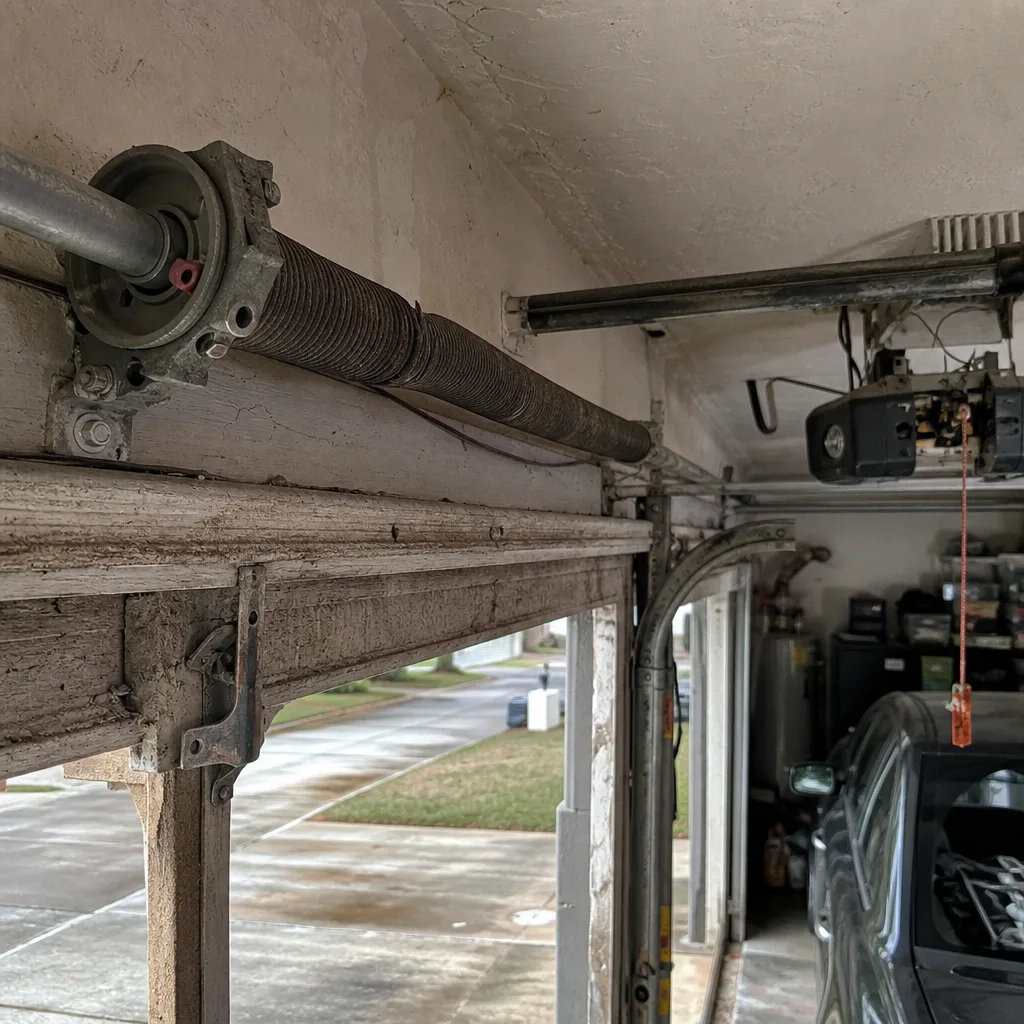 Before
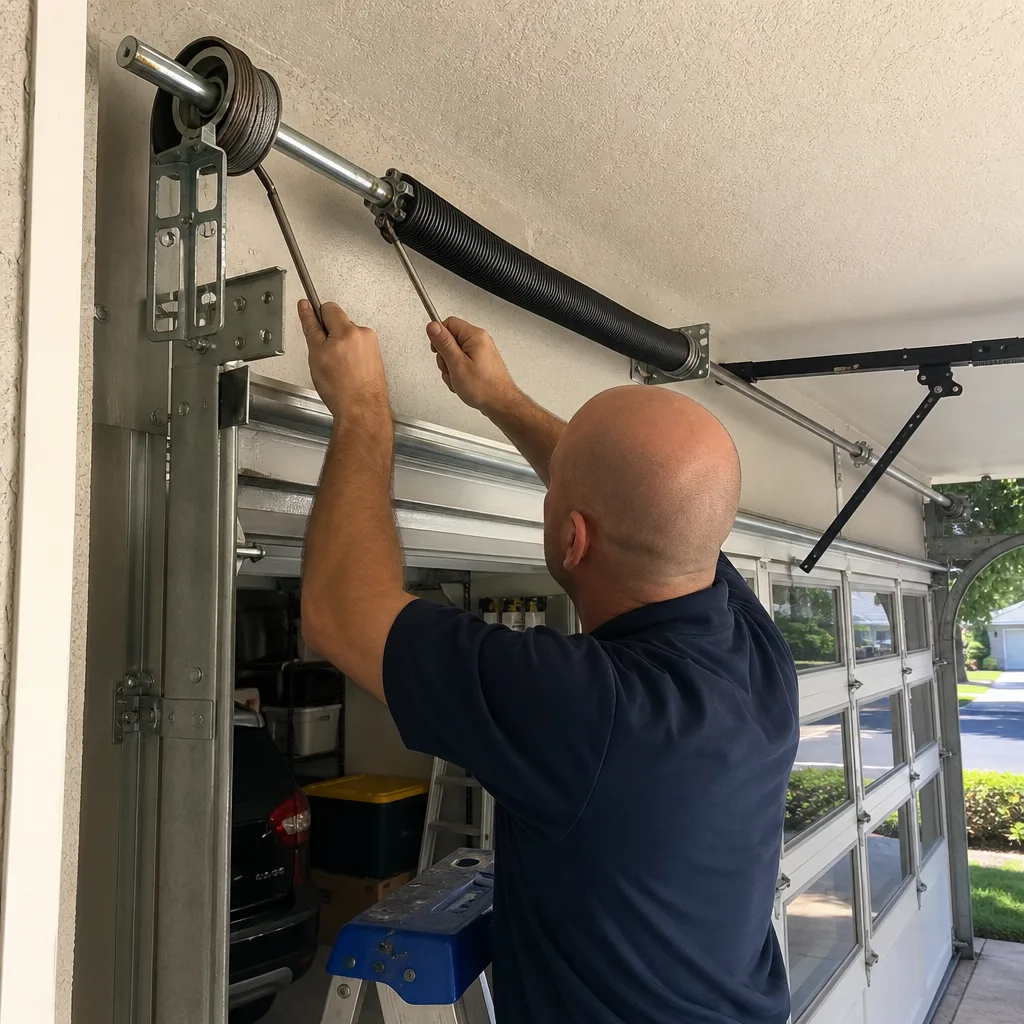 After
After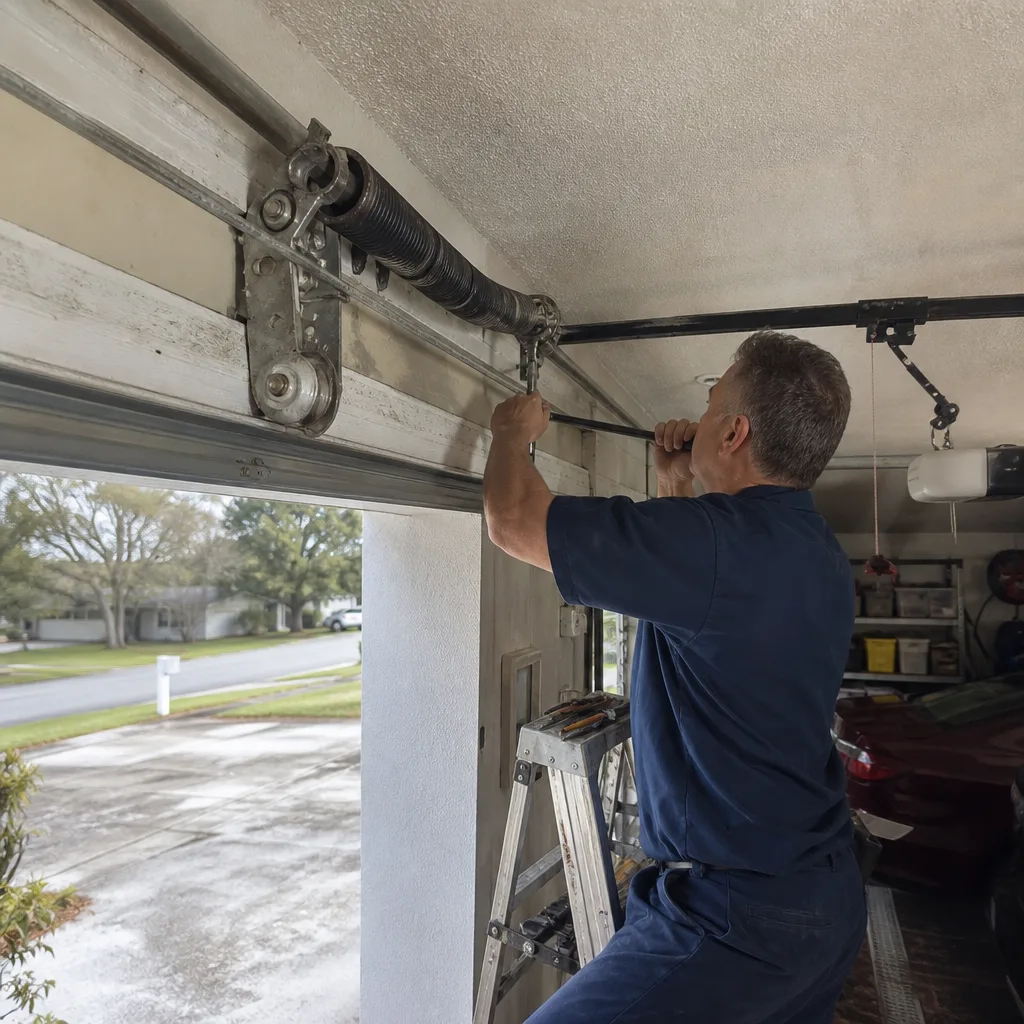 Before
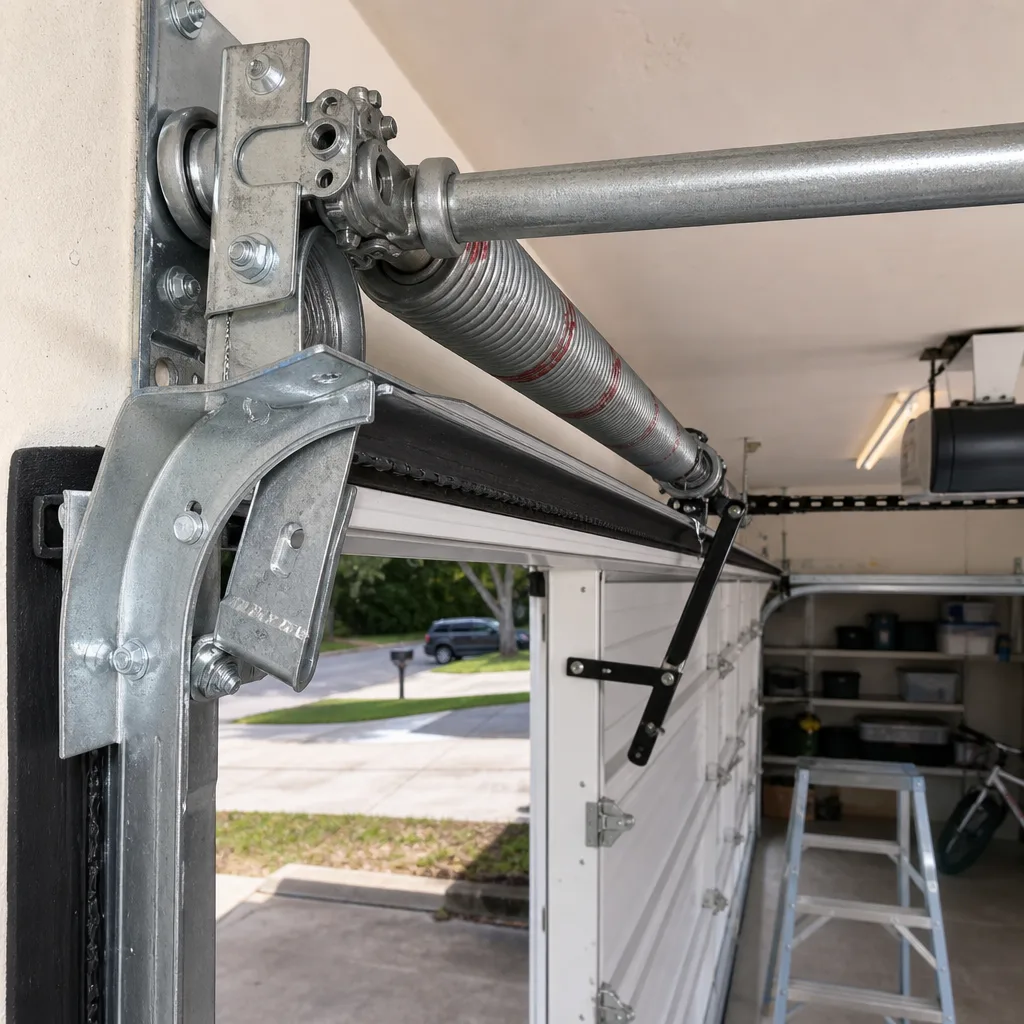 After
AfterGarage Door Permits, Codes & Inspections in FL: What You Need to Know
A garage door replacement that skips a required permit in Hillsborough County doesn’t just risk a fine. It creates an open permit lien that attaches to the property title. Title companies routinely flag these liens during closing, which means the seller ends up resolving the permit under emergency conditions, often paying double or triple the original fee to close the file. This guide maps the actual thresholds, the inspection sequence, and the financial consequences of getting the process wrong in Tampa, and our more guides & resources cover related topics in depth.
Quick Answer
Most garage door replacements in Tampa require a permit when you change the door’s structure, framing, or wind-load rating, even if the door size stays identical. Florida Building Code defines “like-for-like replacement” narrowly: same size, same weight, same wind-load rating, same opening, no structural modification.
Table of Contents
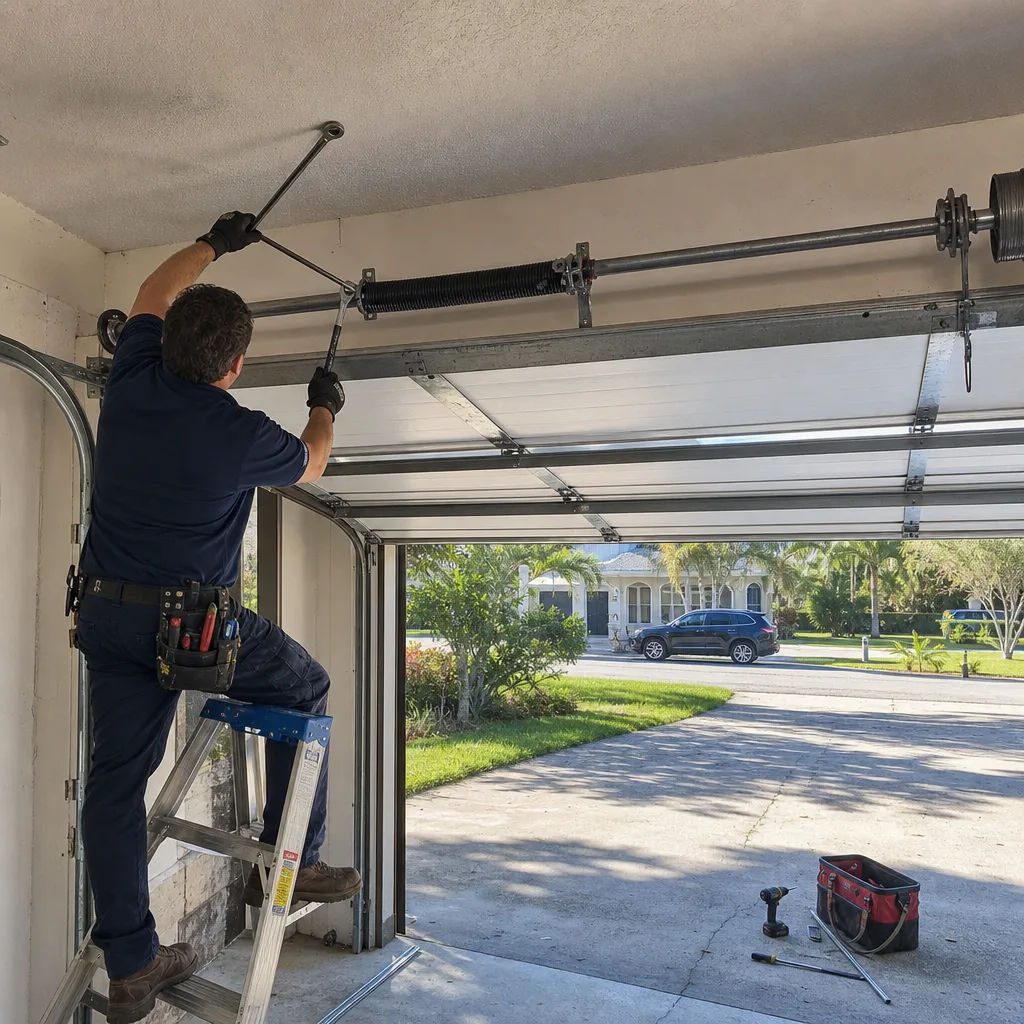
- The Florida Permit Framework: What Actually Triggers a Permit
- Tampa’s Three Jurisdictions: Hillsborough County, City of Tampa, Temple Terrace
- What a Wind-Load Inspection Actually Involves
- How to Search for Open Permits Before Buying a Home in Tampa
- The Contractor of Record Obligation: Why You Can’t Close Someone Else’s Permit
- Permit Costs and Timelines in Tampa as of 2025
- Common Mistakes to Avoid
- When to Call a Professional
- Frequently Asked Questions
- The Bottom Line
 Before
 After
AfterThe Florida Permit Framework: What Actually Triggers a Permit
Florida statute requires a building permit for any garage door installation that involves structural alteration, changes to the opening dimensions, or replacement of a door with a different wind-load rating. The Florida Building Code (FBC 2023) sets the threshold, and local jurisdictions enforce it. Here’s what most Tampa homeowners don’t realize: a “direct replacement” permit exemption only applies when the new door matches the old door on every structural specification.
Under FBC 2023, “like-for-like replacement” means all three of the following must be true:
- Same opening size: The rough opening dimensions must not change by more than a fraction of an inch.
- Same wind-load rating: The new door must carry the same or higher design pressure rating as the one being removed. If you don’t know the old door’s rating, you can’t claim exemption.
- No structural modification: No new framing, no changed header, no altered track mounting points.
The third condition voids more permit exemptions than any other. In our experience inspecting Tampa garage door replacements-a process detailed in our Garage Door Repair Maintenance Checklist for Tampa Homeowners-we regularly find that a homeowner bought a door with different track geometry, which required relocating the mounting brackets. That relocation counts as structural modification, which means the permit was required regardless of the door size remaining unchanged.
Florida’s wind-load requirements matter here because Tampa sits in a high-velocity hurricane zone. A garage door is the largest single opening in most homes, and when it fails during a storm, the pressure differential can lift the roof. The code requires that any replacement door meet the design pressure rating for the specific wind zone of the property address, not just whatever the big-box store had in stock.
If you’re considering a full replacement rather than a repair, start with our Garage Door Installation in Tampa guide for an overview of what a compliant installation includes.
Tampa’s Three Jurisdictions: Hillsborough County, City of Tampa, Temple Terrace
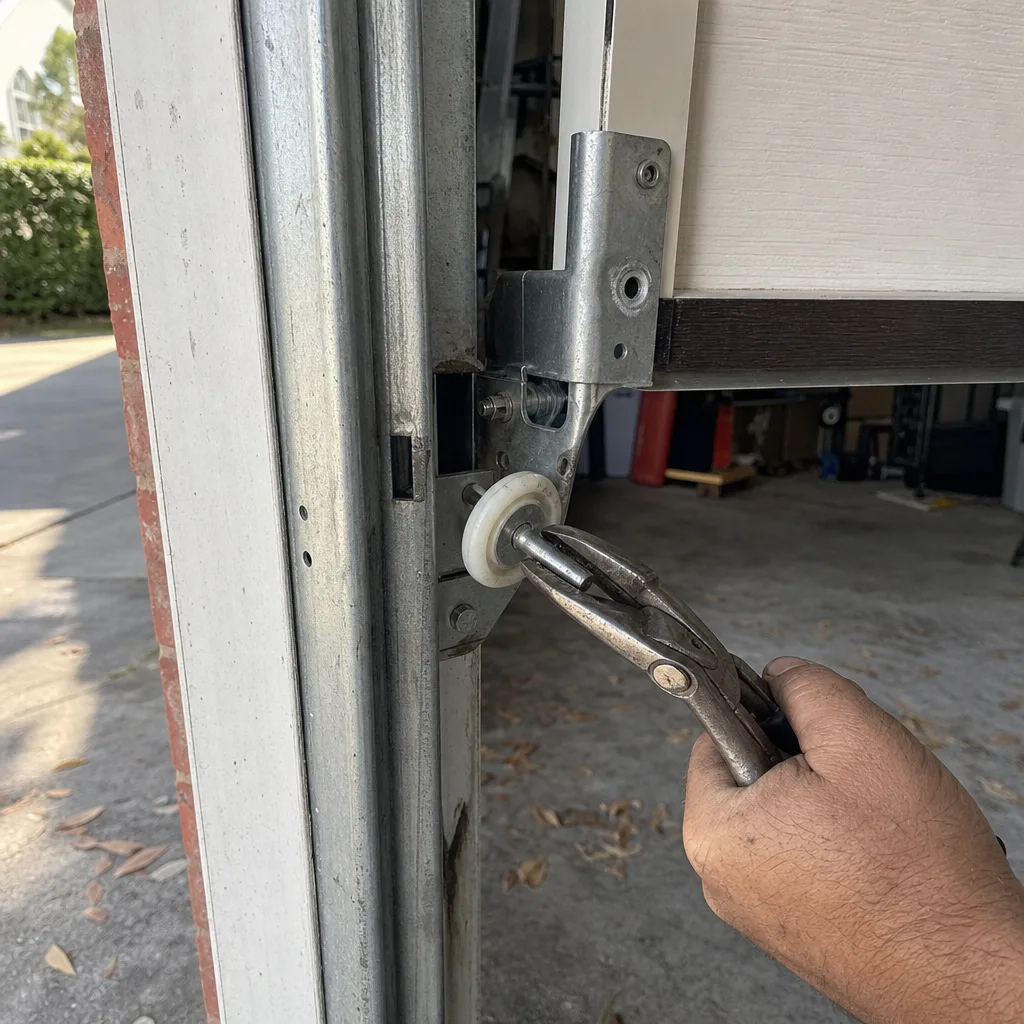
The Tampa metro area splits garage door permitting across three different authorities, and the rules are not identical. A homeowner in Carrollwood answers to Hillsborough County. A homeowner in Hyde Park answers to the City of Tampa. A homeowner in Temple Terrace answers to its own building department. Each jurisdiction sets its own fee schedule and processing timeline.
Hillsborough County
Hillsborough County requires a permit for garage door replacement when the work changes the door size, the wind-load rating, or the structural opening. The county’s residential overhead door permit for a standard single-family home typically runs between $95 and $180 depending on the valuation of the work, plus any surcharges. As of 2025, the county’s online permitting portal processes residential door permits in roughly 7 to 10 business days for straightforward applications. Walk-in filings in downtown Tampa at the county development services office can be reviewed same-day if the paperwork is complete.
City of Tampa
The City of Tampa operates its own building department and applies a slightly different standard. The city requires a permit for any garage door replacement where the door’s wind-load classification changes, even if the physical size is identical. City permit fees for a residential garage door replacement generally fall between $110 and $220, and the city’s construction services division often reviews residential door permits in 5 to 8 business days. The city also enforces a stricter documentation standard: the permit application must include the manufacturer’s product approval number, also called a Florida Product Approval, for the specific door model being installed.
Temple Terrace
Temple Terrace has its own building department with its own threshold. The city requires permits for garage door replacement under the same FBC 2023 standard, but its fee schedule sits at the lower end, typically $85 to $150 for a residential overhead door. Temple Terrace also tends to process permits faster than the county, often within 3 to 5 business days, because the volume is lower. However, Temple Terrace requires a final inspection before the permit closes, and the inspection scheduling desk has limited same-week slots during hurricane season.
The practical takeaway: before you buy a door, call the building department that actually governs your address. Don’t assume your contractor checked. Ask to see the permit application number before any work begins, because the permit is the document that proves the work was reviewed and approved.
What a Wind-Load Inspection Actually Involves
A wind-load inspection for a garage door in Tampa is not the same thing as a visual glance at the door from the driveway. The inspector checks a specific set of documents and physical installations against the approved permit. Here’s the sequence a typical Hillsborough County or City of Tampa wind-load inspection follows:
- Document review: The inspector first confirms the permit is active and matches the address. They then check the Florida Product Approval number for the installed door against the manufacturer’s approved drawings. If the approval number doesn’t match the door model, the inspection fails on the spot.
- Track and bracket examination: The inspector verifies that the vertical and horizontal tracks are installed at the manufacturer-specified gauge and that all mounting brackets match the approved attachment method. Brackets attached with the wrong fastener type are a common failure point.
- Wind-load rating verification: The inspector checks the door’s design pressure rating label, which is typically affixed to the door’s interior face near the bottom panel. The rating must meet or exceed the requirement for the property’s wind zone.
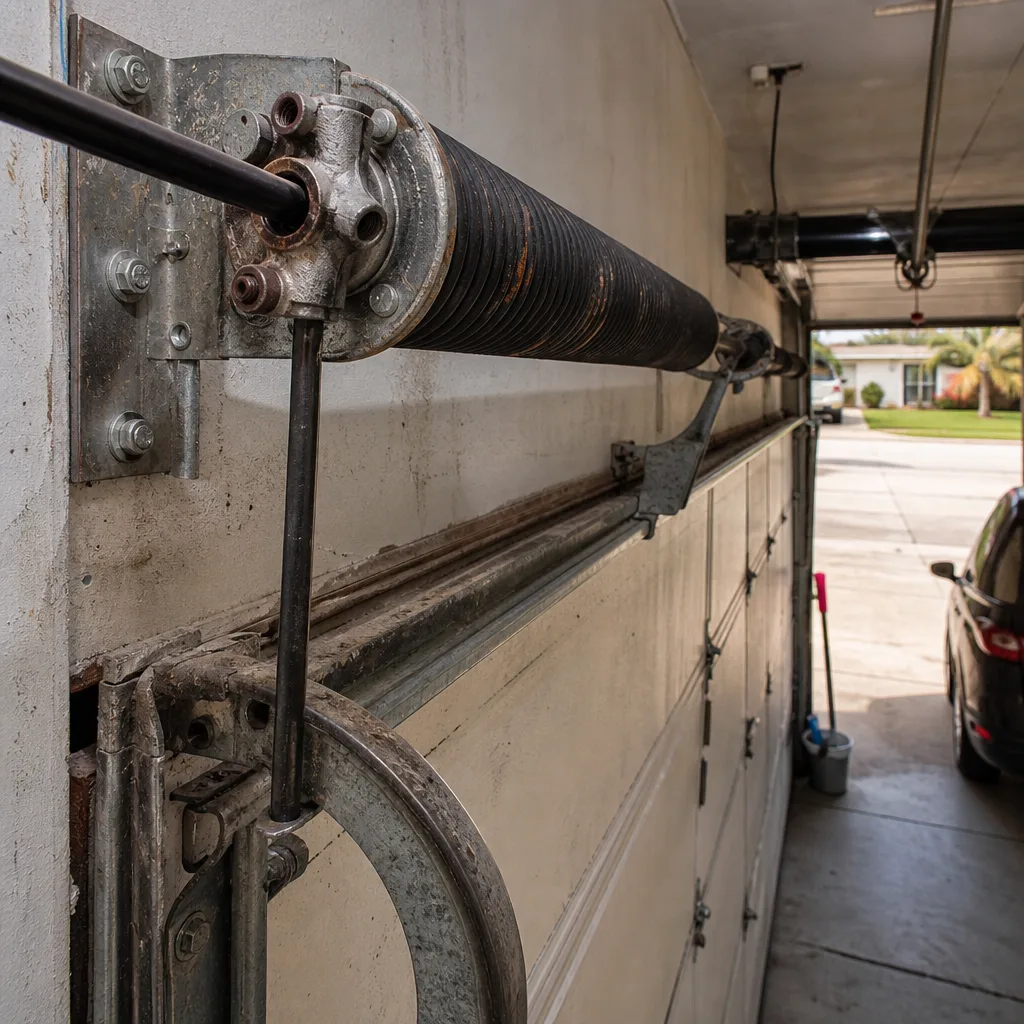
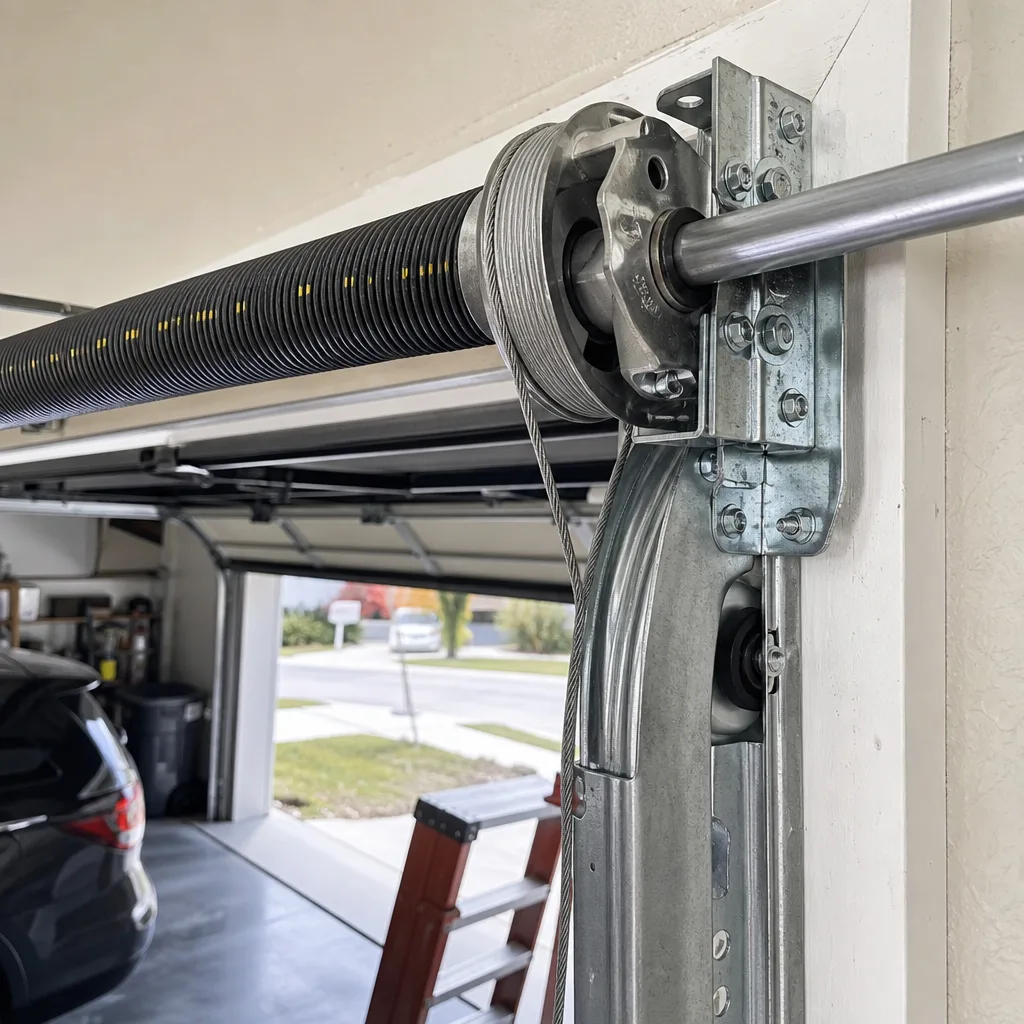
- Component compatibility: The inspector confirms that the springs, cables, and hinges are rated for the door’s weight and wind-load class. Mixing components from different manufacturers voids the product approval in some cases.
- Final latching and sealing: The inspector checks that the door latches fully and that any storm bracing or reinforcement struts specified by the product approval are installed. Missing struts are a failed inspection.
A failed inspection requires a correction notice to be filed, the specific items fixed, and a re-inspection scheduled. Re-inspection fees in Tampa range from $50 to $90 depending on the jurisdiction. In our experience, the most common wind-load inspection failure we see on Tampa homes-one of several Garage Door Warning Signs: A Tampa Homeowner’s Reference Guide-is a door installed with the right panel rating but the wrong track gauge, because the installer had the old track left over and used it to save time. The second most common is a missing Florida Product Approval label, which means the inspector has no way to verify the rating at all.
If your current door needs repair before you can even think about replacement and inspection, our Garage Door Repair in Tampa page explains what a code-compliant repair actually includes.
How to Search for Open Permits Before Buying a Home in Tampa
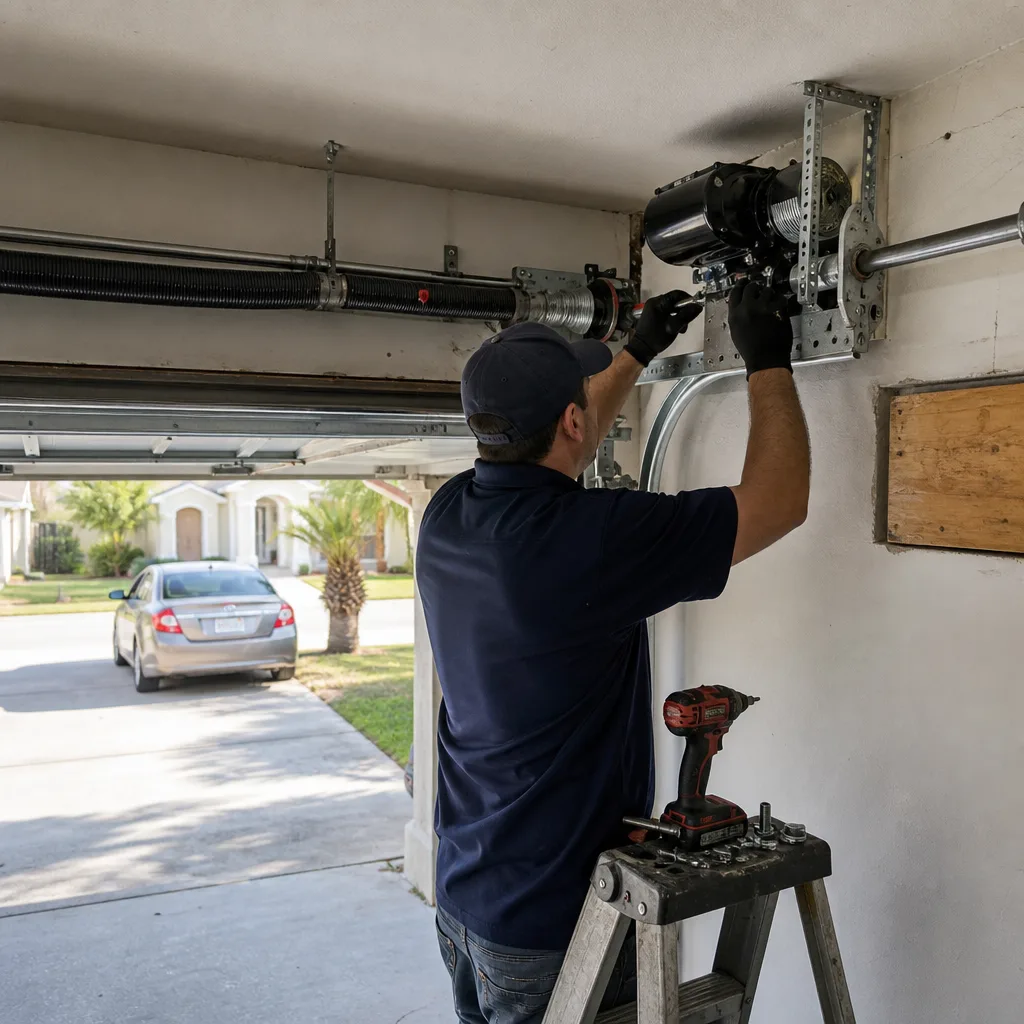
The open permit problem in Tampa is more common than most buyers realize. A previous owner replaced the garage door, the contractor pulled a permit, the work was finalized, but the permit was never closed because a final inspection never happened or the contractor walked away. That permit sits open on the property records, and when you try to sell the house, the title company finds it.
Hillsborough County maintains a public online portal where you can search for permits by address. The search is free, and it shows both active permits and permits that were never closed. The City of Tampa has a similar portal. Here’s the step-by-step process for checking a property before you close:
- Find the parcel number: Search the Hillsborough County Property Appraiser’s website by the property address. The parcel number, also called the folio number, is the key that works across both the appraiser’s records and the building department’s permit database.
- Run the permit search: Enter the folio number into the Hillsborough County building permit search portal. The result shows every permit ever issued for the property, with its current status.
- Filter for garage door permits: Look for permits with a description containing “overhead door,” “garage door,” or “residential door.” Check each one’s status. “Issued” means the permit was taken out but never finalized. “Finaled” or “Closed” means the inspection passed and the permit is complete.
- Check the City of Tampa separately if applicable: If the property falls within Tampa city limits, the city’s permit database is a separate system. The county search will not show city-issued permits.
- Ask for the documentation: If you find an open permit, ask the seller to resolve it before closing or adjust the sale price to cover the cost. Open permits are resolvable, but they take time and fees to close.
The critical insight for buyers: you inherit the property’s open permit record. The open permit doesn’t just disappear because the house changed hands. It attaches to the title and becomes your problem the day you sign.
The Contractor of Record Obligation: Why You Can’t Close Someone Else’s Permit
Here’s the scenario we hear about from Tampa homeowners at least once a month: a contractor pulled a permit, did the garage door work, never scheduled the final inspection, and then went out of business. The homeowner assumes they can simply call the building department and close the permit themselves. They can’t.
Florida law ties a permit to the contractor of record, meaning the licensed contractor who pulled it. That contractor is the only party who can schedule the final inspection and close the permit. If the contractor’s license has lapsed or the company has dissolved, the homeowner is left with an open permit that cannot be closed through the normal process.
The resolution path in Hillsborough County and the City of Tampa looks like this:
- Contact the building department: Explain that the contractor of record is no longer in business. The department will require documentation, typically a letter stating the business is dissolved or a license lookup showing the contractor’s license is inactive.
- Hire a new licensed contractor: The new contractor must be registered with the jurisdiction and licensed for garage door work. They will need to inspect the existing installation to determine whether it meets code.
- File a permit transfer or a new permit: In some cases, the jurisdiction will transfer the open permit to the new contractor. In others, the new contractor must pull a new permit for a code-compliance review of the existing installation.
- Schedule the final inspection: The new contractor schedules the inspection, and if the door passes, the permit closes. If the door fails, the homeowner pays for the corrective work.
This process typically takes 2 to 4 weeks and costs between $300 and $600 in fees and contractor time, depending on what the inspection finds. The lesson: only work with a contractor who has an active license and a track record of closing permits, as outlined in our How to Hire a Garage Door Contractor in Tampa: A Step-by-Step Guide. Ask before the work starts: “Who is the contractor of record on the permit, and is it your license number?”
Permit Costs and Timelines in Tampa as of 2025
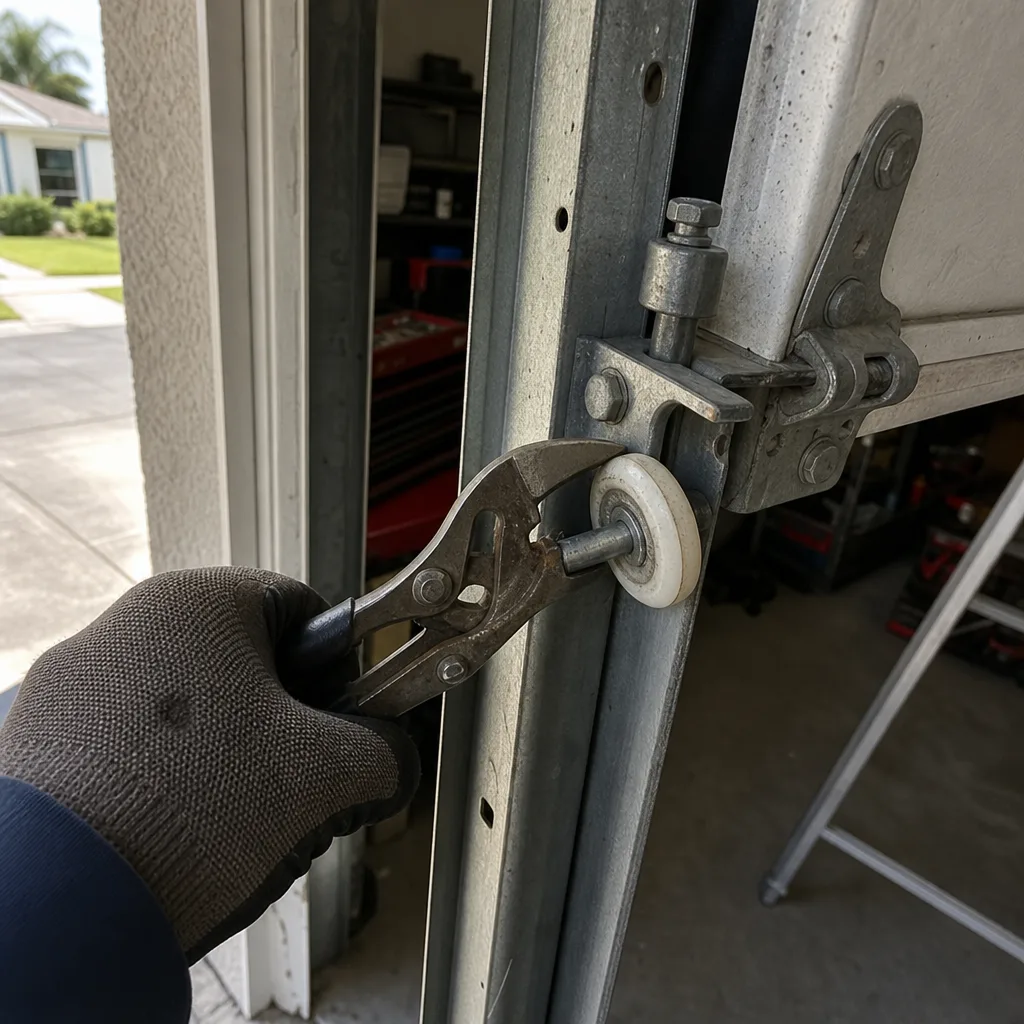
Here’s the structured breakdown of permit costs and processing times for residential garage door replacement across Tampa’s three permitting jurisdictions, based on current fee schedules:
- Hillsborough County: $95 to $180 permit fee, 7 to 10 business days online processing, same-day possible for walk-in with complete paperwork.
- City of Tampa: $110 to $220 permit fee, 5 to 8 business days online processing, Florida Product Approval number required on the application.
- Temple Terrace: $85 to $150 permit fee, 3 to 5 business days processing, limited inspection slots during hurricane season.
- Re-inspection fee: $50 to $90 across all three jurisdictions if the first inspection fails.
- Late permit penalty: Double the permit fee in Hillsborough County when work is discovered without a permit, plus the original fee to bring it into compliance.
These numbers are for the permit itself. They don’t include the cost of the door, the installation labor, or the wind-load inspection if your jurisdiction requires a separate structural review. A homeowner who thinks they’re saving $150 by skipping the permit is betting against a title company, a building inspector, and a hurricane season, and the house always loses that bet in Tampa eventually.
The most expensive garage door permit in Tampa is the one you didn’t pull. When it catches up with you at closing, the fee is doubled, the resolution is urgent, and the seller has no negotiating leverage. We’ve watched this play out enough times to say it plainly: pull the permit the first day, every time.
If the permit process applies to your opener rather than the door itself, our Garage Door Opener Repair & Installation in Tampa page covers the electrical and structural code considerations for opener work.
Common Mistakes to Avoid
- Assuming “same size” means “no permit.” The FBC 2023 definition of like-for-like includes wind-load rating and structural modification. A door that’s the same size but carries a different design pressure rating triggers the permit requirement in all three Tampa jurisdictions.
- Letting the contractor “handle the permit” without verification. Ask for the permit number before work begins. If the contractor can’t produce it the day the work starts, the permit was never pulled. You’re doing unpermitted work on your own house.
- Buying a door without a Florida Product Approval. In the City of Tampa, the permit application requires the product approval number. A door without a Florida Product Approval can’t be permitted, regardless of its quality or brand.
- Using a big-box store installer without checking license status. Many national retailers subcontract installation to local companies. The company that shows up needs its own license, and that license needs to be the one on the permit. Verify before you sign.
- Forgetting that open permits survive a sale. Open permits run with the property, not the owner. A permit left open in 2019 becomes the seller’s closing problem in 2025, and it never gets cheaper to resolve.
- Skipping the wind-load inspection after installation. The permit isn’t closed until the final inspection passes. An open permit with a completed installation is still an open permit on the title.
- Trying to DIY a garage door replacement in a wind zone. Installing a garage door with torsion springs carries genuine risk of serious injury, and a door installed without wind-load compliance can fail catastrophically during a storm. This is not a weekend project.
When to Call a Professional
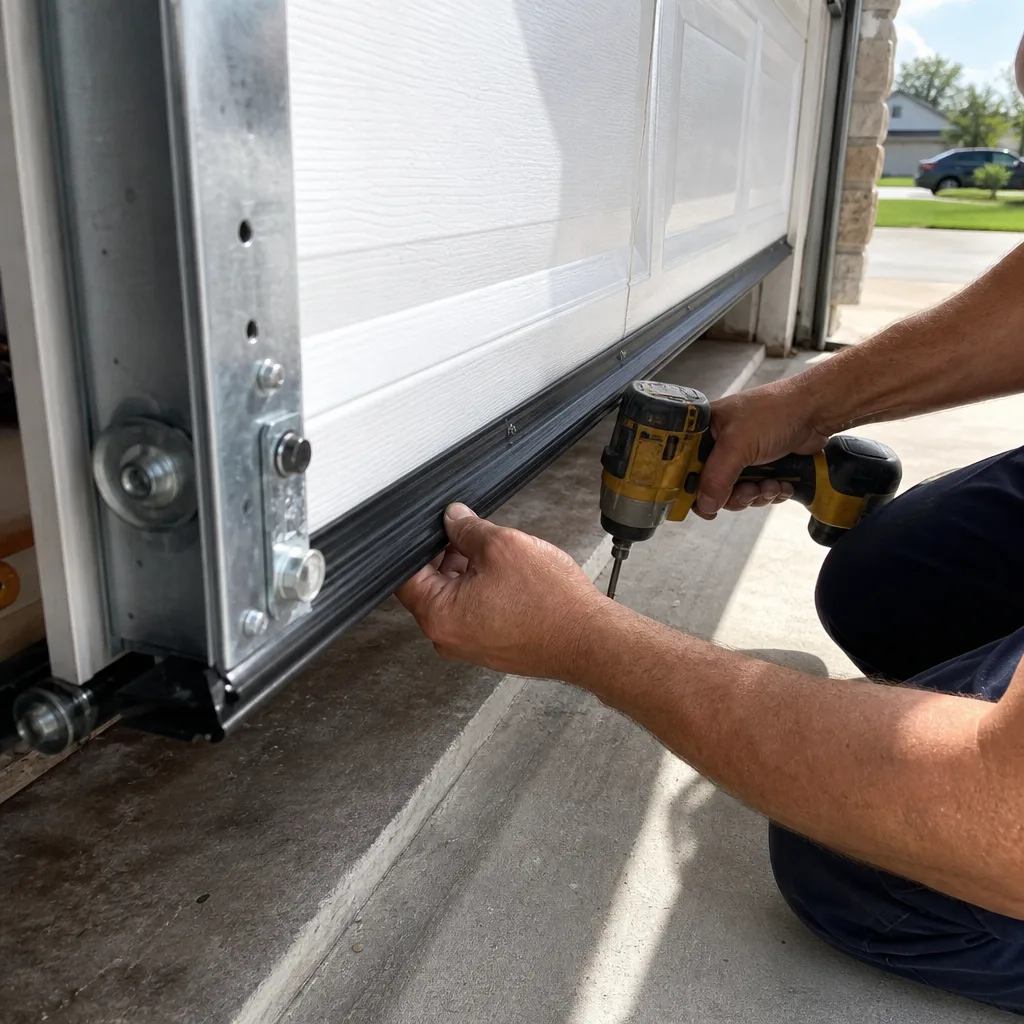
Call a licensed contractor when your garage door replacement triggers a permit in any Tampa jurisdiction, which covers nearly every replacement that isn’t a true like-for-like swap confirmed in writing. Call when you’re buying a home and the title search shows an open garage door permit. Call when your door fails a wind-load inspection and you need corrective work before re-inspection. And call when you’re not sure whether your situation requires a permit at all, because a 15-minute phone call beats a doubled fee and a delayed closing. Servo Garage Doors Tampa home offers free estimates in Tampa, and our written price includes the permit scope spelled out in the contract. Call (656) 223-3036.
Frequently Asked Questions
You need a permit in Tampa any time the replacement changes the door’s size, wind-load rating, or structural opening, even if the door looks identical. A true like-for-like replacement with the same size, rating, and mounting points may be exempt, but verifying that exemption requires documentation from the manufacturer and the original installation. Call (656) 223-3036 and we’ll check your specific address against the right jurisdiction.
A residential garage door permit in Hillsborough County typically costs between $95 and $180, depending on the valuation of the work, with re-inspection fees of $50 to $90 if the first inspection fails. The fee is a fraction of the penalty for unpermitted work, which doubles the permit cost and adds compliance expenses. Call (656) 223-3036 for a written quote that includes the full permit scope.
A new contractor can only close another contractor’s open permit after the building department transfers the permit, which requires documentation that the original contractor is out of business or has an inactive license. The process takes 2 to 4 weeks and requires a code-compliance inspection of the existing work. We handle permit transfers for Tampa homeowners resolving inherited open permits.
Skipping a garage door permit in Tampa creates an open permit situation that title companies flag during sale, forcing the seller to resolve it under time pressure with doubled fees and retroactive compliance costs. The permit requirement doesn’t expire, and the problem worsens the longer it sits. Call (656) 223-3036 to bring an unpermitted installation into compliance before it becomes a closing issue.
Garage door permits in Tampa take 3 to 10 business days depending on the jurisdiction: Temple Terrace processes in 3 to 5 days, the City of Tampa in 5 to 8 days, and Hillsborough County in 7 to 10 days for online filings. Walk-in applications at the county office can be reviewed same-day with complete paperwork. Call (656) 223-3036 and we’ll manage the permit filing as part of the installation.
A garage door opener replacement that uses existing electrical wiring and doesn’t add new circuits typically does not require a permit in Tampa, but openers with new electrical runs or added circuits fall under the electrical permit requirement. We confirm the applicable scope for your specific job before any work begins. Call (656) 223-3036 for a written answer on your opener.
The Bottom Line
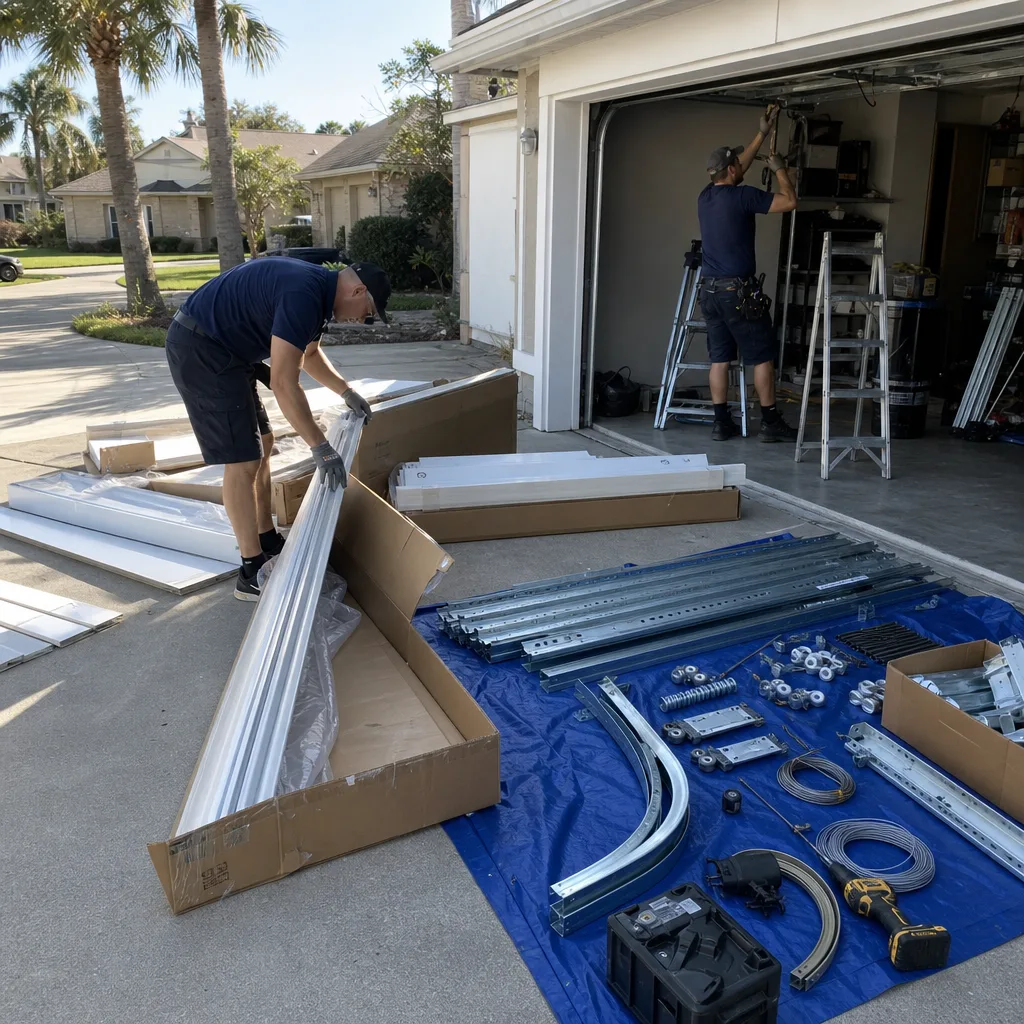
Florida’s garage door permit rules are not complicated once you know the thresholds, but the consequences of guessing wrong are expensive and they attach to your property title, not just your wallet. In Tampa, the rules split across three jurisdictions, the wind-load documentation decides whether your permit gets approved, and the contractor of record decides whether it ever closes. Every garage door we install at Servo Garage Doors Tampa home carries a written permit scope in the contract, a Florida Product Approval verification, and a final inspection confirmation before we consider the job done. That’s how the paperwork protects you, and it’s how a door that looks good on day one still looks good on inspection day and closing day. Call (656) 223-3036 for a free estimate with the full permit picture in writing.
Written by Marcus Deller, Owner at Servo Garage Doors Tampa, serving Tampa since 2015.