
Last updated September 20, 2026
Full 25-point door and opener safety check with every visit - springs, cables, rollers, tracks, and your LiftMaster or Chamberlain opener included
You get a price before we start. It does not change when the truck arrives.
 Before
 After
After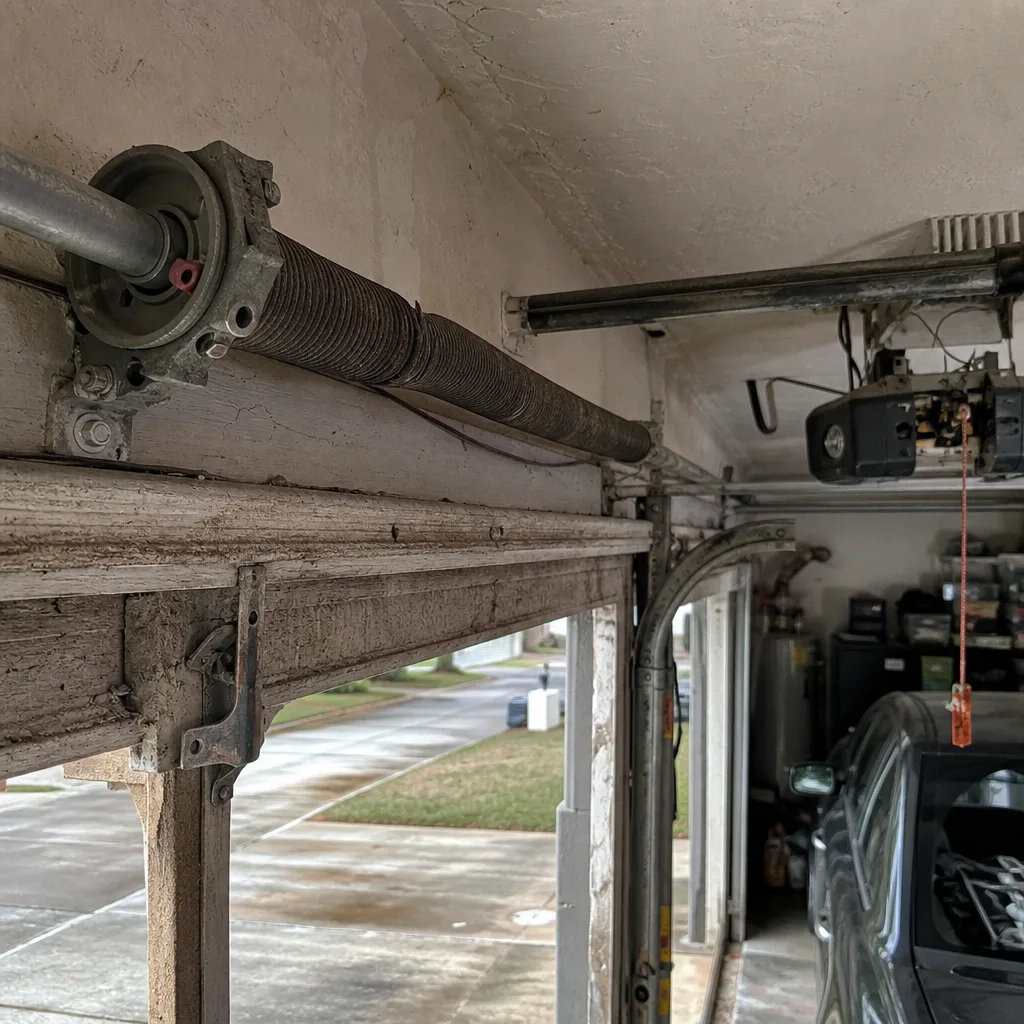 Before
 After
After Before
 After
AfterGarage Door Warning Signs: A Tampa Homeowner’s Reference Guide
Most garage door failures don’t start with a bang. They start with a noise you dismiss, a hesitation you ignore, a slight lean you don’t notice until the door is already off its track. What makes this worse is how warning-sign content usually gets written: a list of symptoms with no map to the component causing them and no sense of how much time you actually have. That’s a disservice, because a grinding noise and a popping noise are two entirely different repairs with two very different price tags, and only one of them means you should stop using the door tonight. This reference guide from Servo Garage Doors Tampa home connects each observable symptom to the named part behind it, the failure mechanism at work, and a two-category urgency rating: schedule within 30 days, or do not operate the door. If you live in Tampa and own a garage door, this is the map you’ve been missing.
Quick Answer
The warning signs that matter most in Tampa are noise changes (grinding vs. popping vs. squealing, each pointing to a different part), visible rust on springs or cables, a door that leans or hangs unevenly, an opener that reverses without touching the floor, and any door that shakes or shudders while moving. If you hear a noise, see spring rust, or notice imbalance, document it with a photo and call a professional, or read our How to Hire a Garage Door Contractor in Tampa: A Step-by-Step Guide first. If the door won’t stay up or a cable shows fraying, stop operating it immediately and call (656) 223-3036. Written, upfront pricing is available on every job, including emergencies.
Table of Contents
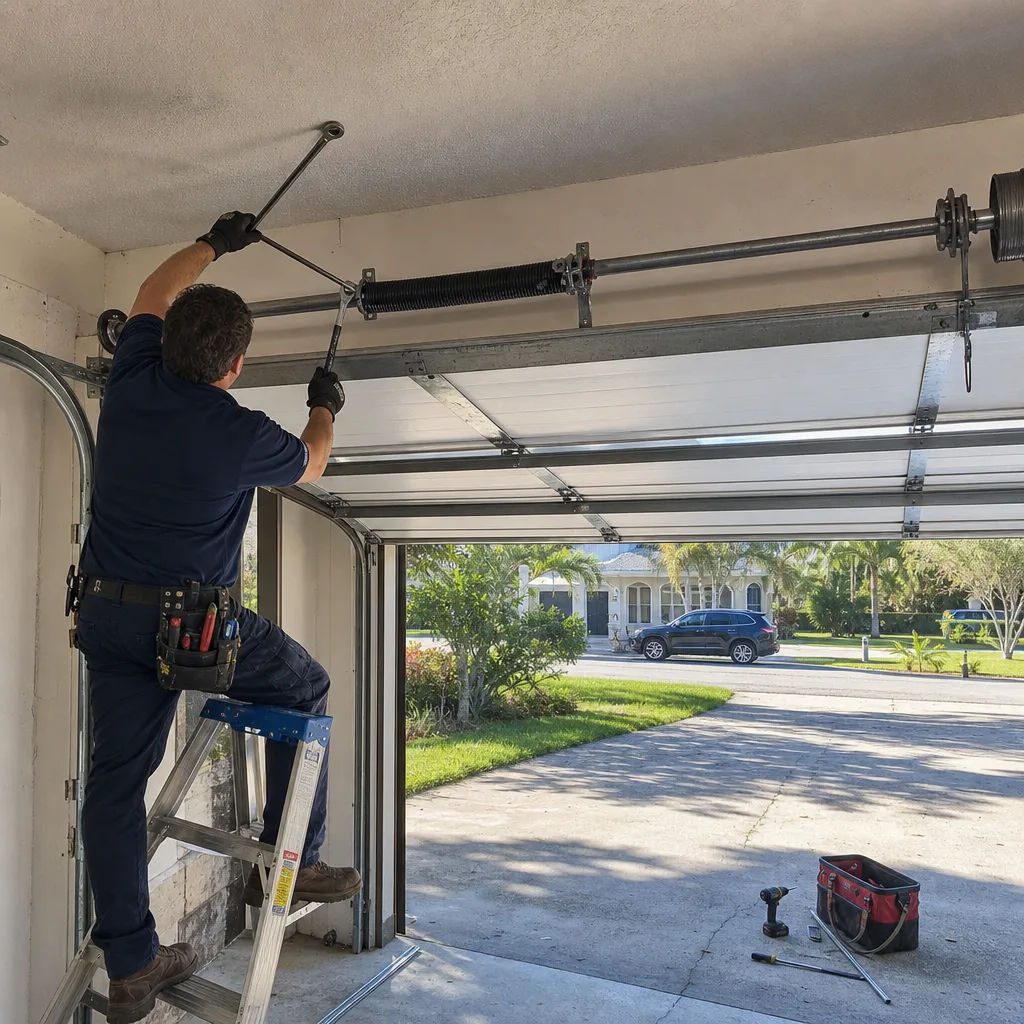
- Sound-to-Component Mapping: What Your Door Is Actually Telling You
- Tampa-Specific Rust: When Surface Oxidation Becomes a Fracture Risk
- The Two-Door Test: Detecting Cable Imbalance Before It Fails
- Opener Behavior: Motor Decline vs. Logic Board Failure vs. Mechanical Load
- Documenting Warning Signs Before the Technician Arrives
- Urgency Ratings: Schedule Within 30 Days vs. Do Not Operate
- Common Mistakes to Avoid
- When to Call a Professional
- Frequently Asked Questions
- The Bottom Line
 Before
 After
AfterSound-to-Component Mapping: What Your Door Is Actually Telling You
A garage door makes noise. It always has. What matters is whether the noise is new, whether it changes under load, and what specific mechanical event is generating it. Most homeowners treat all garage door noise the same, which is why an $80 roller replacement becomes a $450 opener repair: the wrong component gets blamed for the wrong reason. Here’s what we hear in Tampa garages every week, mapped to what it actually means.
Grinding noise: This is almost always a roller bearing failure. The steel bearing inside the nylon or steel roller has lost its lubrication, the bearing has started to disintegrate, and metal is now grinding against metal inside the roller itself. You’ll hear it most clearly when the door passes through the curved track sections, because that’s where the roller is under the highest lateral load. The fix is roller replacement, not opener replacement. In Tampa, the humidity accelerates bearing degradation, but the repair is the same anywhere: replace the rollers, typically $10 to $20 per roller installed, with higher-quality nylon rollers lasting 10 to 15 years in Florida’s climate.
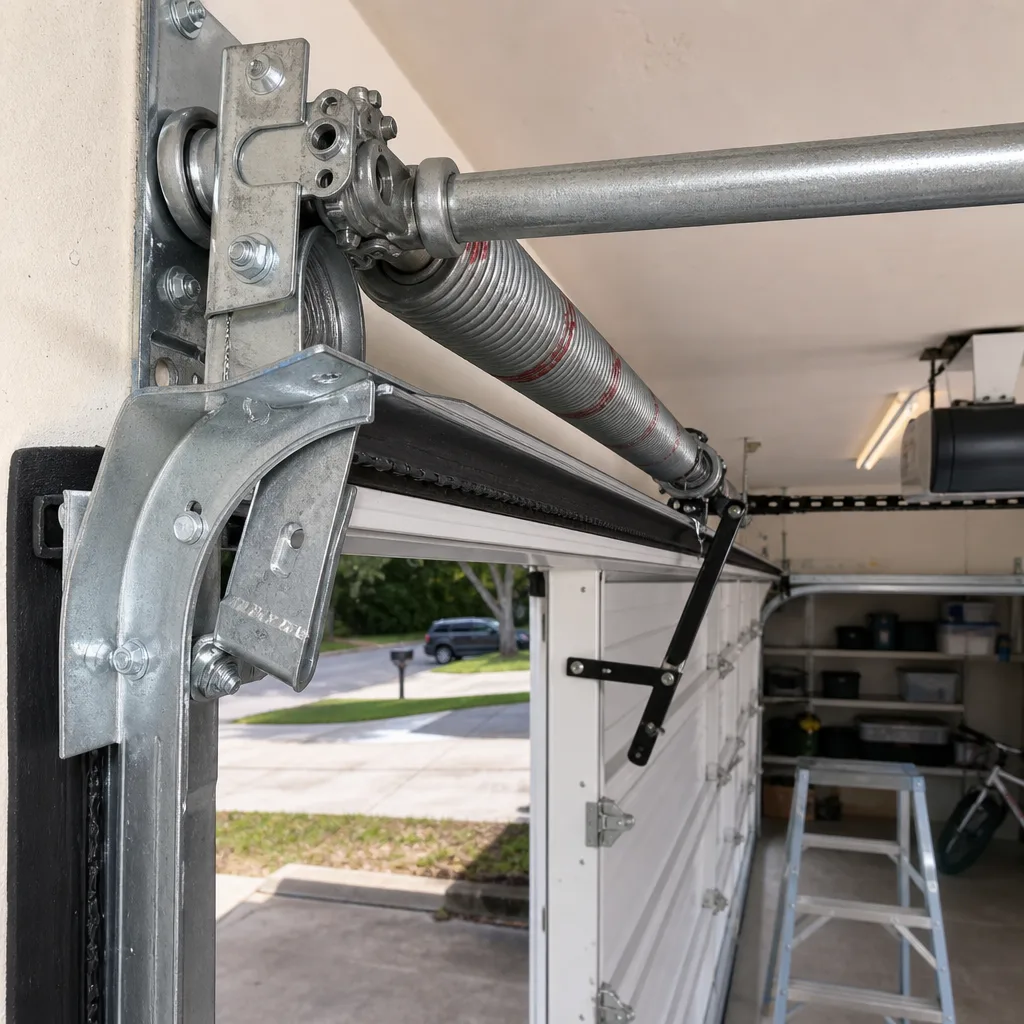
Popping noise: A popping sound is different. It comes from the torsion spring itself, and it’s the sound of coils binding, releasing, and re-seating as the spring winds and unwinds. Think of it as the spring catching on itself. This is not a lubrication problem. It’s a sign that the spring is reaching the end of its service life, or that the spring was wound slightly off-axis, or that the spring’s inner diameter is wearing against the torsion tube. A popping spring is a warning, and it deserves attention within days, not months. Replacement cost for a standard torsion spring in Tampa runs $180 to $320 installed, depending on the door’s weight and the spring’s cycle rating.
Squealing noise: Squealing usually comes from the lift cables rubbing against the cable drum, especially when the drum is slightly misaligned or the cable has developed a flat spot. It can also come from the torsion spring’s stationary cones if they’ve shifted. Squealing is a friction symptom, not a load symptom. That makes it lower urgency than popping, but it should still be inspected. If the cable is rubbing consistently, it’s wearing down its own diameter, which eventually turns a squeal into a snap.
Here’s the sound-to-component map in one list:
- Grinding: roller bearing failure. Repair: roller replacement. Cost: $80-$180 typical.
- Popping: torsion spring coil binding or end-of-life. Repair: spring replacement. Cost: $180-$320 typical.
- Squealing: cable-on-drum friction or cone shift. Repair: cable or drum adjustment. Cost: $80-$150 typical.
- Rattling: loose hinge, loose track bolt, or opener chain slack. Repair: hardware tightening. Cost: $60-$120 typical.
- Thumping: panel misalignment or a bent track section. Repair: panel or track realignment. Cost: $100-$250 typical.
When you call Garage Door Repair in Tampa about a noise, describe it as precisely as you can. Grinding is different from popping is different from squealing. The technician will still diagnose on site, but your description narrows the diagnosis before they arrive, which is why we document the sound in the written scope before any work begins.
Tampa-Specific Rust: When Surface Oxidation Becomes a Fracture Risk
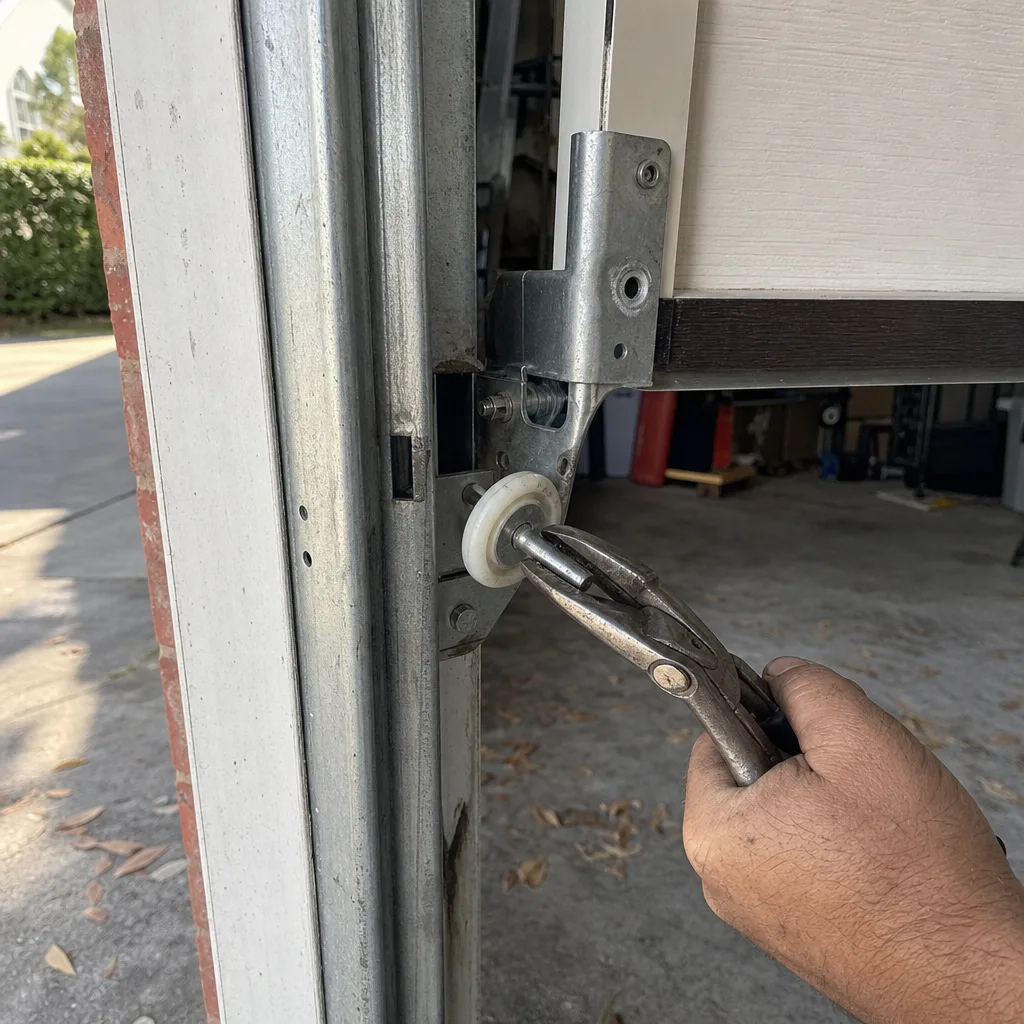
Tampa’s climate does something specific to garage door hardware: the combination of high humidity, salt air from Tampa Bay, and seasonal temperature swings creates a corrosion pattern that looks different from rust in drier climates. Most homeowners see rust on a torsion spring and either panic or dismiss it. Neither reaction is correct. What matters is whether the rust is on the surface or through the metal.
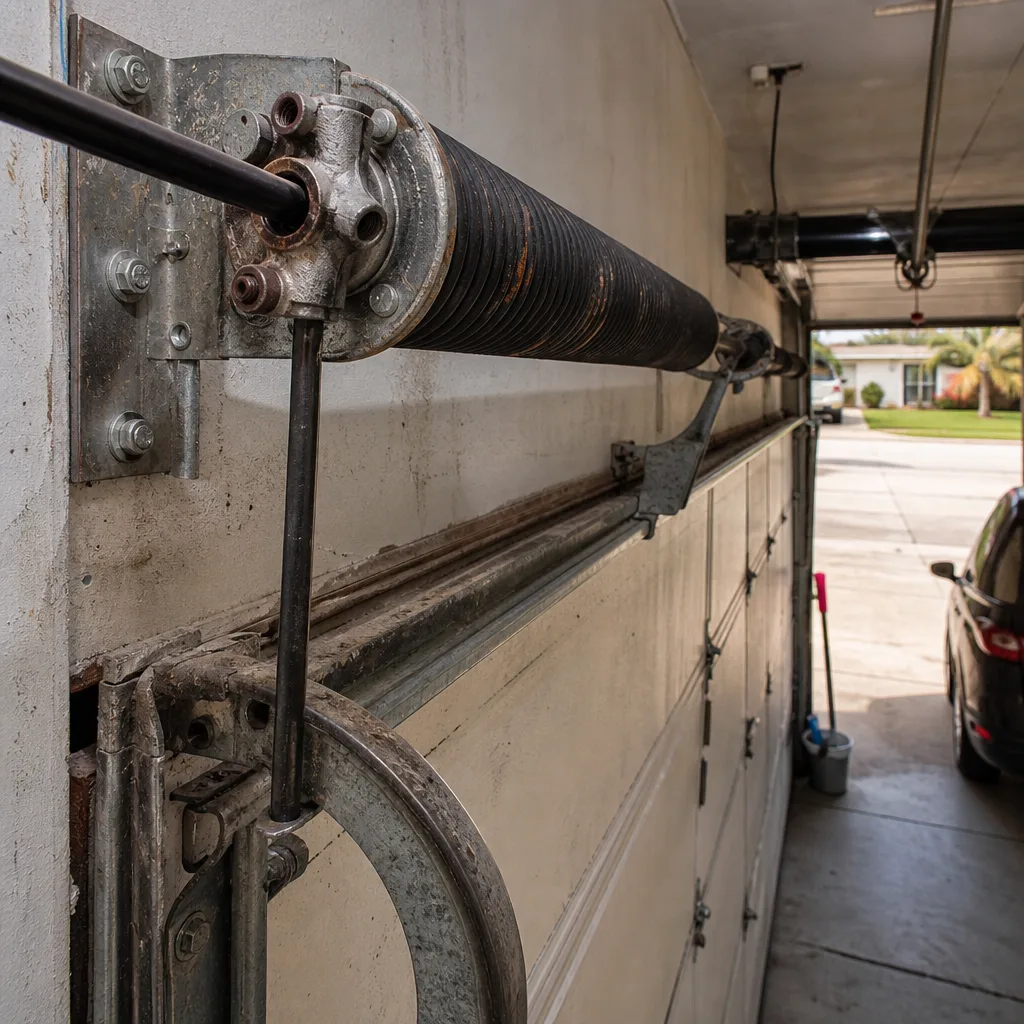
Surface rust on springs: Torsion springs are made of high-carbon oil-tempered steel, which rusts when exposed to moisture. A light coating of reddish-brown oxidation on the spring’s exterior is normal after several years in a Tampa garage. This is superficial. The spring retains its structural integrity. You can verify this by examining whether the rust is uniform or whether it shows flaking, pitting, or a rough, scaly texture. Uniform surface rust is a cosmetic concern. It doesn’t require spring replacement.
Through-rust on springs: Through-rust is what you need to catch. You’ll see it as dark brown or black pitting, visible flaking, or a rough orange-brown texture that looks like the metal is losing its diameter. Through-rust means the spring’s cross-section has been compromised. A spring under hundreds of pounds of torque with a weakened cross-section is not a warning sign. It’s a countdown. When that spring fails, it fails catastrophically, and it will do it while the door is in motion. This is a do-not-operate-the-door situation, not a schedule-within-30-days situation.
The same logic applies to lift cables. Surface rust on cables is common in Tampa garages near the water, but fraying is what matters. A cable is made of multiple strands wound together. When individual strands start to break, you’ll see them poking out from the cable’s body. That’s not a cosmetic problem. That’s a load-bearing cable that has lost its capacity and will eventually snap under spring tension.
One more Tampa-specific factor: the salt air in neighborhoods near the bay, including areas like Palma Ceia, Bayshore, and Davis Islands, accelerates corrosion on all garage door hardware. If you live within two miles of Tampa Bay, inspect your springs and cables at least twice a year, even if you haven’t noticed any noise. The spring that looks fine in June can show through-rust by December.
The Two-Door Test: Detecting Cable Imbalance Before It Fails
Cable failure is one of the most dangerous garage door failures because it happens without warning and it turns a 200-pound door into a falling object. The good news is that cable imbalance gives itself away before the cable snaps, if you know what to look for. The two-door test is a procedure any Tampa homeowner can perform safely, without touching spring hardware, without disconnecting anything, and without putting any body part near the spring system. It takes three minutes.
Step 1: Disconnect the opener and operate the door manually. Pull the red emergency release handle hanging from the opener rail. This disconnects the door from the opener carriage. The door is now being controlled by you, not by the motor. If the door is properly balanced, it should stay put when you release it at the halfway point. If the door starts to drift upward or downward on its own, that’s a spring tension issue, which is a separate concern from cable imbalance.
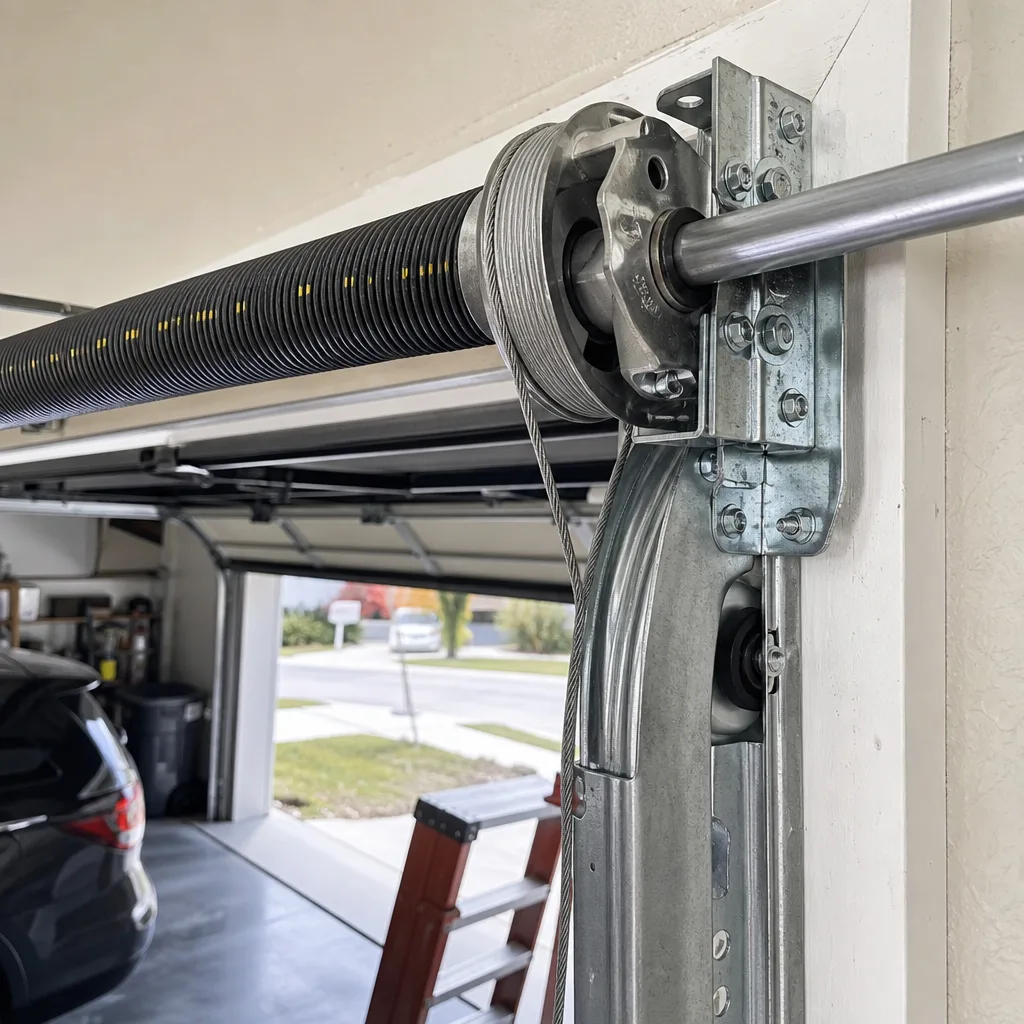
Step 2: Lower and raise the door slowly, watching both cables. The two lift cables are mounted on either side of the door, running from the bottom brackets up to the cable drums at the top of the torsion tube. Lower the door to the ground and then raise it slowly, keeping your eyes on both cables the entire time. You’re looking for any difference in how the cables wind and unwind. If both cables are moving in perfect synchronization, the door is balanced. If one cable is moving faster than the other, if one cable appears slack while the other is taut, or if one cable is not winding tight onto its drum, that’s cable imbalance.
Step 3: Check for fraying. With the door in the down position, run your fingers along each cable from bottom bracket to drum. You’re feeling for broken strands, flat spots, or any area that feels thinner than the rest of the cable. This is safe to do with the door down, because the cables are under minimal tension in this position. If you feel fraying or see individual strands poking out, do not operate the door and call a professional immediately.
Cable replacement in Tampa is typically $150 to $250 per cable, and it’s not a DIY job. The cables are under torsion spring tension, which is stored energy. Releasing that tension without the proper winding bars is how people lose fingers. The two-door test tells you whether you have a problem. It does not authorize you to fix it.
Opener Behavior: Motor Decline vs. Logic Board Failure vs. Mechanical Load
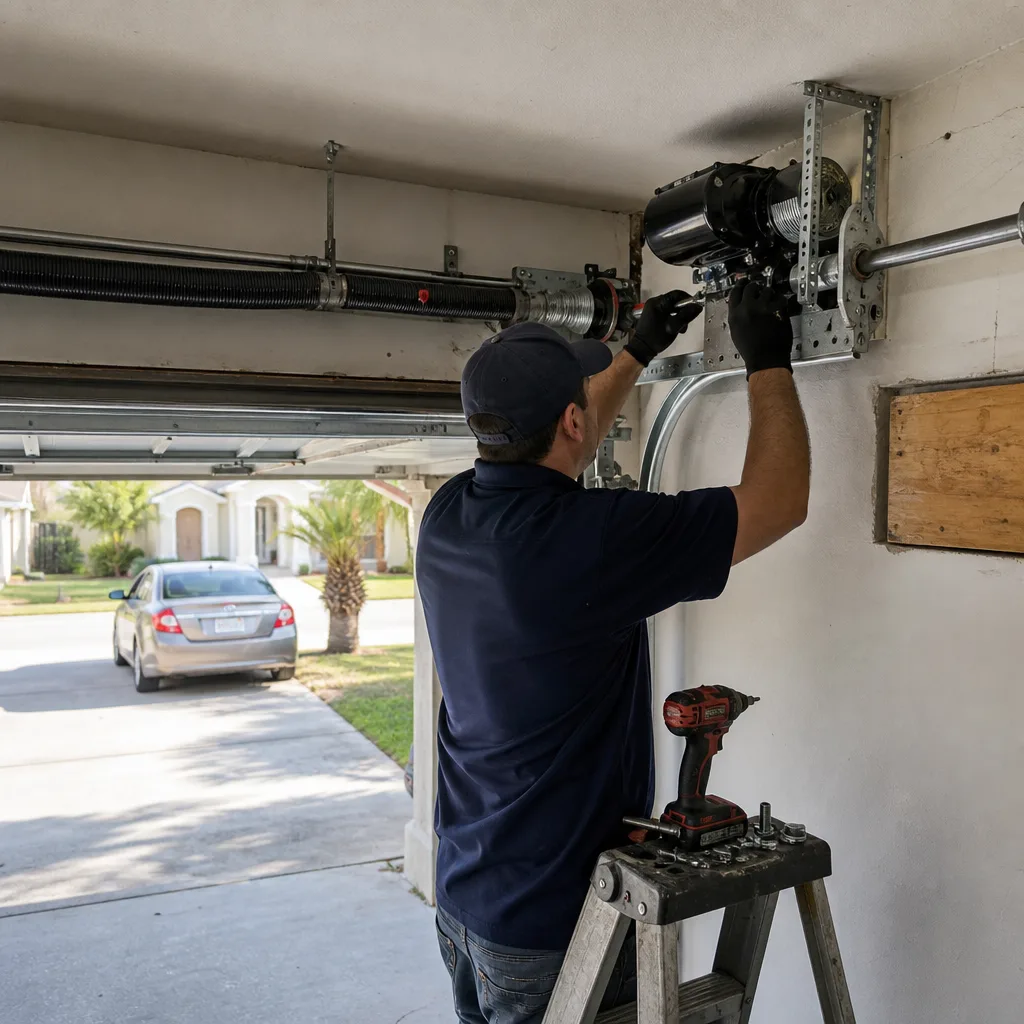
When a garage door opener acts up, most Tampa homeowners assume the whole unit needs to be replaced, as detailed in The Complete Guide to Garage Door in Tampa. That’s an expensive assumption. The opener has several distinct components, and they fail in different ways, at different costs, and with different symptoms. Knowing which one is failing tells you whether you’re looking at an $80 repair or a $450 replacement.
Motor decline: The motor is the part that physically moves the door. As a motor ages - most last 10 to 15 years in Tampa, though heat and humidity in unconditioned garages can shorten that - it loses power. The symptom is a door that moves slower than it used to, especially in hot weather, or a door that struggles to lift its full weight and runs noticeably slower on the way up than on the way down. Motor decline is progressive. It doesn’t fail suddenly. If your opener is 10 years or older and has been getting slower for months, the motor is reaching its end. Motor replacement is typically not cost-effective compared to opener replacement, which in Tampa runs $250 to $450 installed for a quality chain or belt-drive unit from LiftMaster or Chamberlain.
Logic board failure: The logic board is the circuit board that controls everything: open, close, safety sensor input, remote signal processing, light activation. When the logic board fails, the symptoms are erratic, not gradual. The opener might not respond to remotes one day and work fine the next. The wall button might work while the remotes don’t. Lights might flicker, or the opener might open but refuse to close. Logic board failure is intermittent and unpredictable. The repair cost for a logic board is typically $120 to $200 installed, depending on the opener brand and model. Genie and LiftMaster boards are generally available, but older boards may need to be ordered, which adds time but not much cost.
Mechanical load problem: This is the most commonly misdiagnosed opener issue. The opener is not failing. The opener is working harder because the door itself has a mechanical problem: a spring losing tension, a roller binding, a track that’s drifted out of alignment. The opener’s motor draws more current to compensate, and eventually the opener’s thermal overload trips, or the down-force limit keeps resetting. The symptom is an opener that works fine for a few cycles, then stops midway, or an opener whose force settings seem to change on their own. The fix is not an opener repair. The fix is repairing the underlying mechanical problem, then rebalancing the door so the opener isn’t doing more work than it’s designed for. That’s why Garage Door Opener Repair & Installation in Tampa starts with the door, not the opener. The opener is the canary. The door is the coal mine.
Here’s the diagnostic map:
- Slow, gradual decline over months: motor decline. Cost: opener replacement, $250-$450.
- Intermittent, unpredictable behavior: logic board. Cost: board replacement, $120-$200.
- Opener trips, resets, or struggles inconsistently: mechanical load. Cost: depends on the underlying part, $80-$320.
Documenting Warning Signs Before the Technician Arrives
Here’s the problem with oral descriptions: the technician arrives, the noise doesn’t happen while they’re there, the symptom is dismissed, and the door fails two weeks later. The way to prevent that is to document what you’re seeing and hearing before anyone arrives, so the evidence exists independent of whether the problem cooperates on the day of the visit. This is not about being difficult. It’s about building a paper trail that matches what the technician finds against what you observed.
Here’s how to document warning signs, step by step:
- Record the noise. Use your phone’s voice memo app. Stand near the door, not under it, and record the door opening and closing. Do this three times: cold, after one cycle, and after three cycles. Grinding from a roller bearing often only appears when the bearing warms up, so the third cycle is the most diagnostic.
- Photograph the component. If you see rust, fraying, or a gap between the spring coils, photograph it. Take a close-up photo clearly showing the texture of the rust or the broken cable strands. Take a wide-angle photo showing where the component is located so the technician can find it quickly. A photo of a rusted spring means the technician can see it before they even pull into the driveway.
- Mark the door’s position. If your door stops at a consistent point when closing, make a small mark on the track with painter’s tape at that point. This documents the exact failure position and makes it easy to compare before and after.
- Note the date, time, and conditions. Humidity affects garage door performance in Tampa. If the door only sticks on humid mornings, that’s diagnostically useful. Note the weather conditions when the symptom occurs.
- Share the evidence during the estimate. When the technician shows you the component they’re quoting for replacement, compare it against your photos. Clause 4 of The Haven Standard is why Servo technicians photograph the failed part before quoting a replacement: you see what we see. Your pre-visit photos are the same evidence, from your side.
This documentation habit changes the dynamic of the repair visit. Instead of taking the technician’s word for what’s wrong, you’re reviewing evidence together. In our experience, Tampa homeowners who document their warning signs get more accurate diagnoses, because the evidence anchors the conversation to what’s actually failing rather than what’s easy to sell.
Urgency Ratings: Schedule Within 30 Days vs. Do Not Operate
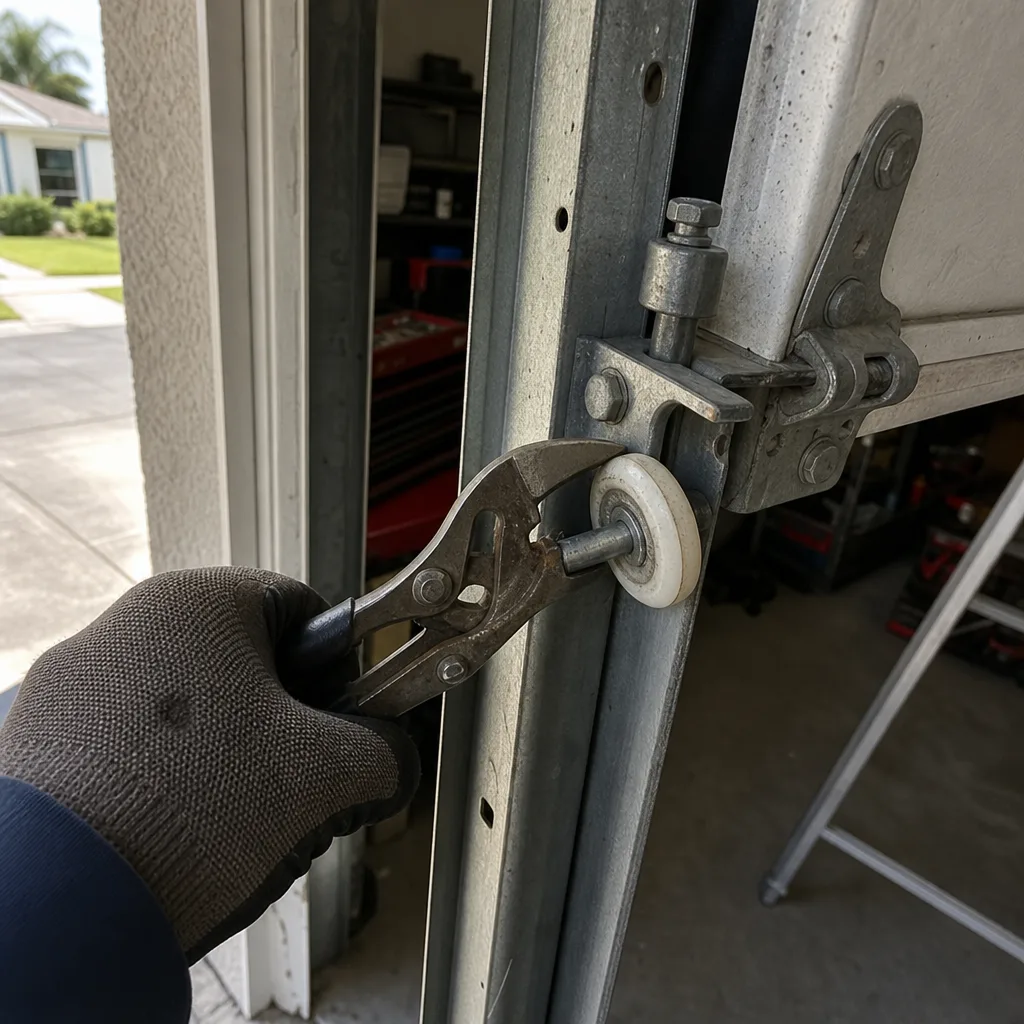
Not every warning sign is an emergency. In fact, most aren’t. The problem is that without a framework, homeowners either ignore everything or panic about everything. Here’s the two-category framework we use in Tampa, applied to the specific warning signs covered in this guide.
Schedule Within 30 Days
These warning signs indicate a problem that will worsen over time but doesn’t put you or your property at immediate risk. You can use the door while you schedule a repair.
- Grinding noise: A failing roller bearing degrades slowly. Schedule within 30 days to avoid damage to the track.
- Squealing noise: Cable friction wears the cable down gradually. Schedule within 30 days.
- Surface rust on springs or cables: Cosmetic today, but it will progress. Schedule within 30 days for cleaning and evaluation.
- Slow, gradual opener decline: A weakening motor doesn’t fail suddenly. Schedule opener replacement within 30 days.
- Rattling or loose hardware: This is an annoyance that can wait a few weeks, but don’t let it become a track problem.
Do Not Operate the Door
These warning signs mean the door should not be moved, either manually or with the opener, until a professional has inspected it. The risks are immediate and severe.
- Popping noise from the torsion spring: A popping spring can fail without warning. Do not operate the door.
- Through-rust on a torsion spring: The spring’s cross-section is compromised. Do not operate the door.
- Frayed lift cables: A frayed cable can snap, releasing the door’s weight. Do not operate the door.
- Cable imbalance detected with the two-door test: An unbalanced door puts uneven load on the cables, the spring, and the track. Do not operate the door.
- Door reverses or stops inconsistently: This can indicate a safety sensor failure, a force limit problem, or a mechanical bind. Do not operate the door until the cause is identified.
If you’re in the do-not-operate category tonight, call (656) 223-3036. We answer live, 24/7, including holidays, and we’ll dispatch a technician with a named arrival time, not a callback window.
Common Mistakes to Avoid
- Ignoring a new noise because the door still works. New noises are how doors communicate. A grinding roller bearing becomes a scored track. A popping spring becomes a snapped spring. The repair cost goes up the longer you wait.
- Spraying WD-40 on everything. WD-40 is a solvent, not a lubricant. It strips what lubrication remains from rollers and hinges and does nothing for a torsion spring, which should never be lubricated with a penetrating oil. White lithium grease on moving metal parts is the correct material, and it won’t fix a failing bearing.
- Assuming the opener is the problem. The opener is the most visible component, which makes it the most commonly blamed. But in our experience, at least half of all caller-reported “opener problems” in Tampa are mechanical door problems that the opener is masking. That’s why Servo diagnoses the door first, then the opener.
- Testing a do-not-operate door “one more time” to see if the noise is still there. If you’ve identified through-rust on a spring or fraying on a cable, every cycle is loading a component that’s already failing. The diagnostic value is zero. The risk is real.
- Accepting a quote over the phone without a written scope. A phone quote is a guess. A written scope tells you what the technician will do, what parts will be used, what it will cost, and what happens if something else is found. Clause 1 of The Haven Standard is a written price and written scope before any work starts. No exceptions. If a company won’t put it in writing, that’s your answer.
- Deferring maintenance because the door is “newer.” A door installed in 2018 is seven years old in 2025. In Tampa’s climate, that’s enough time for significant corrosion on springs and cables, especially near the bay. Newer doesn’t mean maintenance-free.
- Skipping the photo record. If you don’t document the before, you can’t verify the after. A technician can show you a photo of the failed part, or they can describe it. One of those is evidence. One is a story.
When to Call a Professional
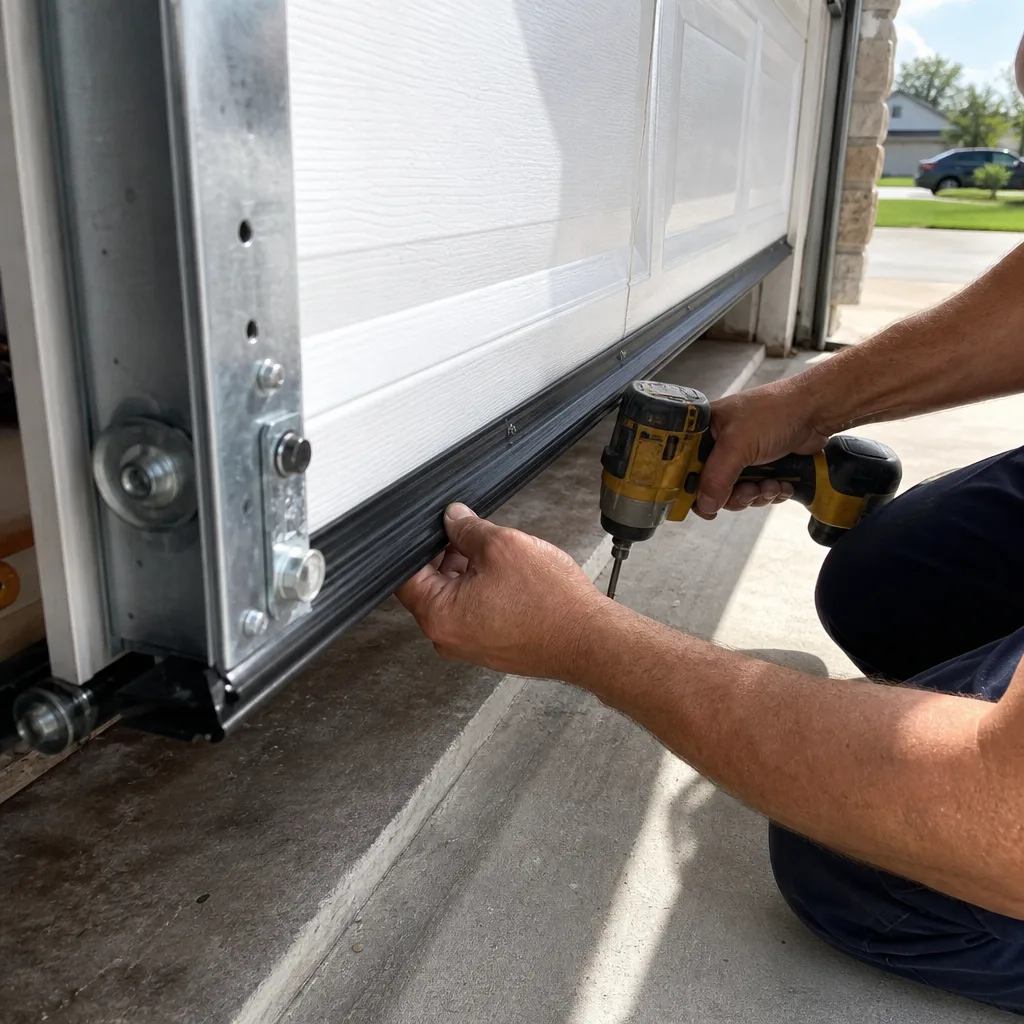
Call a professional when you’ve identified a do-not-operate warning sign, when you’ve run the two-door test and found imbalance, when you hear a popping noise from the spring, or when your opener is behaving erratically and you can’t tell whether it’s the motor, the board, or the door. Torsion springs are under enough tension to cause serious injury or death, and no DIY guide changes that math. Servo Garage Doors Tampa offers free estimates in Tampa, with a flat, written price and written scope delivered before any work starts, and a documented photo record of findings and completed work after the job is done. Call (656) 223-3036 for a free estimate, or see Garage Door Installation in Tampa for replacement options if your door has reached the end of its service life.
Frequently Asked Questions
Most garage door repairs in Tampa fall between $80 and $450, depending on the component: roller replacement runs $80 to $180, cable replacement $150 to $250, torsion spring replacement $180 to $320, logic board replacement $120 to $200, and full opener replacement $250 to $450. The price is quoted and agreed in writing before any work starts, so the number you approve is the number you pay. Call (656) 223-3036 for an exact quote after a diagnosis.
Yes. Servo Garage Doors Tampa handles same-day repair calls throughout Tampa, including emergency service 24/7. For spring and cable repairs, we carry the parts on the truck, so most do-not-operate situations are resolved in a single visit. Call (656) 223-3036 and a live person answers, with a named technician and an on-the-way text.
It can be, but it’s often the opener’s down-force limit compensating for a mechanical bind. When a door binds on the way down, the opener senses resistance and reverses to avoid crushing whatever it thinks is in the way. The bind could be a roller, a track issue, or an unbalanced door. A technician can determine whether it’s the sensor, the force setting, or a mechanical problem in about ten minutes with the right tools.
If the motor has been declining for months and the opener is 10 or more years old, replacement usually makes more sense than repair, at $250 to $450 installed in Tampa. If the logic board is the problem, repair is typically $120 to $200 and worth doing. If the opener is struggling because the door has a mechanical problem, repair the door first. A new opener won’t fix a bad door.
Twice a year if you live within two miles of Tampa Bay, where salt air accelerates corrosion on springs and cables. Once a year is sufficient for most other parts of Tampa, though any new noise, new rust, or new imbalance is a reason to schedule an inspection regardless of the calendar. Inspection cost is modest, and it catches what becomes expensive later.
At Servo Garage Doors Tampa, no. The price is written, the scope is written, and Clause 1 of The Haven Standard means both are delivered before any work begins. If the technician finds something else, that something is quoted separately and approved by you before it’s addressed. The price you approve is the price you pay. Call (656) 223-3036 for a free estimate, and bring any competing written estimate for a free second opinion.
The Bottom Line
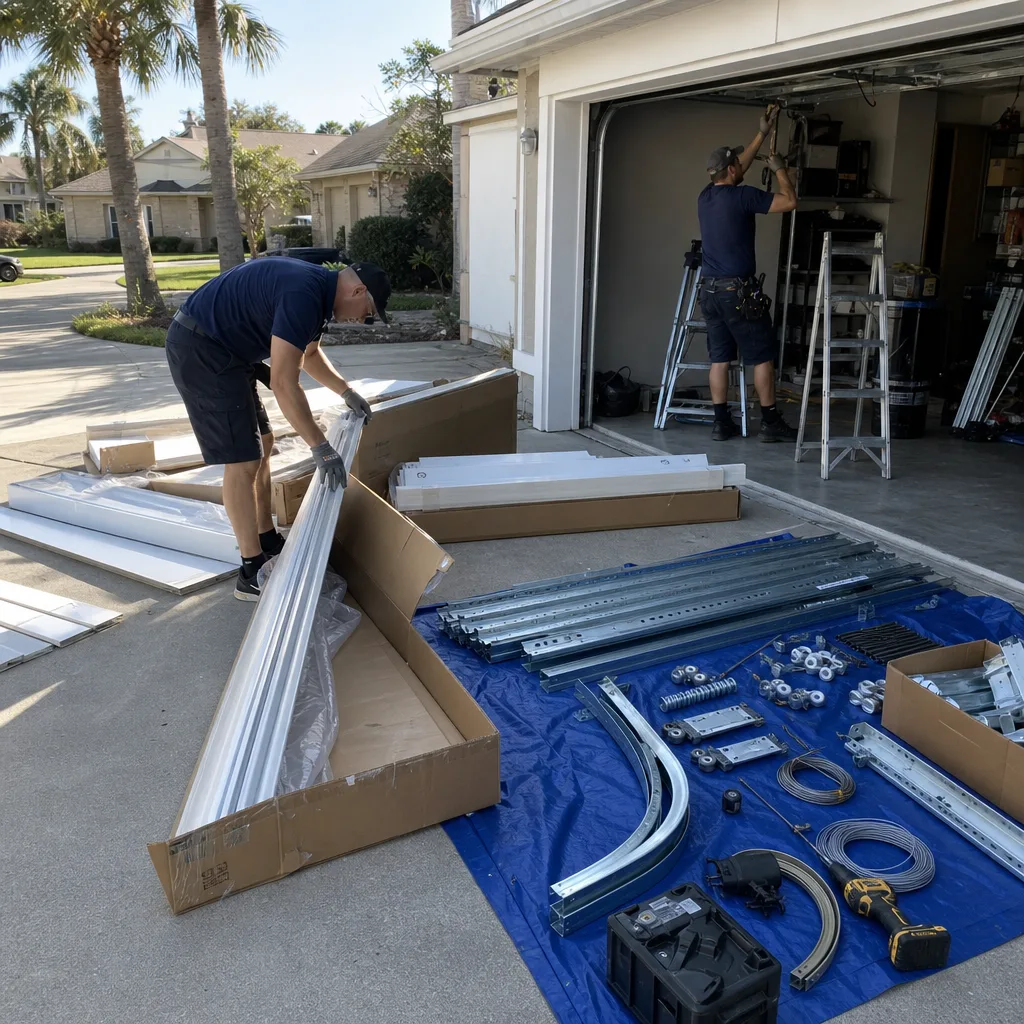
Garage door warning signs are a language. Grinding means rollers. Popping means springs. Squealing means cables. Each has its own urgency, its own repair, and its own price range, and knowing which is which changes the conversation from a sales pitch to a diagnosis. In Tampa, the climate adds corrosion pressure that makes regular inspection a necessity, not a nicety, especially near the bay. Document what you see and hear before the technician arrives, and compare that evidence against what’s quoted on site. If you’re in the do-not-operate category tonight, call (656) 223-3036. If you’re in the schedule-within-30-days category, call anyway or browse more guides & resources. Free estimates, written upfront pricing, and a photo record of everything found and done are how Servo has handled 18,000+ garage doors since 2015, and they’re how we’ll handle yours.
Written by Marcus Deller, Owner at Servo Garage Doors Tampa, serving Tampa since 2015.