
Last updated September 20, 2026
Full 25-point door and opener safety check with every visit - springs, cables, rollers, tracks, and your LiftMaster or Chamberlain opener included
You get a price before we start. It does not change when the truck arrives.
 Before
 After
After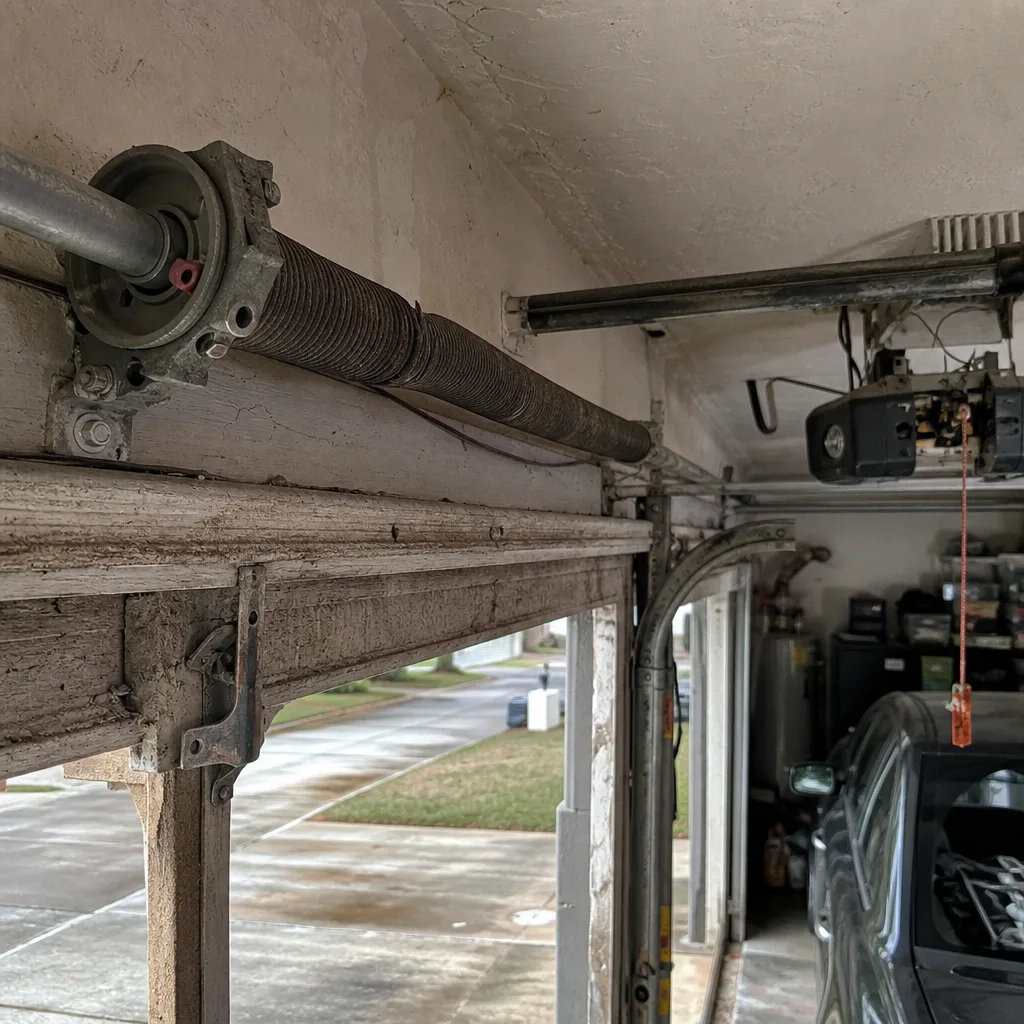 Before
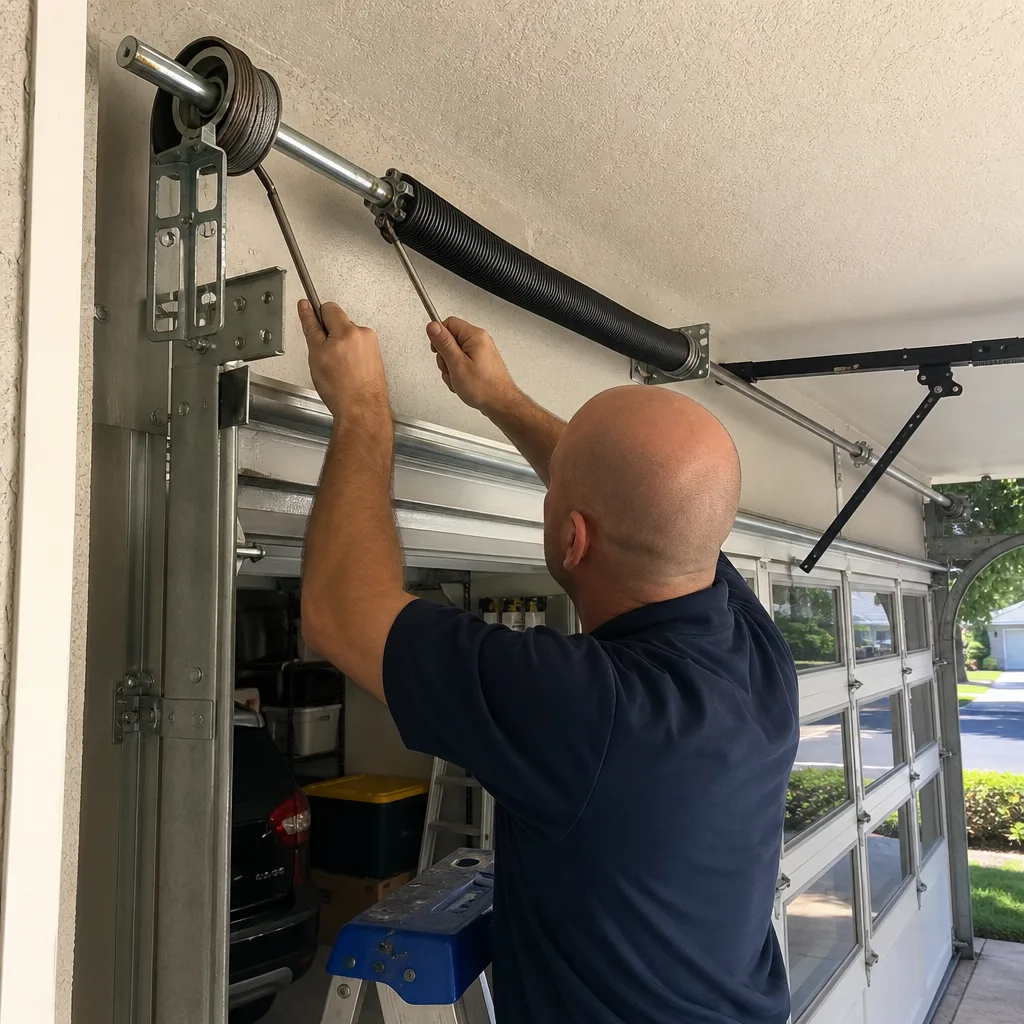 After
After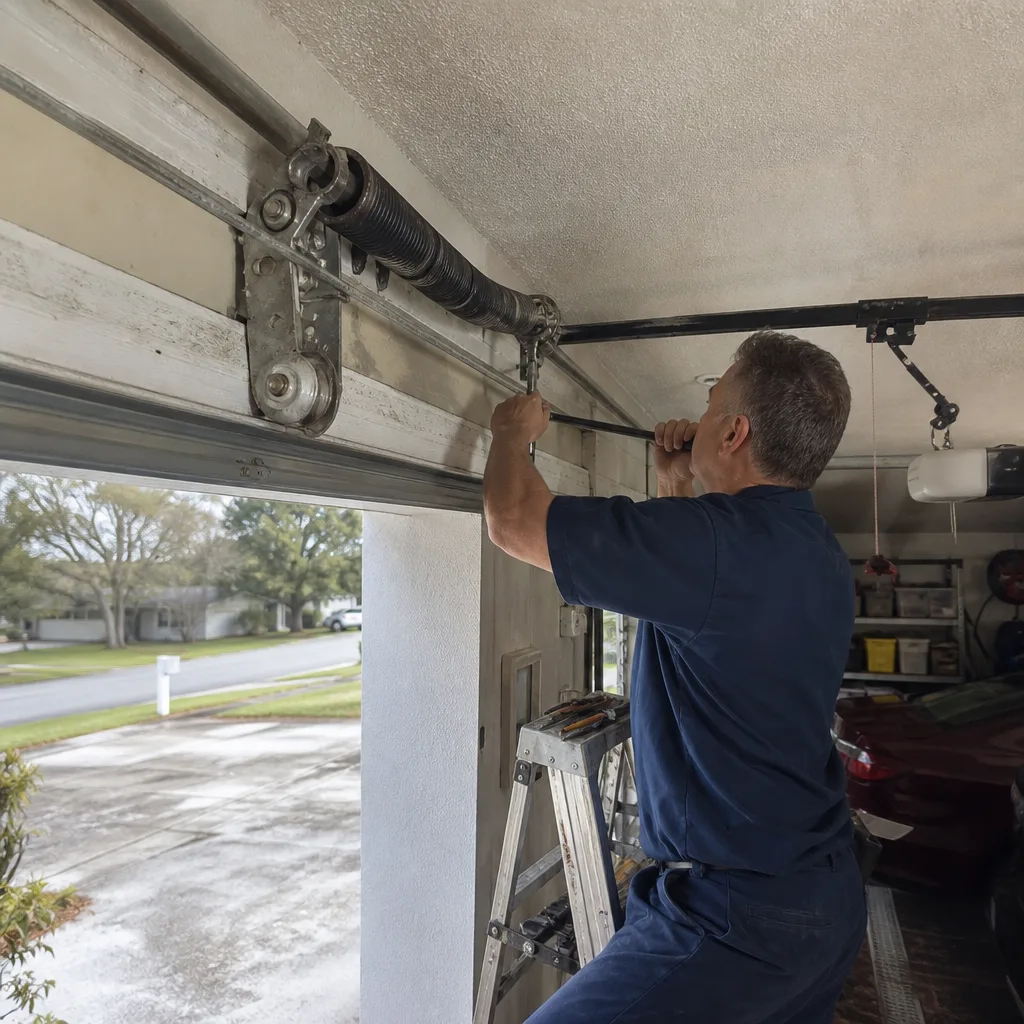 Before
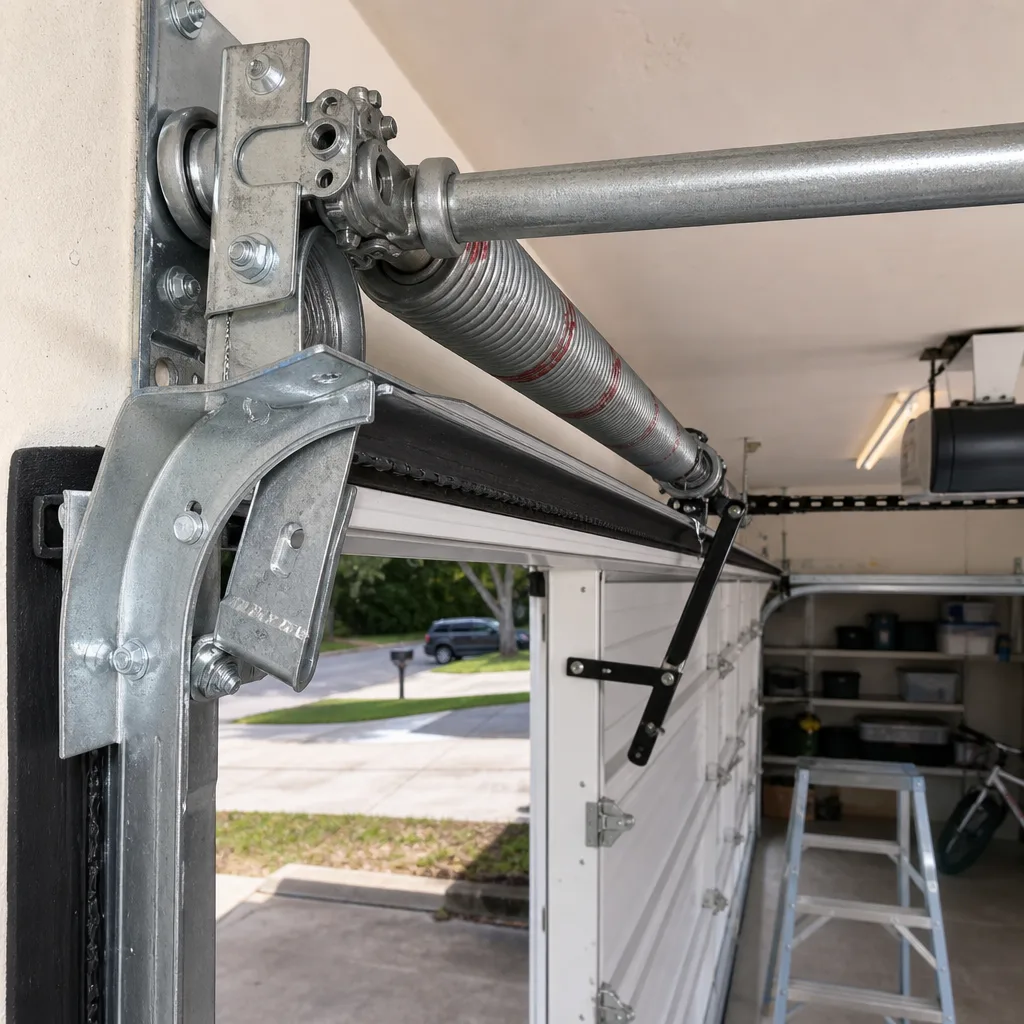 After
AfterHow to Hire a Garage Door Contractor in Tampa: A Step-by-Step Guide
Florida’s Department of Business and Professional Regulation logged 214 contractor complaints in the garage door and overhead door category between 2021 and 2024. The majority involved price changes after work began or unpulled permits discovered at resale. Both are detectable before you sign anything, if you know what to ask for. This guide gives Tampa homeowners a documentation-based hiring framework that filters for honesty and competence rather than popularity. For more guides & resources, visit our blog. You’ll learn how to verify a license in under 90 seconds, the three documents you should receive before any work starts, and the exact language that signals a contractor is about to quote you verbally and bill you differently later.
Quick Answer
To hire a garage door contractor in Tampa, verify their Florida state contractor license on the DBPR portal, require a written itemized quote with a set price before any work begins, confirm they’ll pull and close a permit through Hillsborough County, and ask for proof of workers’ compensation insurance. A legitimate contractor hands you documentation before touching anything. If they quote verbally, pressure you with urgency, or dodge the permit question, walk away.
Table of Contents
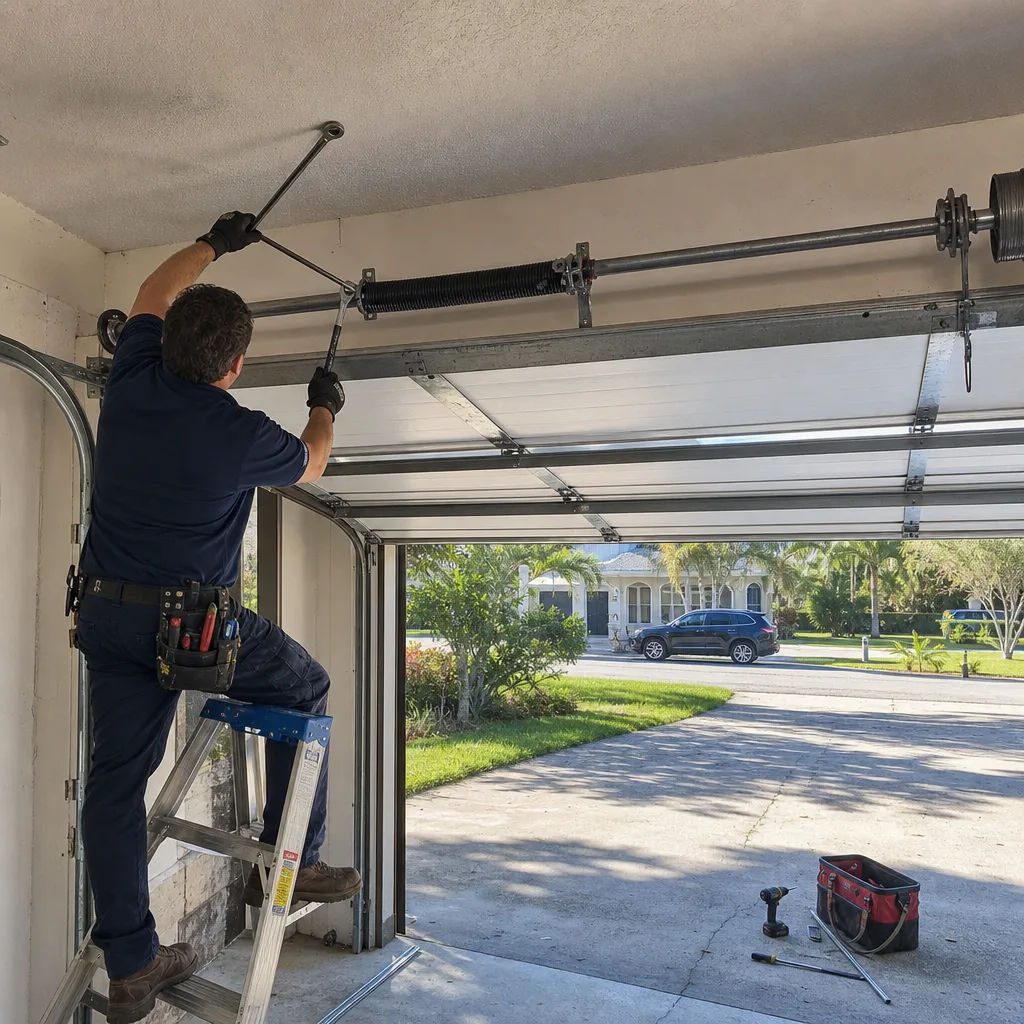
- Step 1: Verify the Florida Contractor License
- Step 2: Demand Three Documents Before Work Starts
- Step 3: Recognize Red-Flag Language in Sales Conversations
- Step 4: Understand Tampa Permits and Final Inspections
- Step 5: Use the Pre-Hire Question Script
- Step 6: Account for Tampa’s Climate and Housing Stock
- Step 7: Ask About the Brands They Actually Work On
 Before
 After
AfterStep 1: Verify the Florida Contractor License
Every legitimate garage door contractor operating in Tampa holds a Florida state contractor license issued by the Department of Business and Professional Regulation, or DBPR. You can verify that license at the DBPR website in under 90 seconds. Go to the DBPR license search page, select “Contractors” as the license category, and enter either the company name or the license number. The record shows the license type, issue date, expiration date, and any complaints or disciplinary actions on file.
Here’s what matters on that record, and what most guides skip:
- The license number is not the same as a business tax receipt. Hillsborough County issues business tax receipts to almost anyone who fills out a form. A DBPR contractor license requires passing an exam, proving insurance, and demonstrating experience. Ask for the DBPR number specifically, not “a license.”
- “Registered” and “certified” mean different things. A certified contractor passed the Florida state exam and can work in any county without additional local testing. A registered contractor met requirements in one specific local jurisdiction and can only work where that registration is recognized. For garage door work in Tampa, either is acceptable as long as the license is active and the scope of work matches.
- The license category should say “Garage Door” or “Specialty Structure.” A plumbing license, an electrical license, or an expired building license does not qualify someone to replace torsion springs.
- Disciplinary actions appear on the public record. If a complaint resulted in a fine or a suspension, it’s there. Read it before you call.
We’ve seen Tampa homeowners hire a handyman with a business card and a pickup truck, then discover the “contractor” wasn’t licensed at all when the spring failed three weeks later and the phone number stopped working. The DBPR search takes less time than reading the reviews on a company’s own website. Do it first.
Step 2: Demand Three Documents Before Work Starts
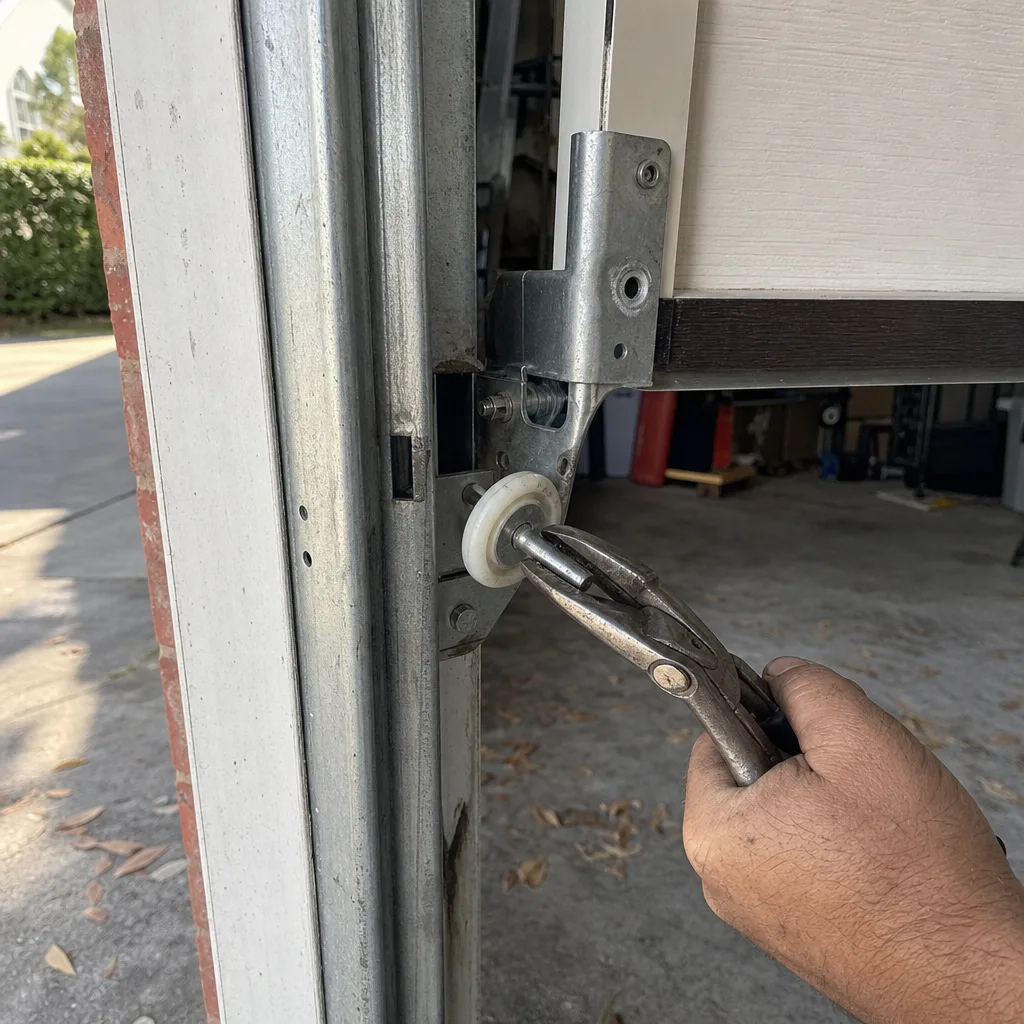
A legitimate Tampa garage door contractor hands you paperwork before touching anything. Specifically, you should receive three documents before the first tool comes off the truck. If any one of them is missing, the risk shifts entirely to you.
- A written itemized quote with a flat price. This is not an estimate range, not a verbal ballpark, and not a number scrawled on a business card. It’s a line-item document listing each part by name (torsion spring, cable, hinge, logic board), the price for each, the labor charge, and a total that doesn’t change. Clause 1 of The Haven Standard, the documentation system Servo Garage Doors operates under, requires a flat written price and written scope before any work begins. No exceptions. If the contractor says “we’ll figure out the final number when we’re done,” you’re about to overpay.
- A copy of the permit application. Hillsborough County requires permits for garage door replacement and for structural repairs in most cases. The contractor should file the application and give you the permit number. If they tell you a permit isn’t needed for a full door replacement, they’re wrong, or they’re avoiding the inspection.
- Proof of workers’ compensation insurance. If the technician gets hurt on your property and the contractor doesn’t carry workers’ comp, your homeowner’s insurance is the next call. Ask for a certificate of insurance with your name and address listed as the certificate holder. A legitimate Tampa contractor sends this without hesitation.
These three documents are not extras. They are the minimum paper trail that separates a contractor who stands behind the work from one who plans to disappear into it. On every job we complete, the customer leaves with a written quote, a permit record where applicable, and a documented photo record showing what we found and what we did, tracing back to the founding rule Servo Garage Doors was built on in 2015: the customer sees the failed part before anyone quotes a replacement.
Step 3: Recognize Red-Flag Language in Sales Conversations
The most common complaint in Florida garage door contracting is a verbal quote that becomes a larger bill. That process starts with language, and you can detect it in the first phone call.
Here are the phrases that should end the conversation:
- “The cable could snap today.” True, a frayed cable can fail. But this sentence is designed to push you past the written-quote step and into immediate, verbally-priced work. The correct response is: “Then write down the price first.”
- “I can do it right now for X if we skip the paperwork.” There is no scenario where skipping paperwork benefits you. A contractor who offers a discount for avoiding documentation is telling you how they’ll behave when something goes wrong.
- “Permits aren’t required for this.” For a full door replacement in Tampa, they are. For spring replacement, they typically aren’t. If the contractor says this about the wrong job, they’re either uninformed or avoiding the final inspection. Either way, that’s a disqualifier.
- “I just need a deposit to hold the price.” A legitimate contractor locks the price with a written quote, not a deposit. Deposits before documentation are how Tampa homeowners lose money to contractors who never return.
- “We’ve been doing this for 30 years, you can trust us.” Longevity is not evidence. A written quote is evidence. A license number is evidence. A permit application is evidence. Demand evidence.
The test for a good contractor is what they hand you before they touch anything. A contractor who leads with urgency is leading you away from the paper trail. The homeowner who researches before calling, the one reading the three-star reviews and wanting the price range on the page, should recognize this pattern immediately.
Step 4: Understand Tampa Permits and Final Inspections
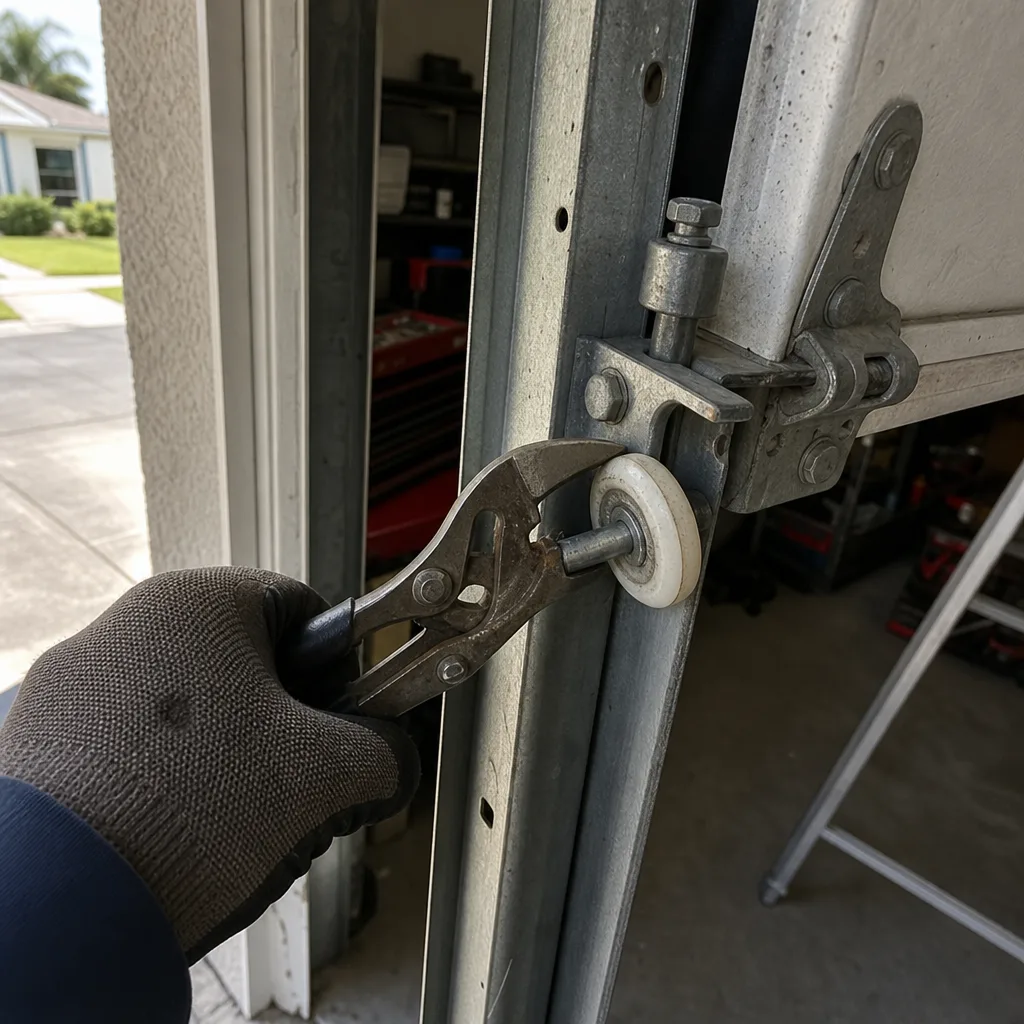
Here’s the part most hiring guides skip entirely: what happens after the work is done matters as much as what happens before it starts. An open permit is a lien on your home sale. Hillsborough County allows buyers and their title companies to see every unpermitted or unclosed permit attached to the property, and an open garage door permit discovered at resale can delay closing by weeks or kill the sale outright.
Here’s how to confirm the permit was closed properly:
- Before work begins: The contractor files a permit application with Hillsborough County and gives you the permit number. This number appears on the county’s online permit portal.
- After the work is done: The county schedules a final inspection. The inspector verifies the installation meets Florida Building Code requirements.
- After the inspection: The permit status changes to “Closed” or “Finaled” on the Hillsborough County online permit portal. You can check this yourself by entering your address in the county’s permit search. You don’t need the contractor to confirm it.
Permit abandonment, where a contractor pulls the permit, does the work, and never schedules the final inspection, is one of the two practices generating the most Florida garage door complaints. The open permit sits on the property record. The homeowner doesn’t know until the title company finds it. A contractor who plans to do the job right hands you the permit number upfront and tells you to verify the final inspection yourself. A contractor who’s cutting corners hopes you never check.
If you’re replacing a door opener or just swapping springs, permits usually aren’t required in Tampa. But for a full door replacement or structural work, they are. A good contractor tells you the difference and doesn’t use “no permit needed” to mean “no paperwork needed.”
Step 5: Use the Pre-Hire Question Script
Collecting quotes is less useful than evaluating answers. Here’s the script we’d hand a Tampa homeowner before they call anyone. Each question has a correct answer, and the answer tells you more than the quote number ever will.
- “What’s your Florida DBPR license number?” Correct answer: a specific number, offered immediately. Wrong answer: “We’re licensed,” with no number, or a deflection to business tax receipts or insurance only. Then verify it yourself on the DBPR portal.
- “Will you give me a written, itemized, flat-price quote before any work starts?” Correct answer: “Yes, always.” Wrong answer: anything with “we’ll see what we find,” “it depends,” or “we can quote it once we’re in there.” A garage door repair quote requires seeing the door, but the price is determined before work begins, not after.
- “Do you carry workers’ compensation insurance, and can you send me the certificate?” Correct answer: “Yes, I’ll email it now.” Wrong answer: hesitation, “we’re exempt,” or “the guys are subcontractors.” Subcontractors without workers’ comp are still your liability in Florida.
- “Will you pull a permit for this job and give me the permit number?” Correct answer: “Yes, and here’s when the final inspection will happen.” Wrong answer: “Permits are a hassle, let’s skip it.” Skipping permits saves them time and transfers risk to you.
- “What does your warranty actually cover, and is it in writing?” Correct answer: specific coverage terms in writing. Wrong answer: a verbal “we stand behind our work.” The 365-Day Done Right Promise from Servo Garage Doors means if a repair isn’t right, we make it right, and it’s written, not handshake-based. Ask for the same level of specificity from anyone.
- “Can I see what you found before you replace anything?” Correct answer: “Yes, we’ll photograph it.” Clause 4 of The Haven Standard is why the technician photographs the failed part before quoting a replacement. If a contractor won’t show you the broken component, you’re trusting their word over your own eyes.
We’ve found that four of these six questions will end most bad contractor relationships before they start. The homeowner who asks all six almost never gets overcharged.
Step 6: Account for Tampa’s Climate and Housing Stock
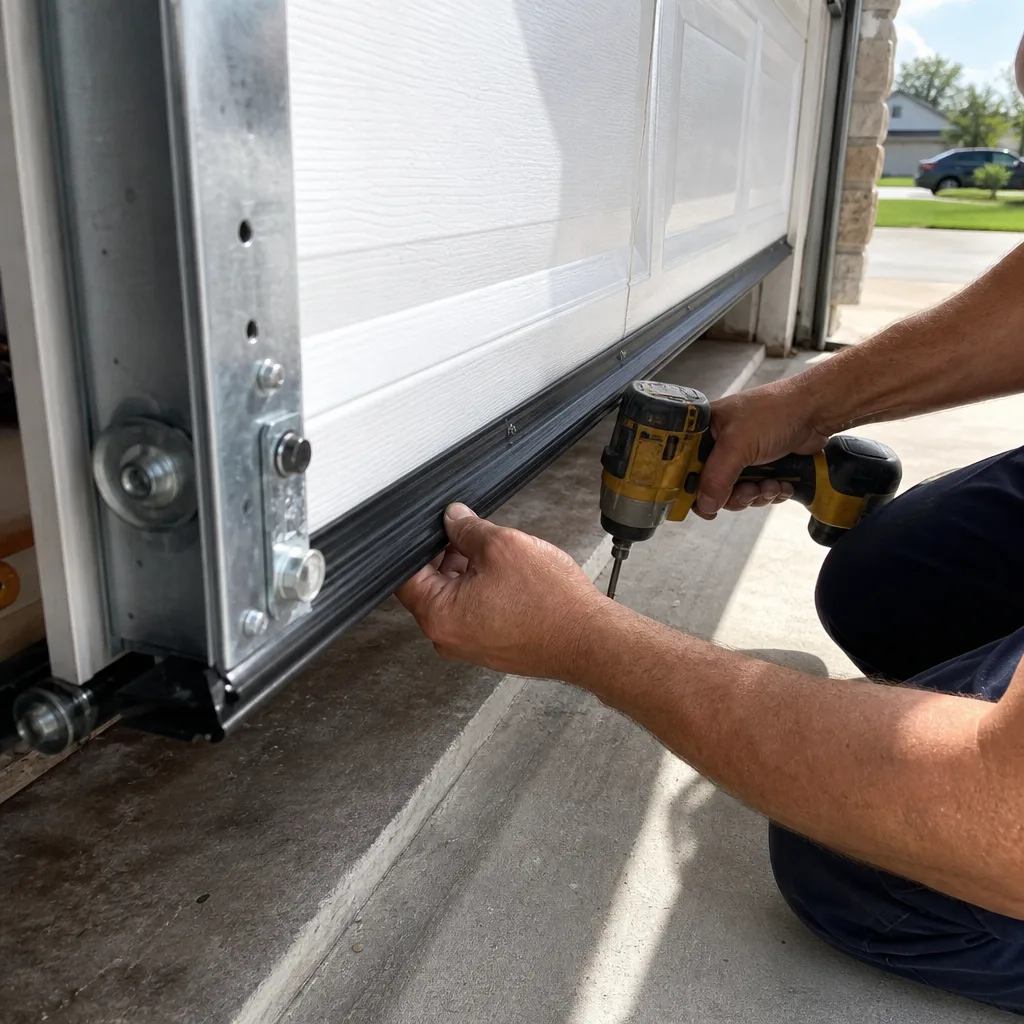
Tampa’s humidity and salt air do specific things to garage doors, and your contractor should know that without being told. See our Seasonal Garage Door Care for Tampa: Year-Round Homeowner’s Guide for what to watch each season. If you’re hiring someone to replace a door or springs in Westchase, South Tampa, Carrollwood, or New Tampa, the conversation should include these local factors.
Humidity accelerates rust on torsion springs and steel rollers. Homes within a few miles of the bay, in neighborhoods like Palma Ceia, Davis Islands, or Bayshore Beautiful, see corrosion rates noticeably higher than inland communities like Lutz or Wesley Chapel. A contractor who services Tampa regularly will inspect the spring for surface rust and measure the door’s balance before recommending a replacement. A contractor who doesn’t mention climate at all is likely reading from a generic national playbook.
Hurricane season adds another layer. Florida Building Code requires garage doors in wind-borne debris regions to meet specific wind load ratings. When you replace a door in Tampa, the permit and inspection process exists partly to confirm that door is rated for the pressure it’ll face in a storm. A contractor who pulls the permit and schedules the inspection is also confirming, in writing, that the door meets code. A contractor who skips the permit is putting a door on your house that may not be rated for the next hurricane.
Tampa’s housing stock matters too. Homes built in the 1980s and 1990s in neighborhoods like Brandon, Temple Terrace, and Town ‘n’ Country often have extension spring systems rather than torsion springs, and the older openers in those homes predate modern safety sensors. A contractor working on those doors should recognize the system immediately and quote accordingly. If they open the door, glance at it, and quote a generic torsion spring replacement without examining the spring type, that’s a red flag.
Step 7: Ask About the Brands They Actually Work On
A contractor’s brand experience is a proxy for their competence, but only if you ask the right way. “Do you work on garage doors?” gets you a yes every time. “Which specific brands do you stock parts for?” separates the specialists from the generalists.
In Tampa, the most common garage door opener brands are LiftMaster and Chamberlain, which share a parent company and many internal parts. You’ll also see Genie units in older homes, and full door panels from Clopay, Amarr, and Wayne Dalton. A contractor working on Tampa doors every week carries torsion springs, cables, hinges, and opener logic boards that match these brands, not generic parts that “might fit.”
Servo Garage Doors services all eight major brands: LiftMaster, Chamberlain, Genie, Clopay, Amarr, Wayne Dalton, Craftsman, and Raynor. That matters because Wayne Dalton doors, for instance, use a proprietary spring system that differs from the standard torsion design on most other brands. A contractor unfamiliar with Wayne Dalton might install the wrong spring, which fails in months rather than years. Craftsman openers, common in homes built before 2010, take specific logic boards and trolley carriages. Raynor doors use a different track profile that affects how the door balances.
Ask the contractor to name the brands they repair most often in Tampa. A specific, unprompted list is a good sign. A vague “all of them” is a shrug, not an answer.
Common Mistakes to Avoid
- Hiring based on review count alone. Review platforms measure volume and popularity, not honesty. Read the three-star reviews specifically. Look for patterns about pricing changes, no-shows, or warranty refusals. One detailed complaint about a price change after work began is worth more than fifty five-star reviews that only say “great job.”
- Accepting a verbal quote. In Florida, verbal quotes have no legal weight and no binding price. If it’s not written, it didn’t happen. Demand a written itemized quote before any work starts.
- Skipping the DBPR license check. It takes 90 seconds and reveals complaints, discipline, and whether the license is active. Tampa has plenty of unlicensed operators. Don’t hire one by accident.
- Believing “no permit needed” without checking. For full door replacements in Hillsborough County, a permit is required. A contractor who says otherwise is either mistaken or avoiding the inspection. Either way, move on.
- Paying a deposit before receiving a written quote. The quote locks the price. The deposit doesn’t. Never pay for the promise of a price.
- Not verifying the permit was closed. An open permit on your property record can stall a home sale. Check the Hillsborough County permit portal yourself after the work is done. It takes two minutes and closes the loop.
- Letting urgency override documentation. A broken garage door in Tampa is inconvenient, and a door stuck open is a security issue. But a contractor who says “this has to be fixed today” is using urgency to bypass the written quote. A same-day repair is possible without skipping the paperwork. The paperwork takes ten minutes. The repair takes an hour. Both can happen in the same visit.
When to Call a Professional
Some garage door problems are genuinely dangerous to attempt yourself. Torsion springs hold hundreds of pounds of tension, and when they break, the stored energy releases violently. A broken cable under load can whip. A door off its tracks can fall. If your door won’t open or close properly, if you see a gap in a spring, if the cables are frayed, or if the door is making grinding sounds, call a licensed contractor rather than attempting a repair. The cost of a professional repair is a fraction of what an emergency room visit costs. Servo Garage Doors Tampa offers free estimates and 24/7 emergency service in Tampa, with live phone coverage answered by a real person, including holidays. Call (656) 223-3036 and a named technician will respond, not a recording.
Frequently Asked Questions
A typical garage door repair in Tampa ranges from $125 to $340, depending on the specific component and the extent of the failure. Spring replacement, the most common repair, typically falls between $180 and $340 including parts and labor. Opener logic board replacement runs higher, between $250 and $450. These are flat, written prices, quoted before work starts, not estimates you discover were wrong after the fact. Call (656) 223-3036 for an exact quote on your specific door. Estimates are free.
Yes. Many Tampa garage door companies, including Servo Garage Doors, offer same-day service for repairs and 24/7 emergency response. The key distinction: same-day service should not mean same-day verbal pricing. A legitimate contractor can dispatch a technician quickly and still provide a written, itemized price before any work begins. The quote takes minutes. The repair takes an hour. Both fit in the same visit.
Search the Florida DBPR online portal for the contractor’s name or license number. The record shows whether the license is active, when it expires, and whether any complaints or disciplinary actions are on file. Look for a license category that includes “Garage Door” or “Specialty Structure.” A business tax receipt from Hillsborough County is not the same thing as a contractor license.
Yes, for a full door replacement, Hillsborough County requires a permit and a final inspection. For spring replacement and minor repairs, permits are typically not required. Your contractor should tell you which applies to your specific job and give you the permit number if one is needed. After the work is done, you can verify the permit was closed on the county’s online permit portal.
It should not. A legitimate Tampa garage door contractor examines the door, determines the exact repair needed, and then hands you a written flat price before any work begins. The price is set at that moment. If a contractor suggests the price might change based on what they find after starting work, that’s a sign they’re not following a written price-first process. Clause 1 of The Haven Standard requires a flat written price and written scope before any work begins, with no exceptions.
Ask for their DBPR license number, a written itemized quote before work starts, proof of workers’ compensation insurance, and their process for pulling and closing permits. Ask whether they photograph what they find before quoting a replacement. Ask which specific brands they service most often in Tampa. The answers to these questions tell you more than any review ever will. Call (656) 223-3036 for a free estimate from Servo Garage Doors Tampa.
The Bottom Line
Hiring a garage door contractor in Tampa is not about finding the most popular company on a review site. For a deeper look at the full process, see The Complete Guide to Garage Door in Tampa. It’s about finding one that hands you documentation before touching your door. Verify the license on the DBPR portal. Demand a written, itemized, flat-price quote. Confirm the permit process from application to final inspection. Ask about workers’ comp, specific brand experience, and whether they photograph what they find. Most importantly, treat urgency language as a warning sign rather than an argument. A door that needs repair is urgent. The paperwork that protects you is not optional. Servo Garage Doors has served Tampa since 2015. Every job leaves with a written price before work starts and a documented photo record when the technician leaves. That’s how it should work.
Written by Marcus Deller, Owner at Servo Garage Doors Tampa, serving Tampa since 2015.