
Last updated September 20, 2026
Full 25-point door and opener safety check with every visit - springs, cables, rollers, tracks, and your LiftMaster or Chamberlain opener included
You get a price before we start. It does not change when the truck arrives.
 Before
 After
After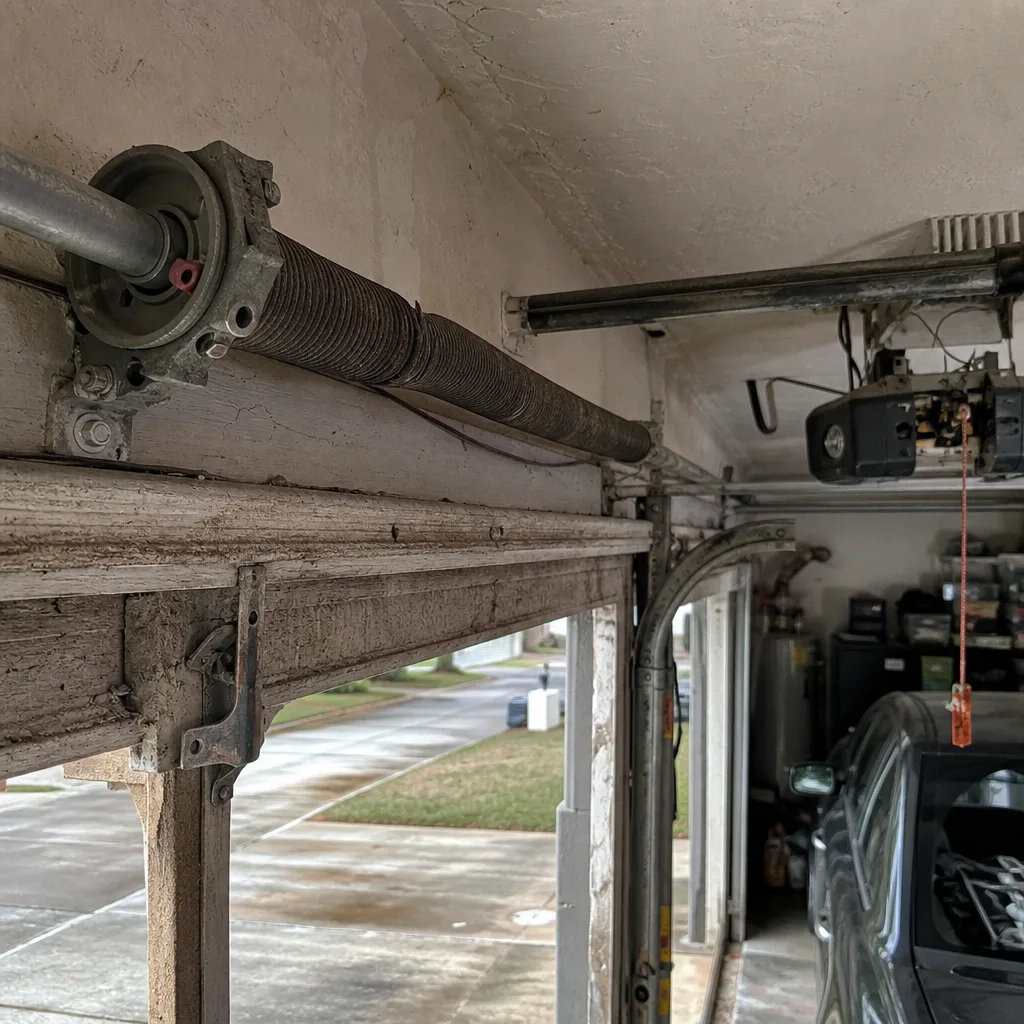 Before
 After
After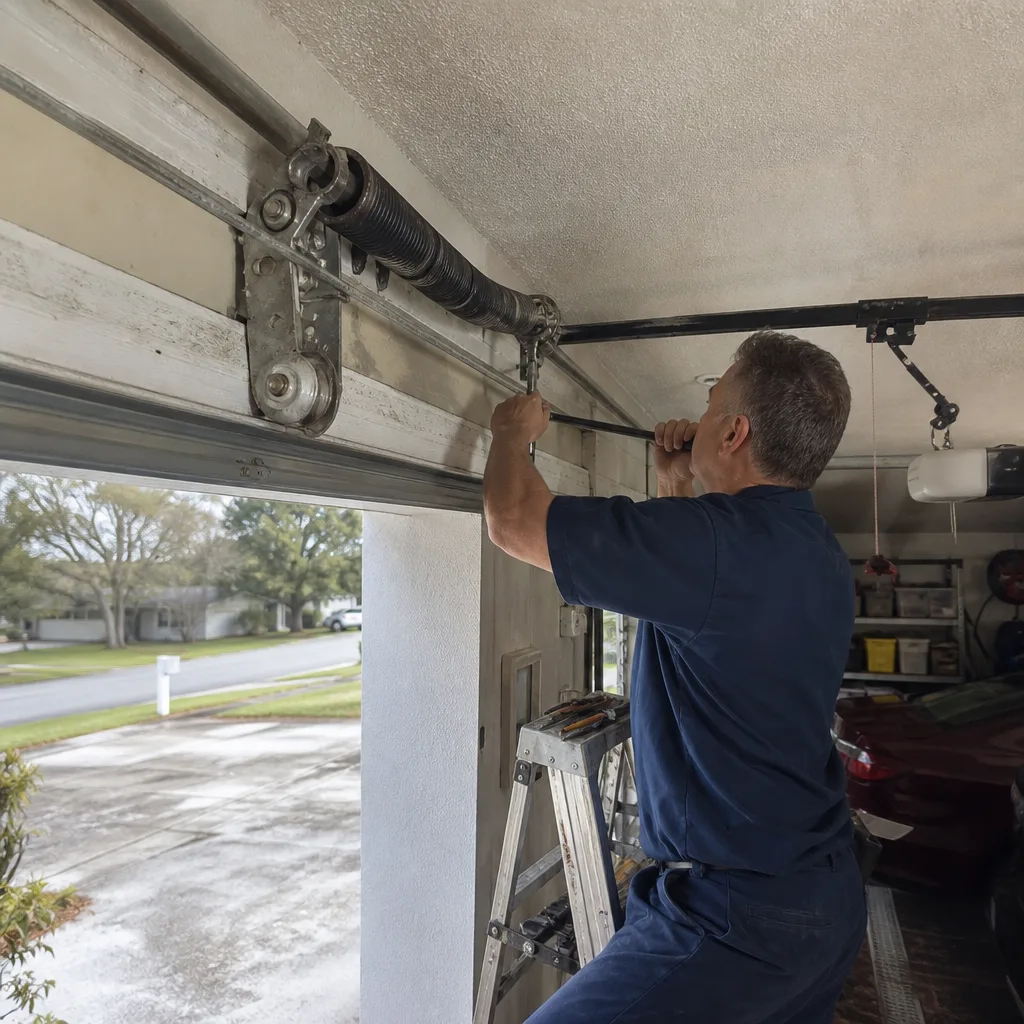 Before
 After
AfterGarage Door Cost Breakdown: The Tampa Homeowner’s Reference for 2026
A $900 garage door quote and a $1,600 quote for the same size door in Tampa can both be honest. The difference is rarely margin. It’s usually whether the lower quote includes Florida Building Code (FBC) wind-load hardware, Hillsborough County permit fees, and haul-away of the old door, or whether those appear as change orders after the job starts. This guide names every line item a legitimate Tampa quote should contain, with dollar ranges pulled from actual 2025 project data across Hillsborough County. By the end, you’ll know exactly what a replacement costs here, what drives the price up, and which numbers on a written estimate you can push back on. For garage door warning signs every Tampa homeowner should watch for, see our companion guide.
Quick Answer
A complete garage door replacement in Tampa in 2026 runs between $1,800 and $4,200 for a standard two-car, single-layer steel door with a torsion spring system, opener, permit, and haul-away included. The single biggest variable is impact-rated construction, which adds $600 to $1,800 depending on door size and material. Published national averages routinely underestimate Tampa costs by 20 to 35 percent because they exclude Florida-specific wind-load hardware and local permit fees.
Table of Contents
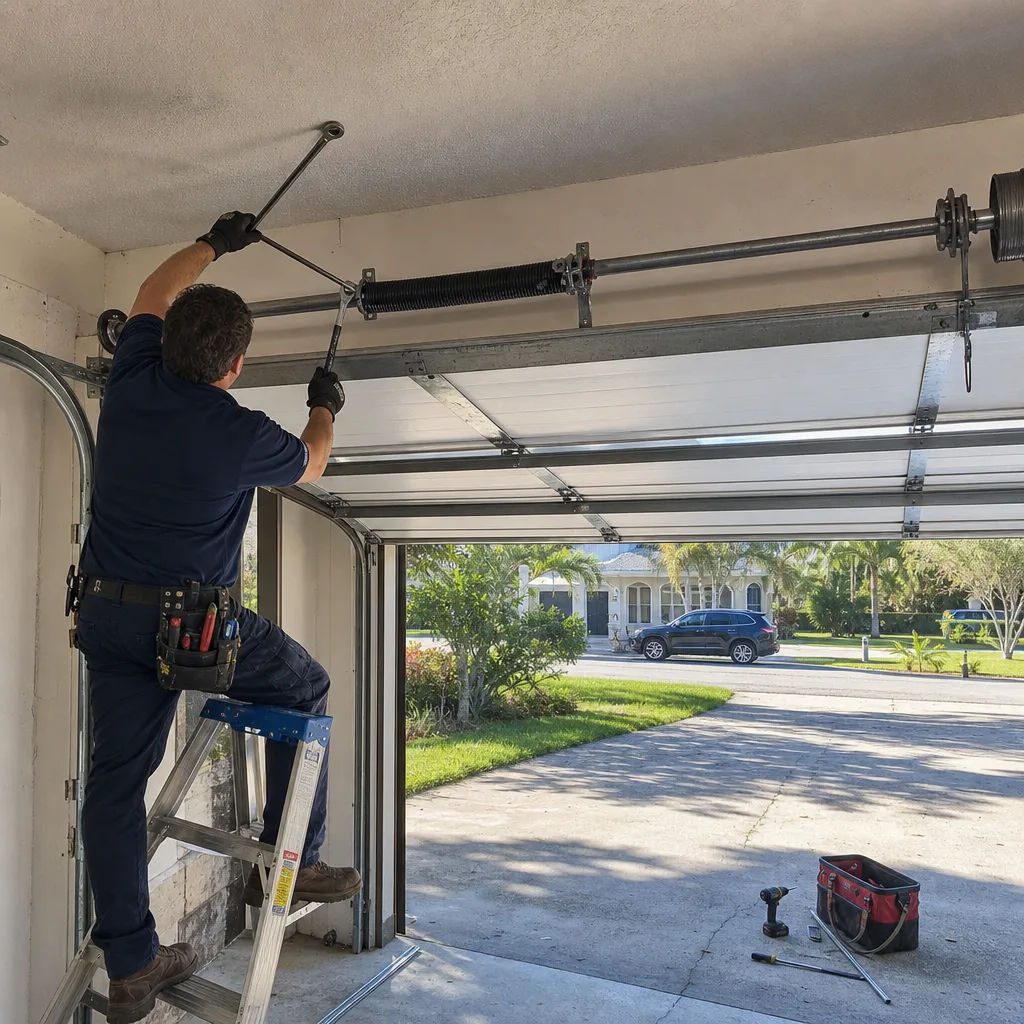
- The Real Line-Item Breakdown for a Tampa Replacement
- Impact-Rated vs. Non-Impact Doors: When Code Requires Which
- Door Material Costs by Panel Type
- Opener Costs and When Yours Can Stay
- Permit Fees, Haul-Away, and the Line Items Quotes Leave Out
- The Real Cost of an Unlicensed Installer at Resale
- Negotiable vs. Fixed: Where You Can Push, Where You Can’t
- How to Read a Tampa Garage Door Quote
- Common Mistakes to Avoid
- When to Call a Professional
- Frequently Asked Questions
- The Bottom Line
 Before
 After
AfterThe Real Line-Item Breakdown for a Tampa Replacement
In Hillsborough County, a compliant garage door installation is not one purchase. It’s six distinct cost centers that a written quote should list separately. If a quote is a single number with no breakdown, you don’t yet have a quote. You have a starting point for negotiation.
Here’s what we see in our own documentation on garage door installation in Tampa projects, line by line, for a standard 16×7 two-car door in 2025-2026 pricing:
- Door panel (single-layer, non-insulated steel, 16×7): $650 to $950. This is the physical door itself. Single-layer means one sheet of steel over a frame, no insulation core.
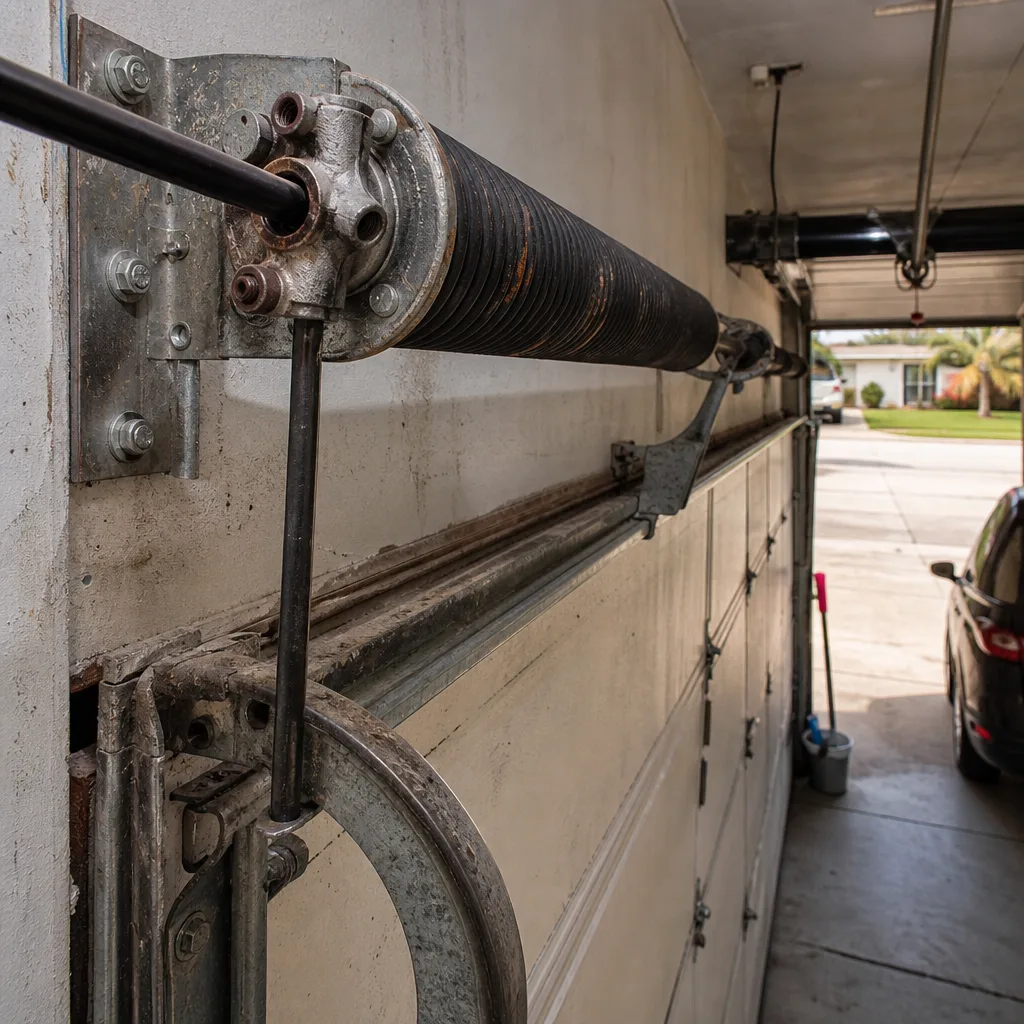
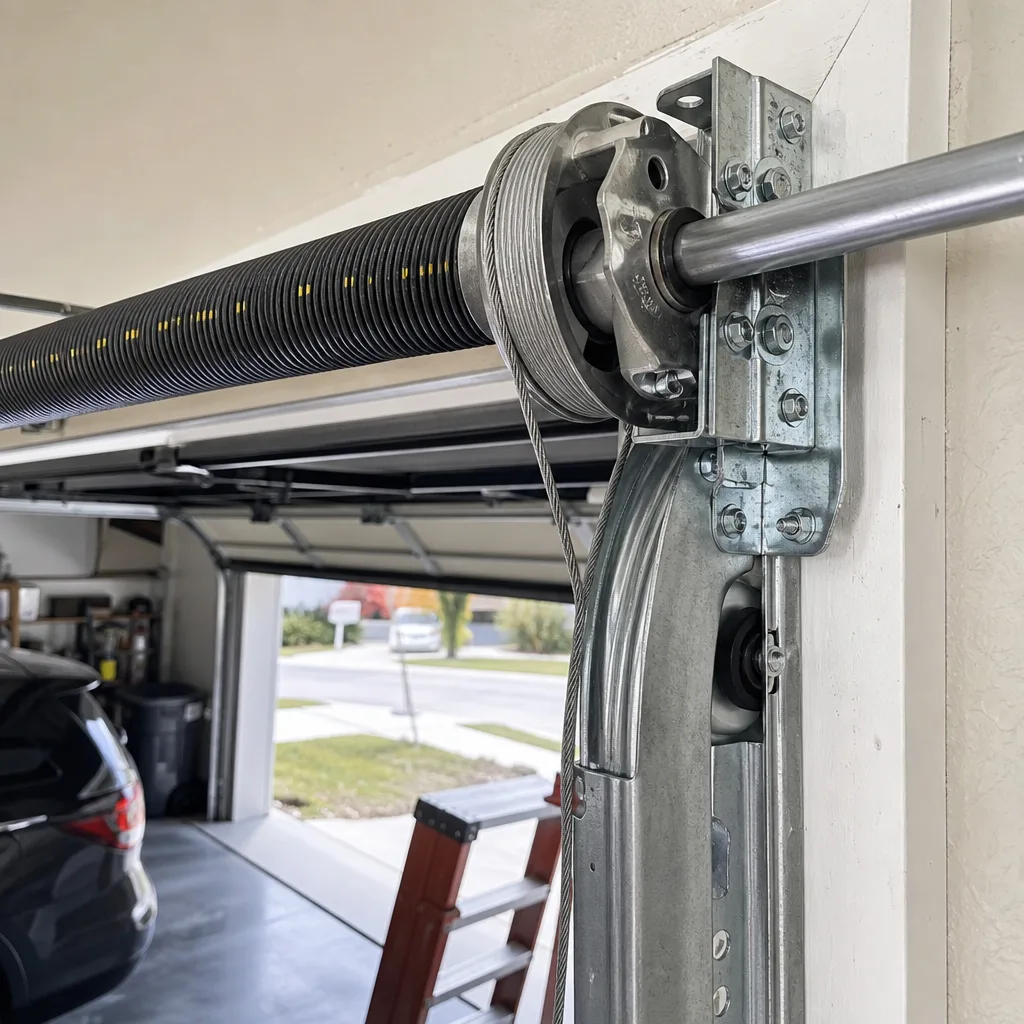
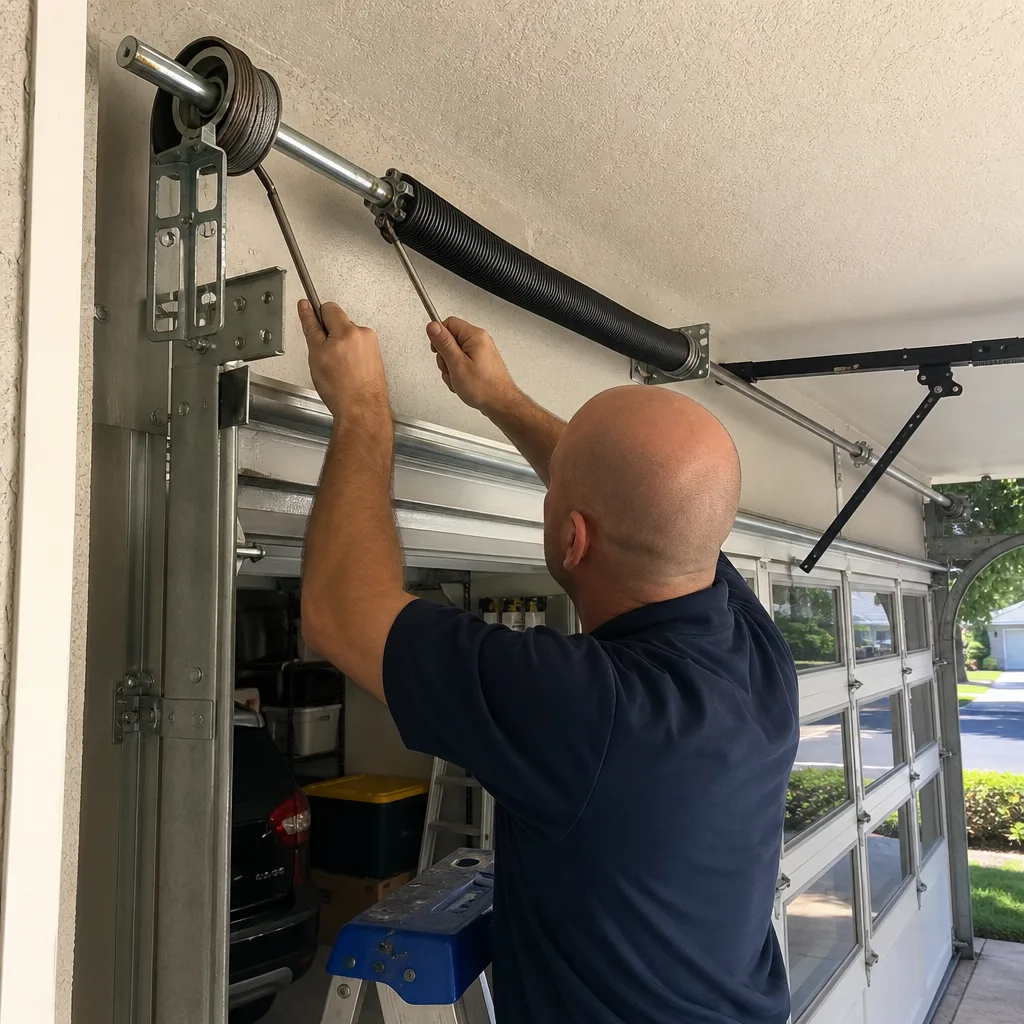
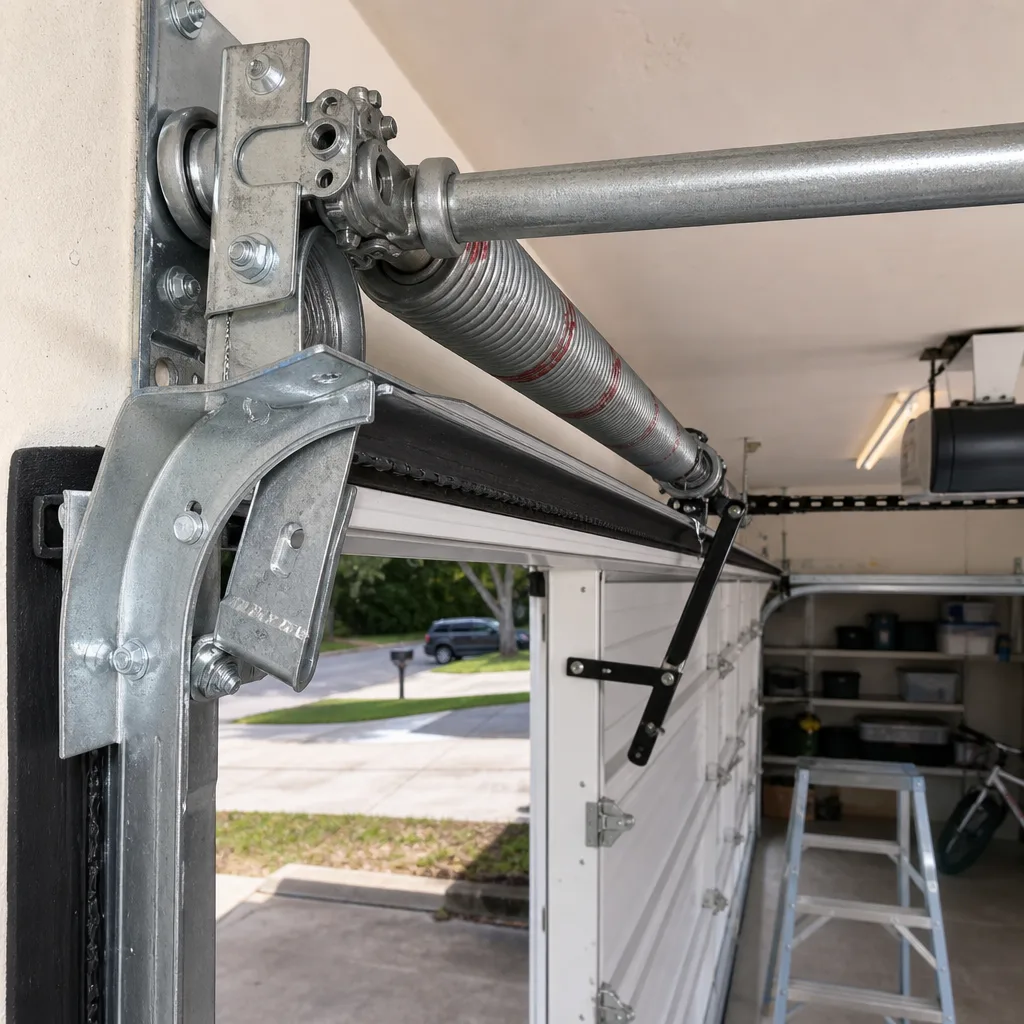
- Torsion spring assembly: $180 to $300. This is the counterbalance system that lets the door open with one hand. It includes the spring, drums, cables, and bearing plates. High-cycle springs (rated for 25,000 cycles instead of 10,000) run at the top of this range.
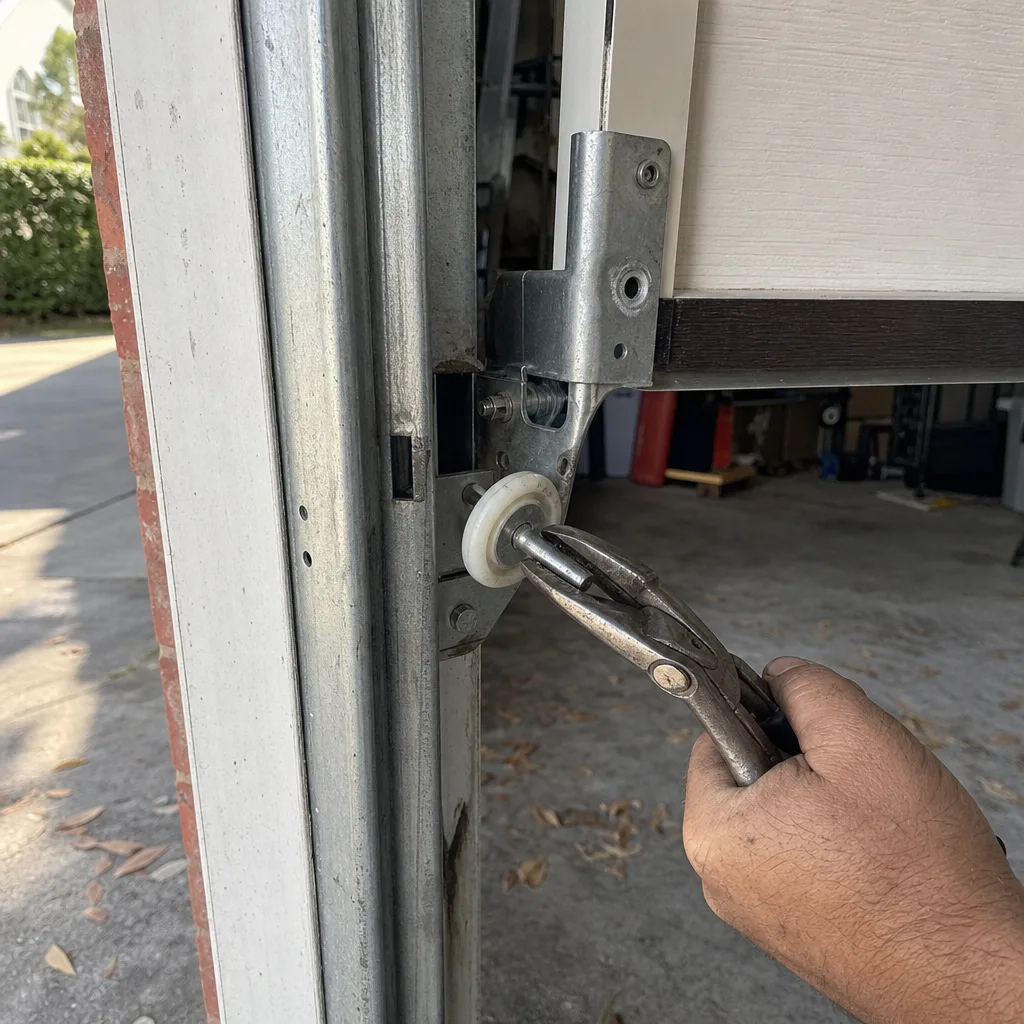
- Tracks, rollers, hinges, and hardware: $220 to $400. New hardware is not optional on a replacement. Reusing old tracks with a new door is how you get a door that binds in August humidity and rattles two years later.
- Garage door opener (chain-drive, 1/2 HP): $350 to $550 installed. More on openers below, but expect this to appear as its own line unless you’re keeping your existing unit.
- Hillsborough County permit fee: $80 to $150 depending on valuation. This is not profit. This is a line item set by the county, and a contractor who skips it is not doing you a favor.
- Labor and installation: $400 to $750 for a standard non-impact replacement. Impact-rated doors take more time for reinforcement fastening and weigh more, which adds $150 to $300 in labor.
- Haul-away and disposal of old door: $75 to $150. Old steel doors weigh 150 to 250 pounds and cannot go in your curbside bin.
Total for a complete, code-compliant, non-impact replacement with a new opener: $1,855 to $3,300. Add impact-rated construction and you’re looking at $2,500 to $4,500. These are the ranges we’ve documented in our photo records across Tampa, and they reflect what a homeowner should expect to see itemized before signing anything.
Impact-Rated vs. Non-Impact Doors: When Code Requires Which
Florida Building Code Section R301.2.1.2 divides the state into wind-borne debris regions. Tampa sits near the boundary, and your address determines whether impact-rated construction is mandatory or optional for a garage door replacement.
When it’s required: If your home is within one mile of Tampa Bay, the Gulf coast, or any coastal waterway in Hillsborough County, impact-rated doors are code-mandated for new installations and replacements. The wind-borne debris region maps in the FBC don’t follow neighborhood lines, so we’ve seen homes in South Tampa, Westshore, and along Bayshore where impact rating is non-negotiable, while homes in Seminole Heights or Citrus Park fall outside the zone and can choose.
When it’s optional but advisable: Even outside the mandated zone, many Tampa homeowners choose impact-rated doors because they carry wind-load-rated hardware and heavier-gauge tracking. The cost premium for a standard 16×7 door is $600 to $1,800 depending on whether you choose aluminum frame with polycarbonate glazing, impact-rated steel, or full hurricane-rated construction with reinforced struts.
The practical difference: A non-impact door in a wind event fails at the panel seams and track brackets. An impact-rated door is engineered to absorb projectile impact and maintain structural integrity through design pressure ratings, usually DP-50 or DP-60 for the Tampa market. The difference is not cosmetic. It’s how the door behaves when a 2×4 hits it at 34 mph in a storm, which is the actual ASTM test standard.
We tell homeowners the same thing every time: if you’re in a wind-borne debris zone, this is not a choice. The permit reviewer will reject a non-impact door. If you’re outside the zone, it’s a budget decision with an insurance consequence. Some carriers offer premium reductions for impact-rated garage doors in Tampa, but that’s a call for your agent, not your door installer.
Door Material Costs by Panel Type
The panel material is the biggest cost driver after impact rating. Here’s what each material actually costs in the Tampa market for a 16×7 double door, installed, excluding opener and permit:
- Single-layer steel, non-insulated: $650 to $950. The most common replacement in Tampa’s rental and mid-range neighborhoods. Dent-resistant enough for daily use, but no thermal or sound insulation. In our experience this is the right door if your garage is detached or you don’t use it as a workshop.
- Insulated steel, polystyrene core: $950 to $1,500. Two sheets of steel with a foam core. Reduces heat transfer noticeably, which matters in a Tampa August when the afternoon sun hits the door face directly. We regularly measure 15 to 20 degree differences between insulated and non-insulated door faces on west-facing garages in Westchase and Carrollwood.
- Insulated steel, polyurethane core: $1,300 to $2,200. Denser insulation and better R-value. The upgrade matters most for attached garages under living space, where the door is the largest uninsulated surface in the conditioned envelope.
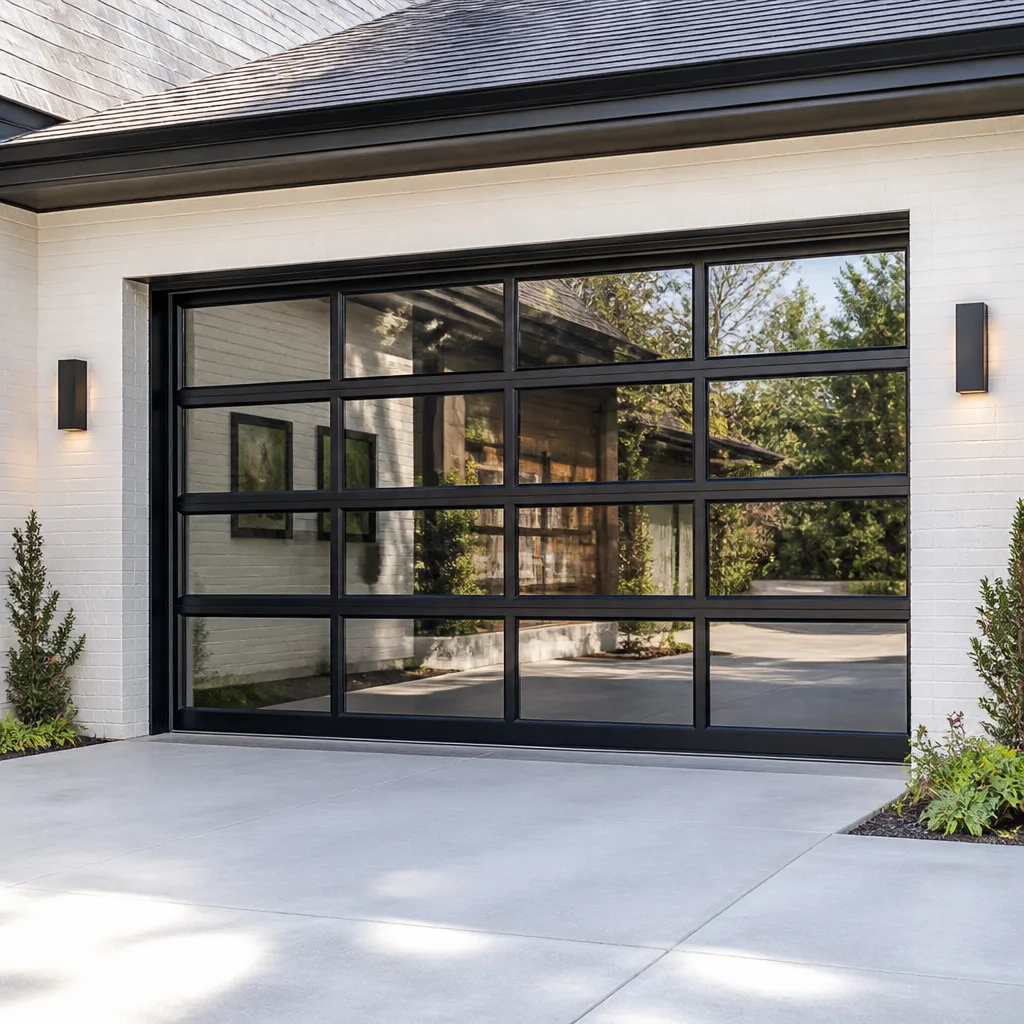
- Aluminum frame with glass panels: $2,400 to $4,000. Full-view doors, popular in South Tampa and Davis Islands modern homes. These are heavier, require more hardware, and are almost always impact-rated when installed near water.
- Vinyl or composite: $1,400 to $2,600. Low-maintenance, dent-resistant, and quiet. A good choice for homes in coastal areas where salt air accelerates steel corrosion, but the material cost sits above basic insulated steel.
What we don’t see anymore in Tampa: wood doors. Solid wood was common on 1960s-1980s homes in Temple Terrace and Forest Hills, but the maintenance burden in Florida humidity is relentless. When those doors fail, homeowners replace them with wood-grain embossed steel or composite, not more wood.
Opener Costs and When Yours Can Stay
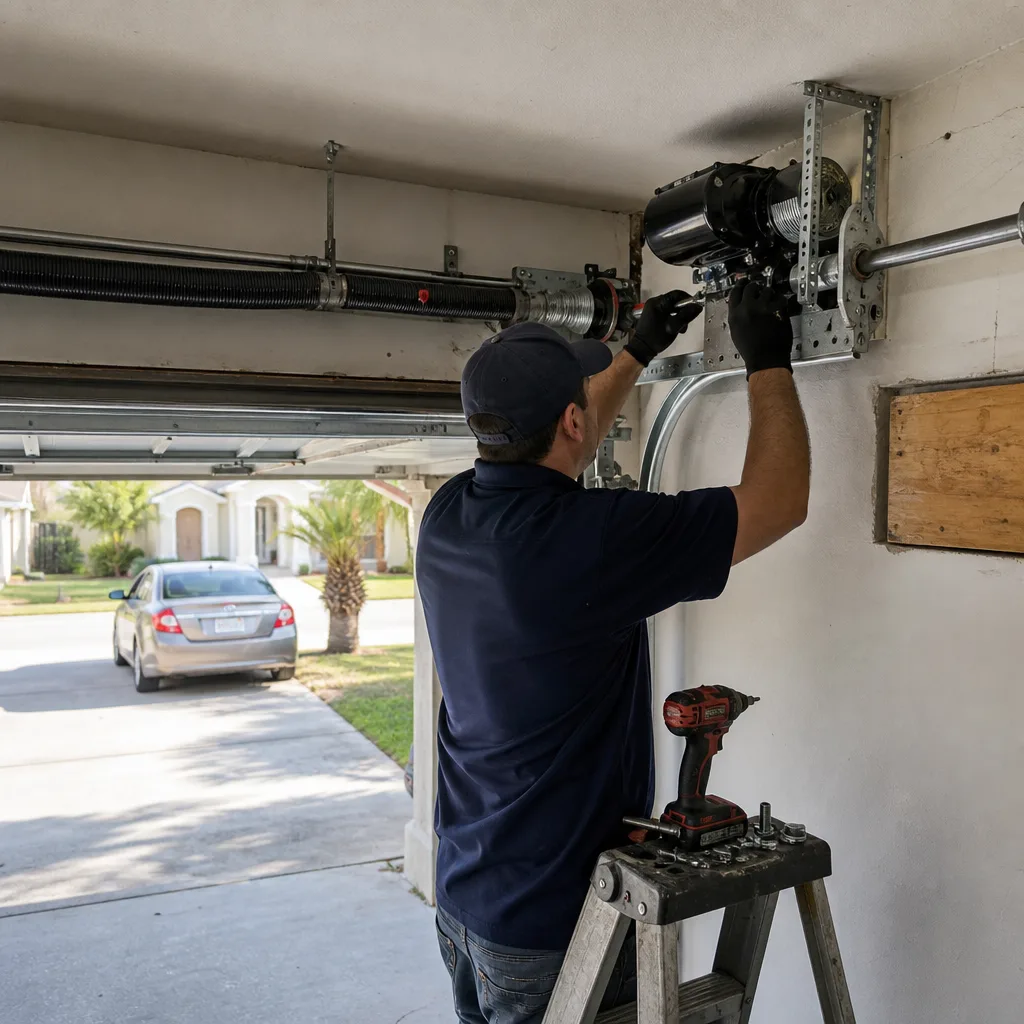
If your opener is less than 10 years old and in working condition, you don’t need to replace it when the door is replaced, though our garage door repair maintenance checklist for Tampa homeowners can help you verify its condition. The opener mounts to the track and ceiling, not to the door panel itself. A new door with a new torsion spring assembly will almost always operate smoothly on a compatible existing opener.
When you do need a new opener, here are installed costs in Tampa for 2026:
- Chain-drive, 1/2 HP (Chamberlain, Genie, Craftsman): $350 to $500 installed. Noisy but reliable. Fine for detached garages and budget-conscious replacements.
- Belt-drive, 3/4 HP (LiftMaster, Chamberlain premium lines): $450 to $700 installed. Quieter, which matters when the garage is under a bedroom. This is the most common opener we install in Tampa homes built after 2010.
- Smart opener with battery backup (LiftMaster 87504 or equivalent): $550 to $800 installed. Adds Wi-Fi connectivity, a camera option, and battery operation during the power outages that follow Tampa afternoon storms.
The opener is one of the few line items where you can meaningfully choose a budget option without compromising safety or code compliance. A $400 chain-drive and a $700 smart belt-drive both open the door. The difference is noise, features, and battery backup. For garage door opener repair or replacement in Tampa, we show homeowners the exact unit cost before installation so the choice is theirs, not ours.
Permit Fees, Haul-Away, and the Line Items Quotes Leave Out
The line items that turn a $1,100 quote into a $1,600 invoice are the ones that were never on the quote in the first place. Here’s what legitimate Tampa contractors include and what less-scrupulous bids leave off:
- Hillsborough County permit: $80 to $150. Required for a full door replacement. Not optional. A contractor who says “we don’t need a permit for this” is telling you they’re not pulling one, which means no inspection, which means a problem at resale.
- Haul-away: $75 to $150. The old door has to go somewhere. If it’s not on the quote, it’s getting added after you’ve already paid the deposit.
- Disposal fees: Some Hillsborough County transfer stations charge by weight for construction debris. If the contractor’s haul-away line seems low, ask if disposal is included or billed separately.
- Wind-load hardware upgrades: On non-impact doors in coastal wind zones, the county may require additional track braces, heavier hinges, or longer lag bolts. These are $80 to $200 and should appear on the quote before installation, not as an “unexpected” site finding.
- High-cycle springs: Most manufacturers’ baseline springs are 10,000-cycle units, meaning 7 to 10 years of daily use. Upgrading to 25,000-cycle springs costs $50 to $100 more and roughly doubles the lifespan. This is a legitimate upsell if disclosed, a surprise cost if not.
Our position on this is documented in writing under The Haven Standard Clause 1: the price we quote is the price you pay, and the scope we write is the work we do. If a line item isn’t on the written scope, it doesn’t get added later without your signed change order.
The Real Cost of an Unlicensed Installer at Resale
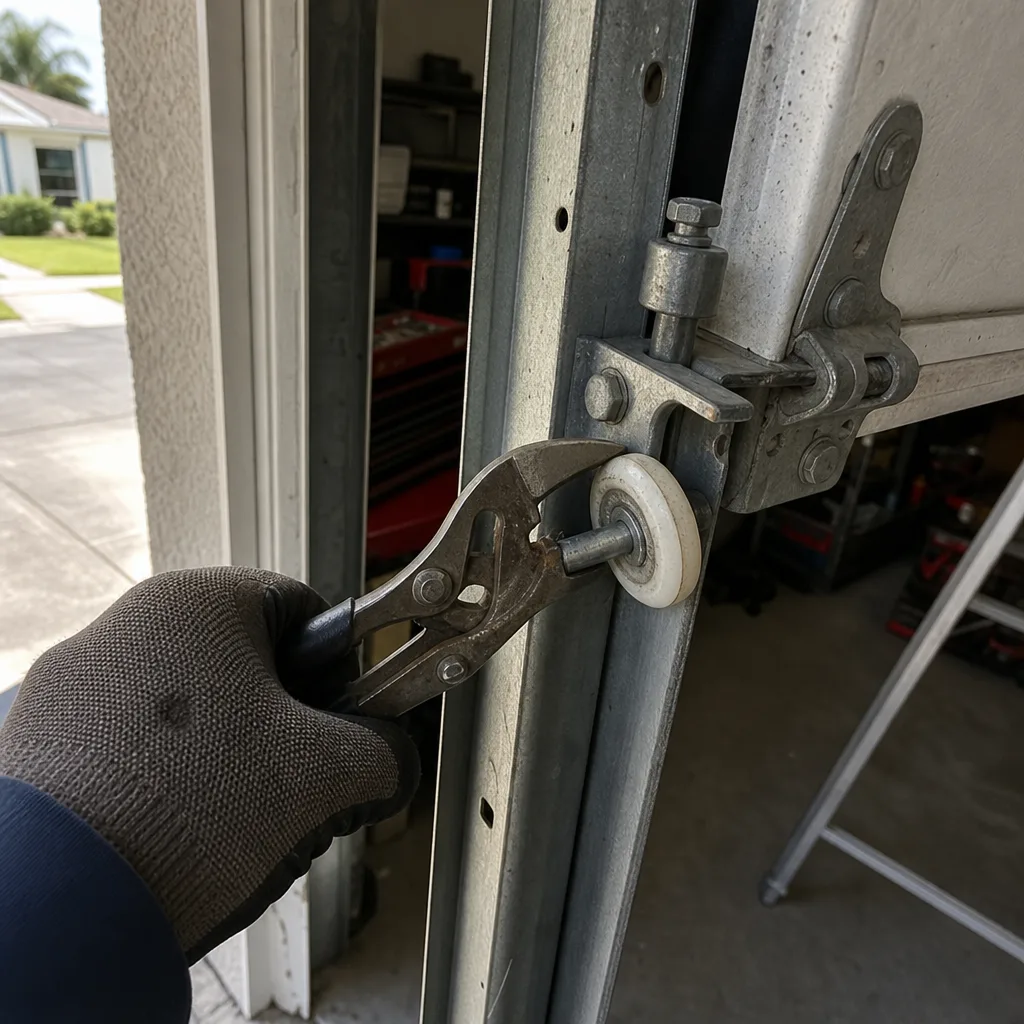
We see this pattern in Tampa title work more often than homeowners expect: a garage door was replaced by an unlicensed handyman in 2019, the permit was never pulled, and in 2026 the house goes under contract. For details on permits, see Garage Door Permits, Codes & Inspections in FL: What You Need to Know. During the title search or the buyer’s inspection, the non-permitted work surfaces. The seller is now stuck with one of three outcomes.
Outcome one: The seller pays to bring the installation into compliance retroactively. This means hiring a licensed contractor to pull a permit, disassemble and reinstall the door to current code, and pass an inspection. Documented Florida title resolution cases show remediation costs between $1,200 and $2,800 for garage doors specifically, because the reinstalled door must meet current wind-load requirements, which may mean adding hardware the original install skipped.
Outcome two: The seller credits the buyer at closing for the cost of repair. Buyers’ agents in Tampa know what a non-permitted install costs to fix, and they ask for the credit. The seller pays it without getting the work done.
Outcome three: The deal falls through. If a buyer’s lender won’t underwrite a property with unpermitted structural work, the sale dies. In Hillsborough County’s current market, we’ve watched this happen on homes in Seminole Heights and Old Seminole Heights where garage doors were part of flips done without permits.
The math is simple: a legitimate permitted installation costs $80 to $150 more at the time of the work. A non-permitted installation costs $1,200 to $2,800 to remediate later, plus the stress and delay. This is not a gamble worth taking for savings of less than 10 percent of the project cost.
Negotiable vs. Fixed: Where You Can Push, Where You Can’t
Not every number on a Tampa garage door quote is negotiable. Here’s the breakdown of what’s set by code or material pricing, and what a legitimate contractor can actually adjust.
Fixed. Do not negotiate on these:
- Permit fees. Set by Hillsborough County. Any contractor who discounts a permit fee is not pulling a permit.
- Impact-rating requirements. If your address is in a wind-borne debris zone, the FBC mandate is not optional and there is no compliant workaround.
- Manufacturer-set door panel pricing. A Clopay or Amarr panel has wholesale pricing that’s the same for every licensed contractor in the region. A quote that’s $400 under market for the same door model usually means cheaper hardware, skipped line items, or a door that doesn’t exist at that price.
- Disposal and transfer station fees. These are set by the county and the transfer station, not by the contractor.
Negotiable. These are legitimate places to ask:
- Labor. A contractor with a light schedule may discount labor on a multi-day flex installation. Don’t expect more than 5 to 10 percent off, and don’t expect it during storm season or early summer, which is peak demand in Tampa.
- Opener upgrades. If you’re replacing both door and opener, ask for package pricing. A $200 door install and a $500 opener install might become $620 together because the technician is already on site with tools out.
- Old door removal. If you have a way to dispose of the old door yourself (you almost certainly don’t, and the transfer station will charge you anyway), the haul-away line could be waived. We include it because we’ve seen what happens when homeowners try to fit a 16-foot door panel in a pickup.
- Spring upgrades. High-cycle springs are a legitimate upsell, but the margin on them is more flexible than the margin on material costs. Ask what the cost difference is and decide based on how long you’ll own the home.
The negotiation that matters most is not the price conversation. It’s the scope conversation. A written scope that lists every line item protects you more than any discount.
How to Read a Tampa Garage Door Quote
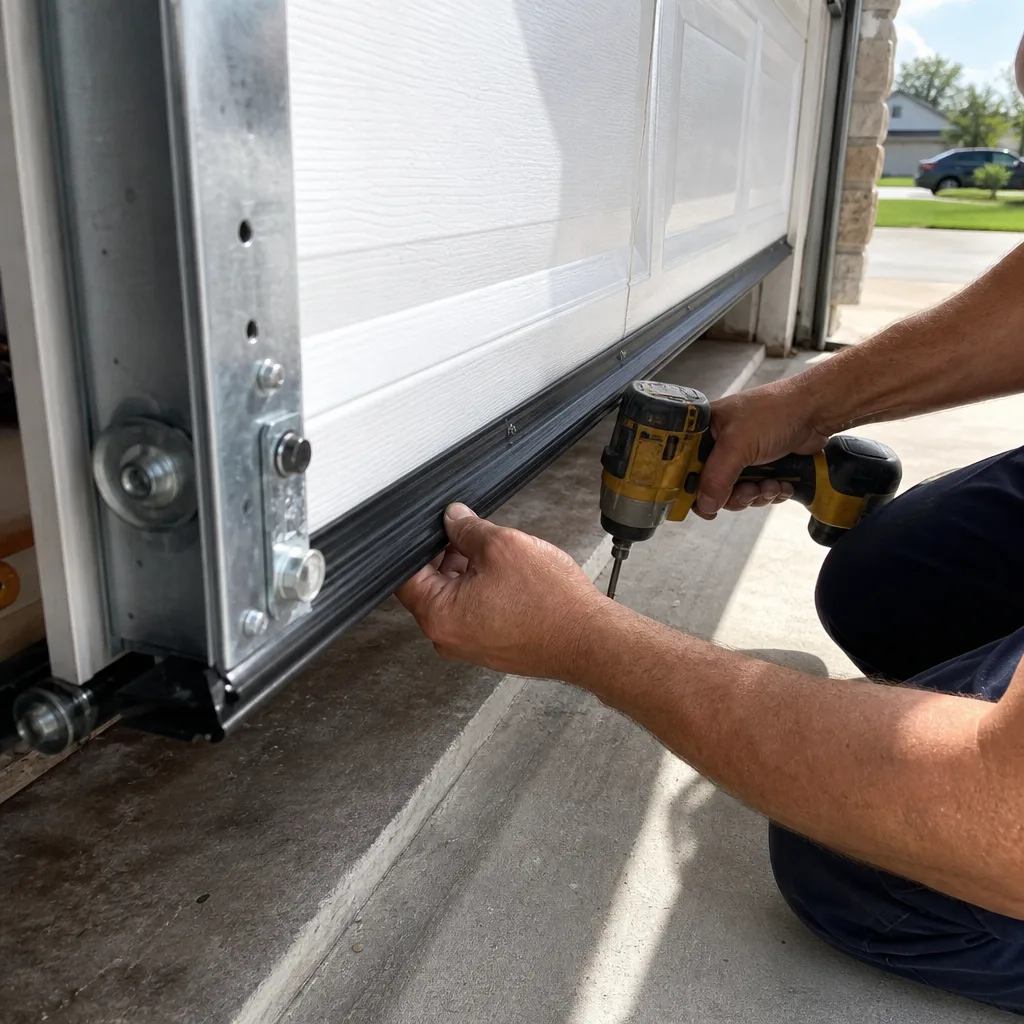
Here’s our step-by-step method for evaluating any written garage door estimate in Hillsborough County. We call this the five-line test.
- Is there a line for the door panel that names a brand and model? “16×7 steel door, white, non-insulated” is not a model. “Clopay 4050 16×7, white, 25-gauge steel” is a model. If there’s no model number, you cannot verify whether the door is what was installed.
- Is there a line for the torsion spring assembly that specifies the spring type? “Springs included” tells you nothing. A quote should say “torsion spring, high-cycle, 0.250-inch wire, right and left wound.” If you don’t see wire diameter or cycle rating, ask.
- Is there a permit line with a fee, or a sentence stating the permit is included? If neither exists, assume you’ll be paying $80 to $150 more, or that the contractor does not intend to pull a permit at all.
- Is there a haul-away and disposal line? Same logic. If it’s missing, it becomes a change order after the door is off the tracks.
- Is there any language that says “additional work may be required at additional cost”? This is the change-order clause. A legitimate quote in Tampa will specify exactly what’s included and will handle unexpected conditions with a photograph, a written explanation, and a signed change order before any additional work proceeds.
At Servo Garage Doors Tampa, Clause 4 of The Haven Standard is why the technician photographs the failed part before quoting a replacement. You see the broken torsion spring. You see the worn track bracket. You make the call on the scope with evidence in front of you, and the price was already written on the page before anyone touched a tool.
If you’re comparing two quotes and one fails the five-line test, you’re not comparing the same job. You’re comparing two different jobs with the same opening sentence.
Common Mistakes to Avoid
- Accepting a verbal quote. If it’s not written, it doesn’t exist. A verbal number creates a dispute about what was promised. A written scope creates a contract. In Tampa, where the same door can legitimately cost $1,800 or $3,200 depending on requirements, you want the written version.
- Choosing the lowest bid without checking what’s missing. The $900 quote that’s $600 below market is missing something. Usually it’s the permit, the haul-away, or the wind-load hardware. You’ll pay for it eventually, either as a change order or at resale.
- Skipping the permit to save $120. Hillsborough County permit fees on garage doors are under $150. The remediation cost for unpermitted work is $1,200 to $2,800. The math does not justify the gamble.
- Replacing the door without inspecting the tracks and hardware. New door on old tracks is a recipe for a door that binds, sags, or fails early. The tracks should be on the quote as a line item, and if they’re not, ask why.
- Upgrading to a deluxe door while keeping a 15-year-old opener. An old opener with worn gears will struggle with a new, heavier door, especially an insulated or impact-rated model. If your opener is past its lifespan, replace it in the same visit and ask for package pricing.
- Ignoring the impact-rating question entirely. If your address falls in a wind-borne debris zone and you install a non-impact door, the permit won’t pass inspection. You’ll pay for the correct door twice. Know where your home sits before you shop.
When to Call a Professional
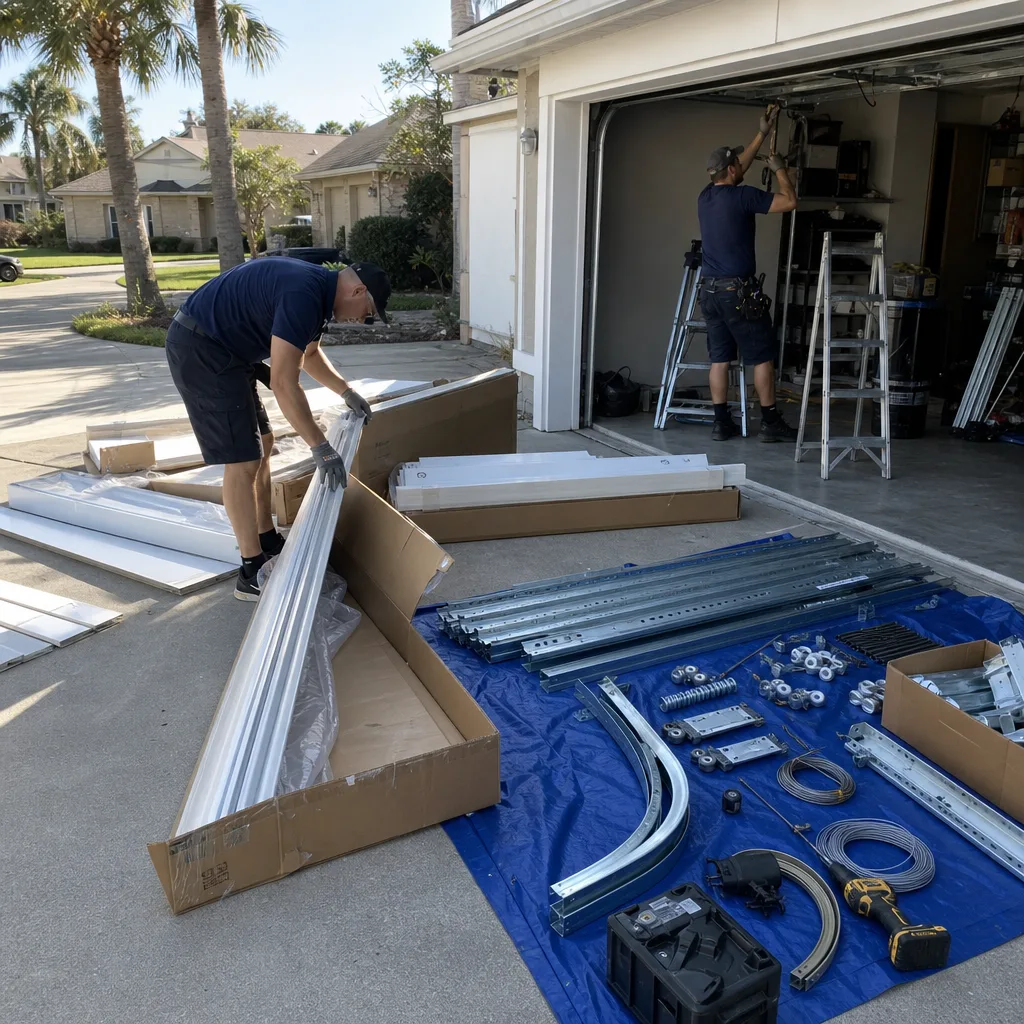
A garage door replacement is a structural, code-governed installation. It involves high-tension torsion springs that store enough force to cause serious injury, panels heavy enough to require two people and proper lifting equipment, and wind-load specifications that a permit inspector will verify. This is not a DIY project, and it’s not a handyman job. It’s a licensed contractor’s job.
If your door is sagging, binding, or the spring is broken, the safest move is to stop using the door and call someone who can show you what failed. A broken torsion spring is under tension even when compressed, and the torque it holds is not something to experiment with. Servo Garage Doors Tampa offers free estimates in Tampa, and we answer the phone at (656) 223-3036 with a real person, day or night.
Frequently Asked Questions
A complete standard two-car garage door replacement in Tampa costs between $1,800 and $3,300 for a non-impact-rated steel door with opener, permit, and haul-away included, based on 2025 Hillsborough County project data we’ve documented. Impact-rated doors run $2,500 to $4,500. Nationally published averages understate Tampa costs by 20 to 35 percent because they exclude FBC wind-load hardware and local permit fees. Call (656) 223-3036 for a written quote on your specific door and address.
A garage door without an opener in Tampa costs between $1,450 and $2,650 installed with permit and haul-away, depending on whether the door is single-layer steel or insulated steel. The opener adds $350 to $800 on its own line. If your existing opener is under 10 years old and in good working order, it can typically be kept and will operate the new door without issue.
Yes, Hillsborough County requires a permit for a full garage door replacement, and the permit fee is $80 to $150 depending on the job valuation. The permit triggers an inspection that verifies wind-load compliance. A contractor who offers to skip the permit saves you money now and creates a $1,200 to $2,800 remediation problem at resale.
If your home is within one mile of Tampa Bay or the Gulf coast, impact-rated construction is required by Florida Building Code and is not an optional upgrade. Outside the wind-borne debris zone, an impact-rated door adds $600 to $1,800 and provides structural integrity in a storm that a standard door cannot match. Some insurers offer premium reductions for impact-rated garage doors in Tampa, but confirm with your carrier before buying on that basis.
A same-day installation is generally not available for a full door replacement because the door must be measured, ordered, and fitted to your opening, and the permit must be pulled before work starts. In our experience, a standard non-impact replacement in Tampa is typically scheduled within 3 to 7 business days after the written quote is accepted. For rapid service on garage door repair in Tampa, our live team is reachable 24/7 at (656) 223-3036.
Run the quote through the five-line test: a named door brand and model, a specified torsion spring with wire diameter, a permit line, a haul-away line, and no open-ended “additional work” language. If a quote fails any of those tests, it’s incomplete at best. We offer a free second opinion on any written estimate from another company in Tampa, and you can bring the paperwork to us directly. Browse more guides & resources on garage doors, maintenance, and Tampa-specific requirements.
The Bottom Line
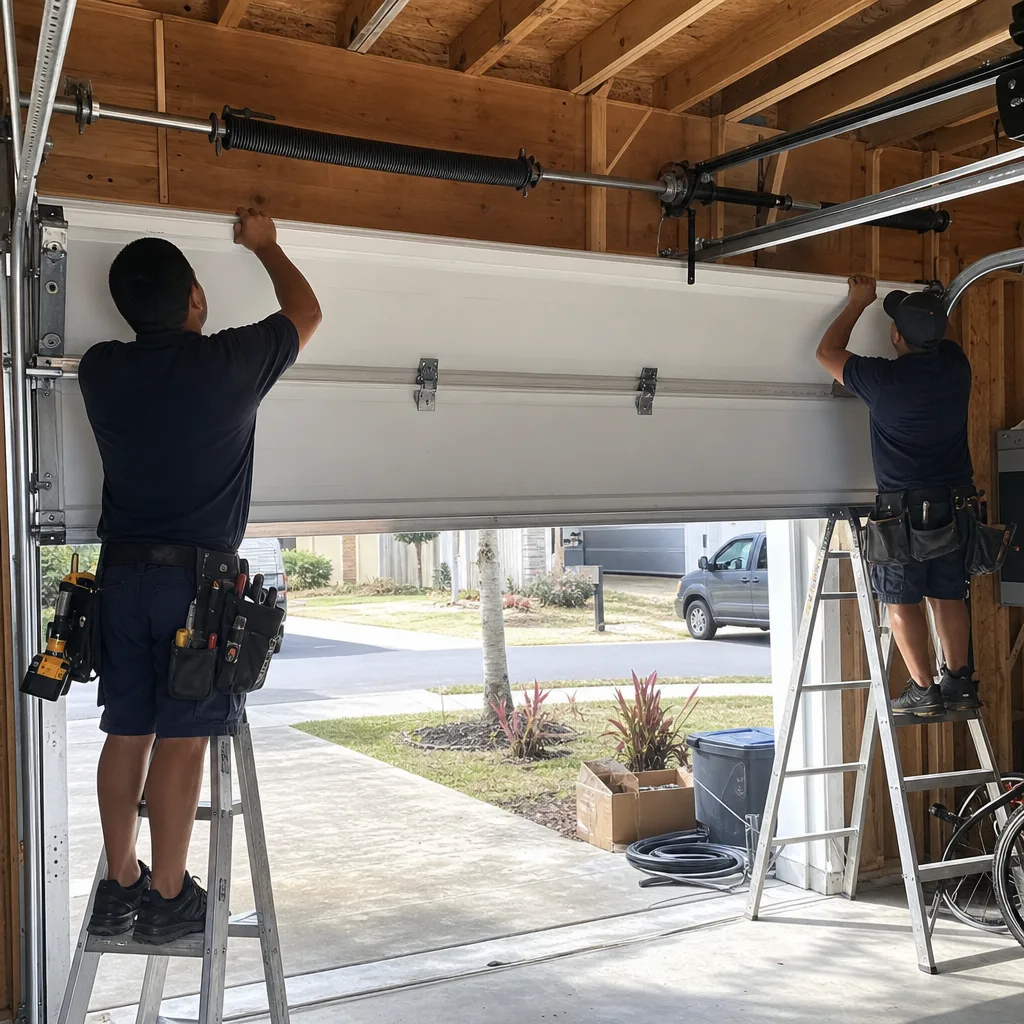
A garage door replacement in Tampa is a $1,800 to $4,200 project whose final cost depends on three things: the door material, the wind-load requirements at your address, and whether your quote actually includes everything the job requires. National averages are 20 to 35 percent too low for this market. The homeowners who get the best results are the ones who read the line items, ask for a written scope, verify the permit, and don’t let “call for a quote” stand in for what should be a documented price. That’s the way we’ve done it at Servo Garage Doors Tampa since 2015, and it’s the way The Haven Standard requires us to keep doing it.
Written by Marcus Deller, Owner at Servo Garage Doors Tampa, serving Tampa since 2015.