
Last updated September 20, 2026
Full 25-point door and opener safety check with every visit - springs, cables, rollers, tracks, and your LiftMaster or Chamberlain opener included
You get a price before we start. It does not change when the truck arrives.
 Before
 After
After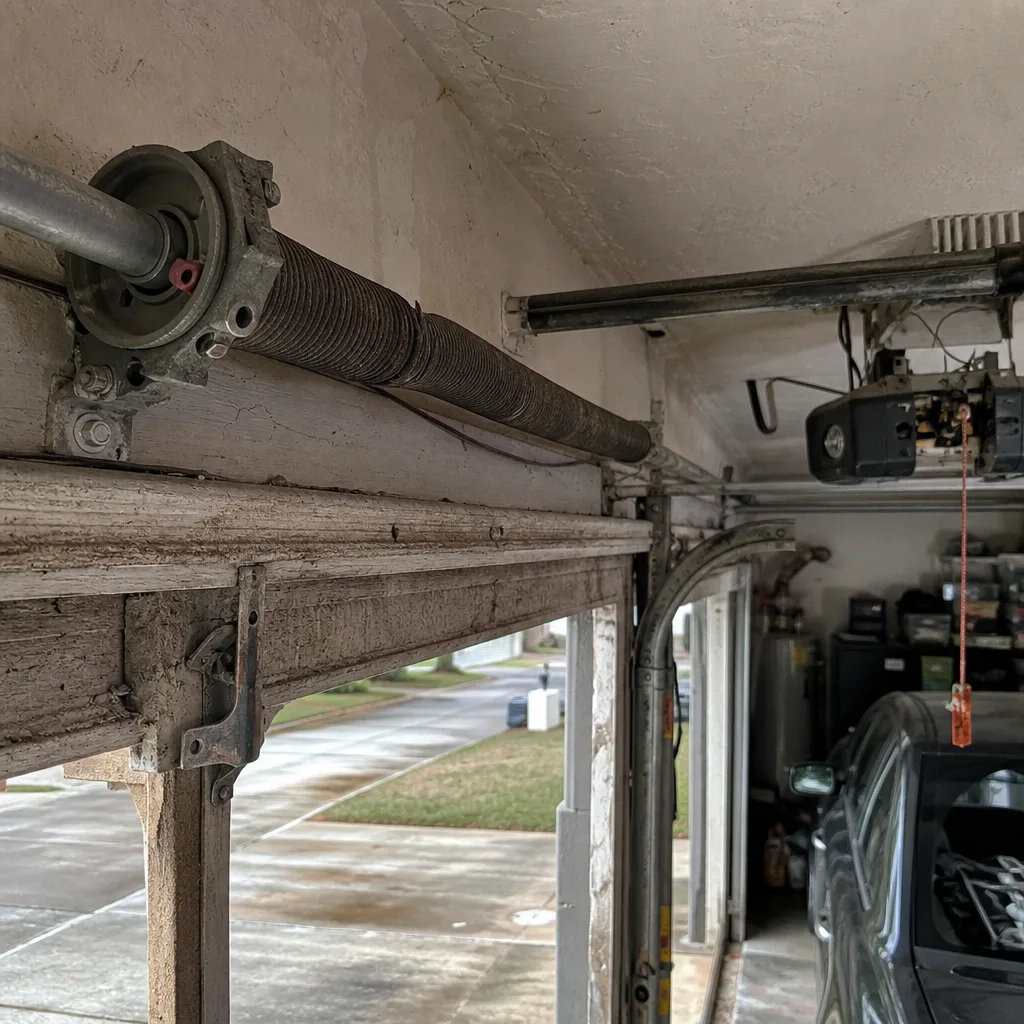 Before
 After
After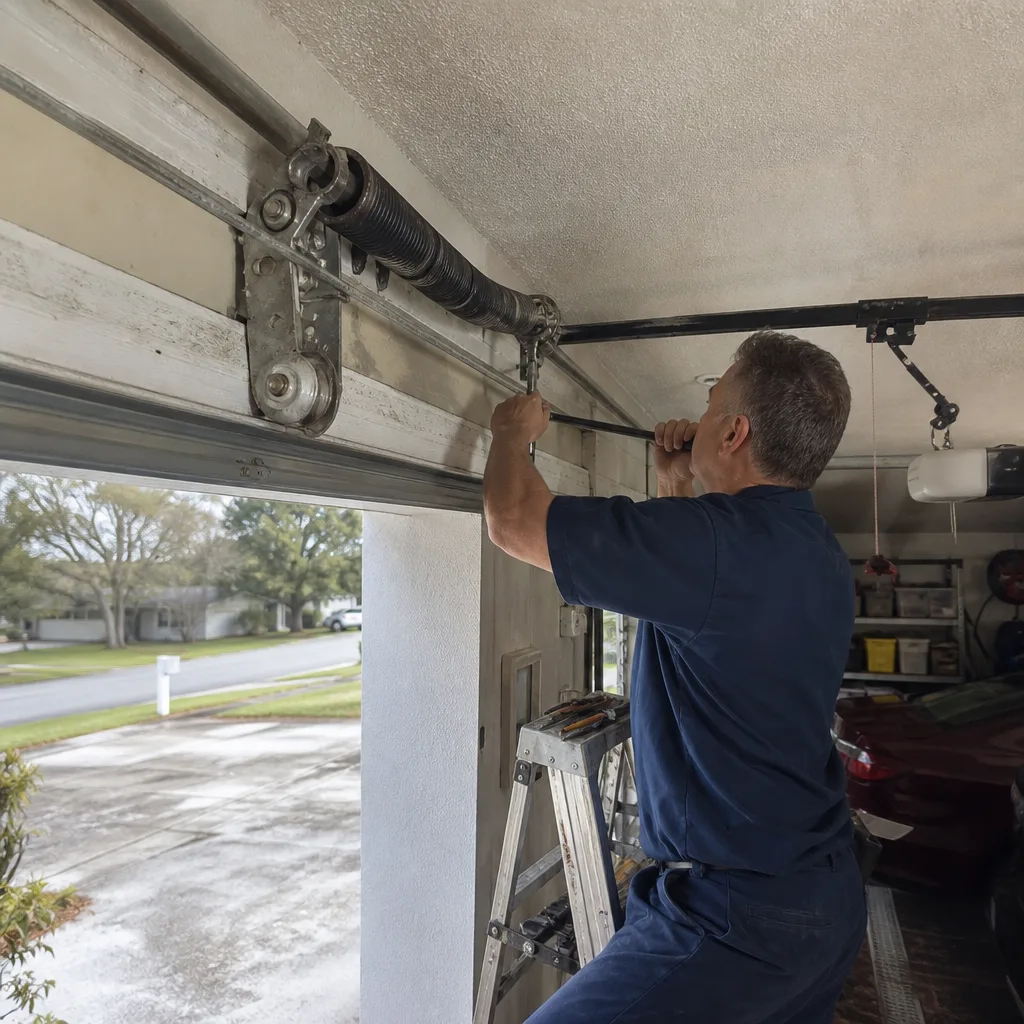 Before
 After
AfterDIY vs Professional Garage Door: The Tampa Homeowner’s Decision Guide
A Tampa homeowner can legally replace their own garage door panels and opener under Florida Statute 489.103(7). The moment the work involves structural attachment or wind-load certification, the exemption ends, and the insurance and permit consequences of misclassifying that line are the homeowner’s to bear. This guide draws that legal line first, then addresses skill and safety within the permitted DIY scope. You’ll learn which tasks Florida law allows you to do, which ones require a licensed contractor, and what documentation protects you either way.
Quick Answer
In Tampa, the DIY-versus-professional decision for garage doors is primarily a code compliance question, not a skill question. Florida Statute 489.103(7) lets homeowners replace panels, openers, and weatherstripping on their own property without a license, but torsion spring replacement, structural modifications, and anything requiring wind-load certification fall outside that exemption and require a licensed contractor. If the work needs a permit, the person pulling it must be licensed for that scope, and a homeowner exemption closes only if the work stays cosmetic or non-structural.
Table of Contents
- What Florida Law Actually Permits: Reading FS 489.103(7)
- Task-by-Task Classification: DIY-Eligible vs Professional-Only
- Why Torsion Springs Are Professional-Only: The Energy Math
- Tampa’s Wind-Load Requirements and What They Mean for DIY
- Documenting DIY Work the Right Way
- The Cost Math on Borderline Tasks
- Common Mistakes to Avoid
- When to Call a Professional
- Frequently Asked Questions
- The Bottom Line
 Before
 After
AfterWhat Florida Law Actually Permits: Reading FS 489.103(7)
Florida Statute 489.103(7) is the homeowner exemption to contractor licensing. The relevant text says a property owner may act as their own contractor when the work is performed on their own property, for their own use, and the property is not intended for sale or lease within one year of completion. That third condition matters in Tampa’s real estate market, where homes bought between 2015 and 2025 change hands regularly. If you plan to sell within a year of doing the work yourself, the exemption does not apply, and the work required a licensed contractor from the start.
The exemption has hard boundaries. It permits unlicensed work that is non-structural and non-mechanical in the regulated trades sense. Replacing a garage door opener that plugs into an existing outlet is permitted. Replacing panels on an existing track system is permitted, provided the track itself is not being moved, re-anchored, or modified. Replacing weatherstripping, rollers, hinges, and sensors is permitted. What is not permitted, regardless of skill level: replacing or adjusting torsion springs, modifying or replacing the track support system, altering the header or jambs to fit a different door size, and installing a new door where none existed before, because that installation is structural attachment.
The distinction is not about difficulty. It is about liability. A homeowner who replaces a torsion spring and gets it wrong faces not just a failed repair but a potential denial of a future insurance claim if the failure can be traced to unpermitted, unlicensed work. In Tampa, where windstorm claims are already scrutinized closely, the paper trail matters as much as the repair.
For work that falls inside the exemption, Florida law says you may do it. The question becomes whether you should, and the answer depends on the task, the tooling, and what documentation you walk away with. We’ll get to that. But first, the classification table, because most Tampa homeowners we talk to want the boundary stated plainly.
Task-by-Task Classification: DIY-Eligible vs Professional-Only
Here is the line, drawn task by task. The classifications below reflect Florida Statute 489.103(7) and the Florida Building Code as applied in Tampa. Where a task is conditional, the condition is stated.
| Task | Classification | Condition or Note |
|---|---|---|
| Opener remote programming | DIY-eligible | No permit required. Follow the manufacturer’s pairing sequence. |
| Safety sensor realignment | DIY-eligible | Adjust the bracket, not the wiring. Low voltage only. |
| Weatherstripping and bottom seal replacement | DIY-eligible | No permit required. Buy the correct profile for your door brand. |
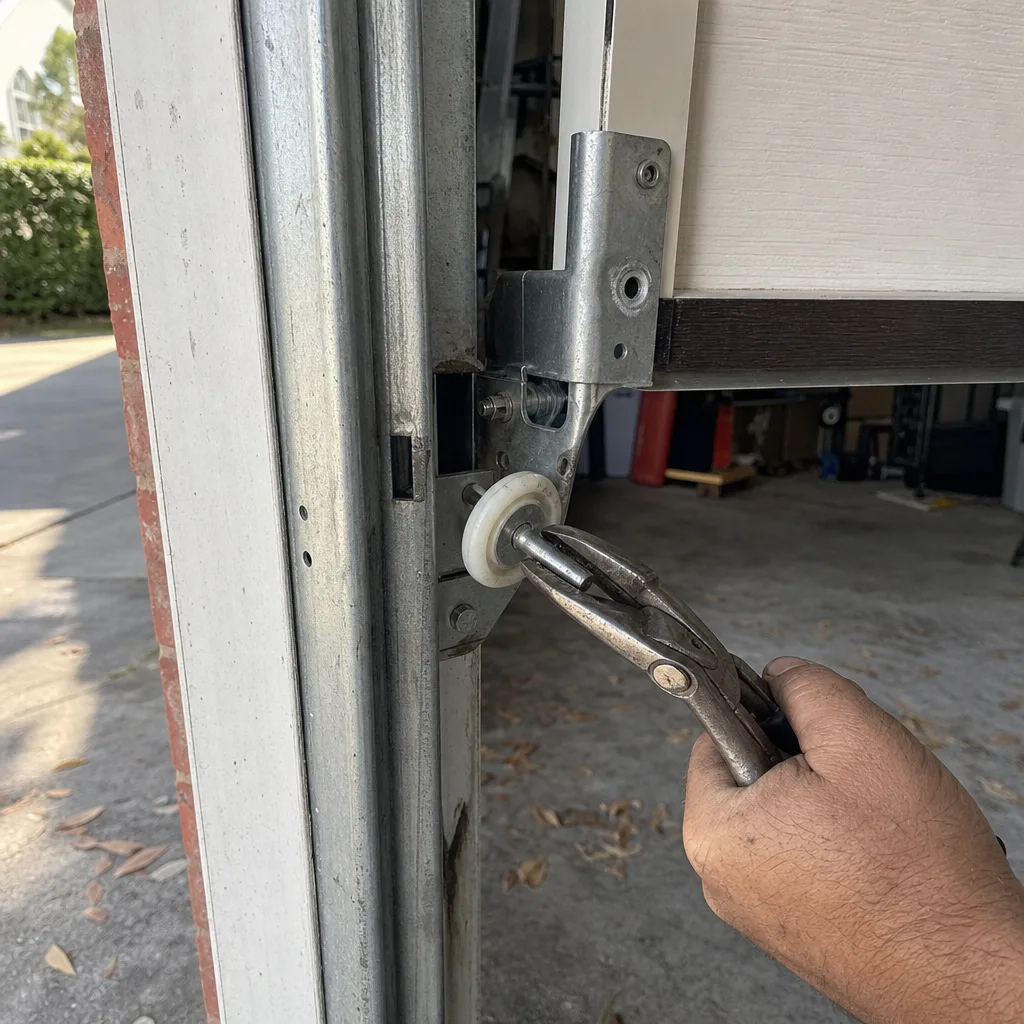
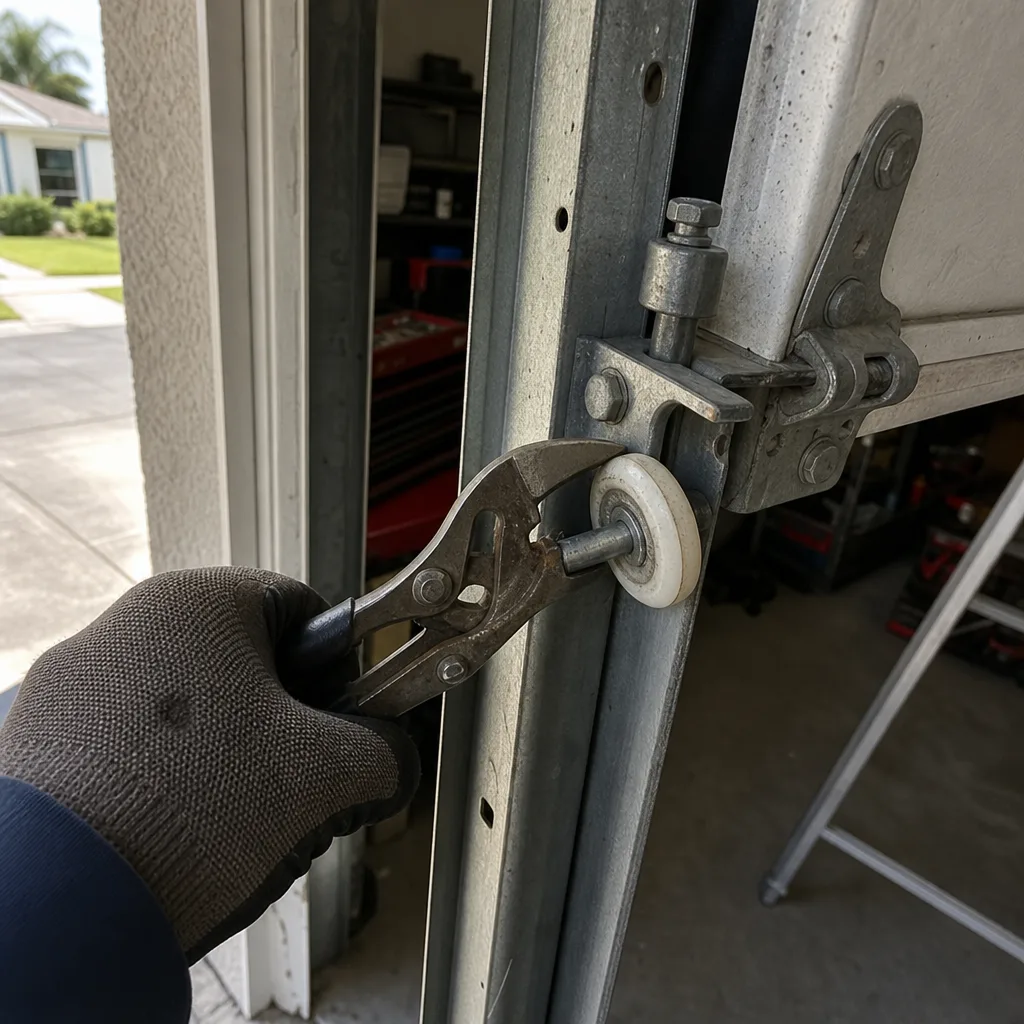
| Roller and hinge replacement | DIY-eligible | Leave the bottom bracket alone. If the roller is in the bottom bracket, call a pro. |
| Opener replacement (plug-in swap) | DIY-eligible | Must use an existing grounded outlet. No new wiring. No structural changes. |
| Panel replacement on existing track | Conditional | DIY-eligible if no track, spring, or cable is touched and the panels are the same brand and model line. If any of those three are touched, professional and likely permitted. |
| Track adjustment or re-anchoring | Professional | Track brackets carry the door’s weight through the wall. Moving them is structural. Florida Building Code requires a licensed contractor if an anchor point changes. |
| Torsion spring replacement | Professional | No homeowner exemption applies. The spring is under tension and the work is explicitly outside FS 489.103(7) scope. |
| New door installation (no existing door) | Professional | Structural attachment to header and jambs. Permit required in Tampa. Wind-load certification required. |
| Cable replacement (any lift cable) | Professional | Cables work in tandem with the spring system. Replacing one without the proper procedure transfers tension incorrectly. |
The pattern: anything that plugs in, snaps on, or slides into an existing, unmodified system is your call. Anything that changes an anchor point, carries door weight, or stores mechanical energy is a licensed contractor’s call. That rule of thumb keeps you on the right side of the statute in Tampa.
Why Torsion Springs Are Professional-Only: The Energy Math
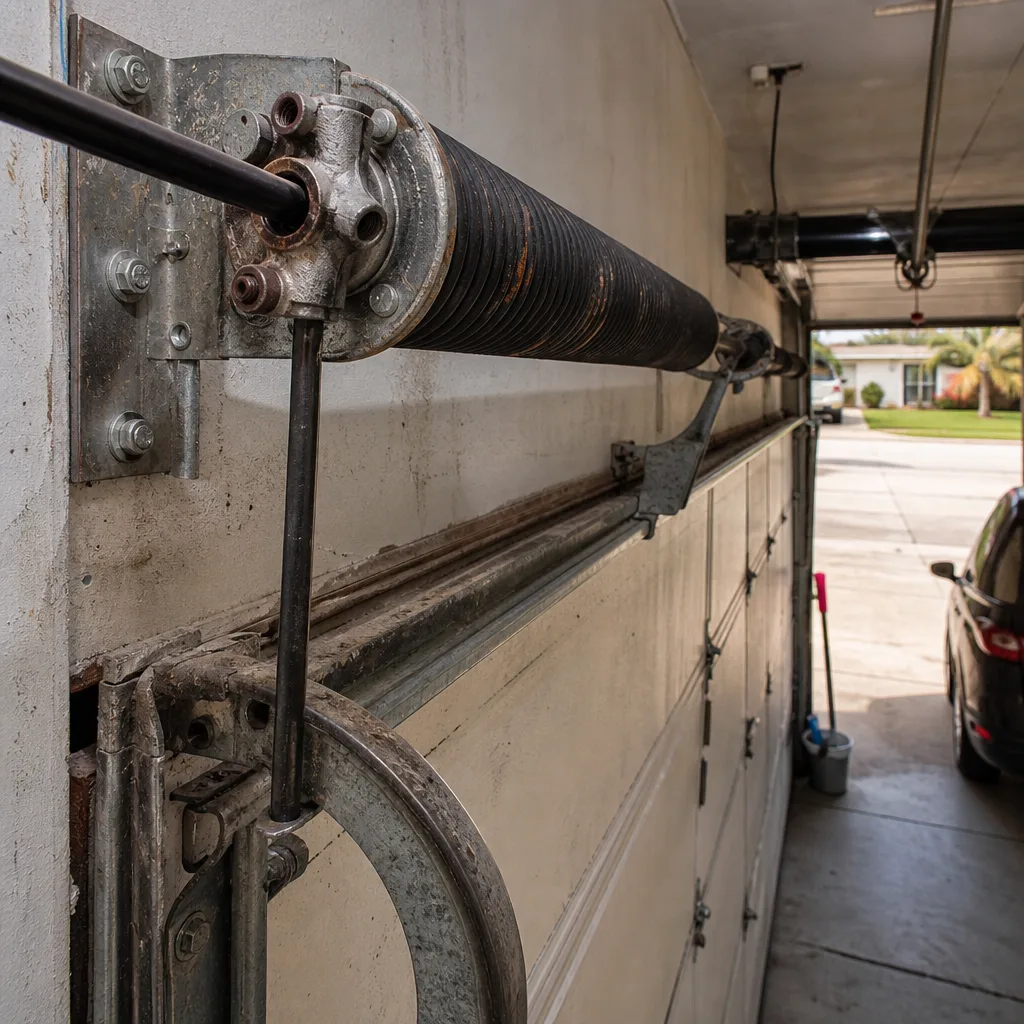
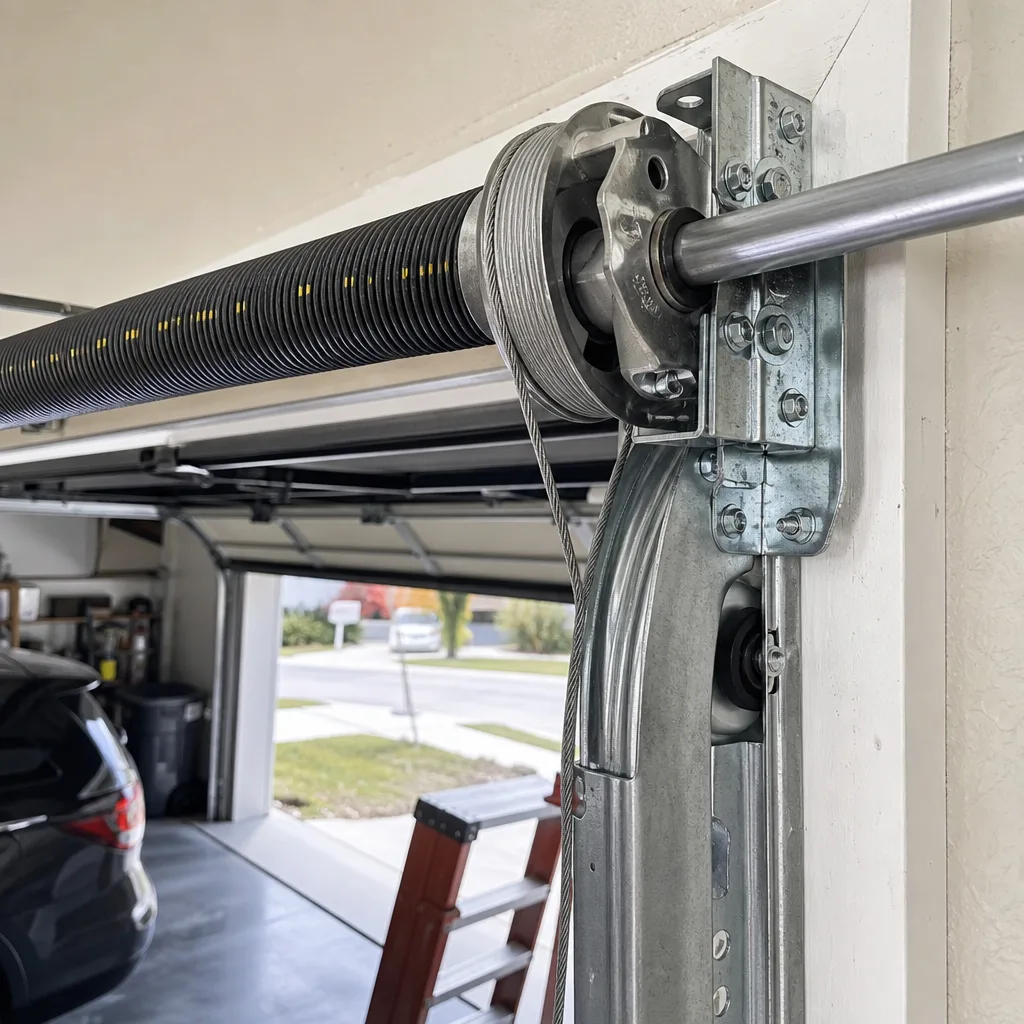
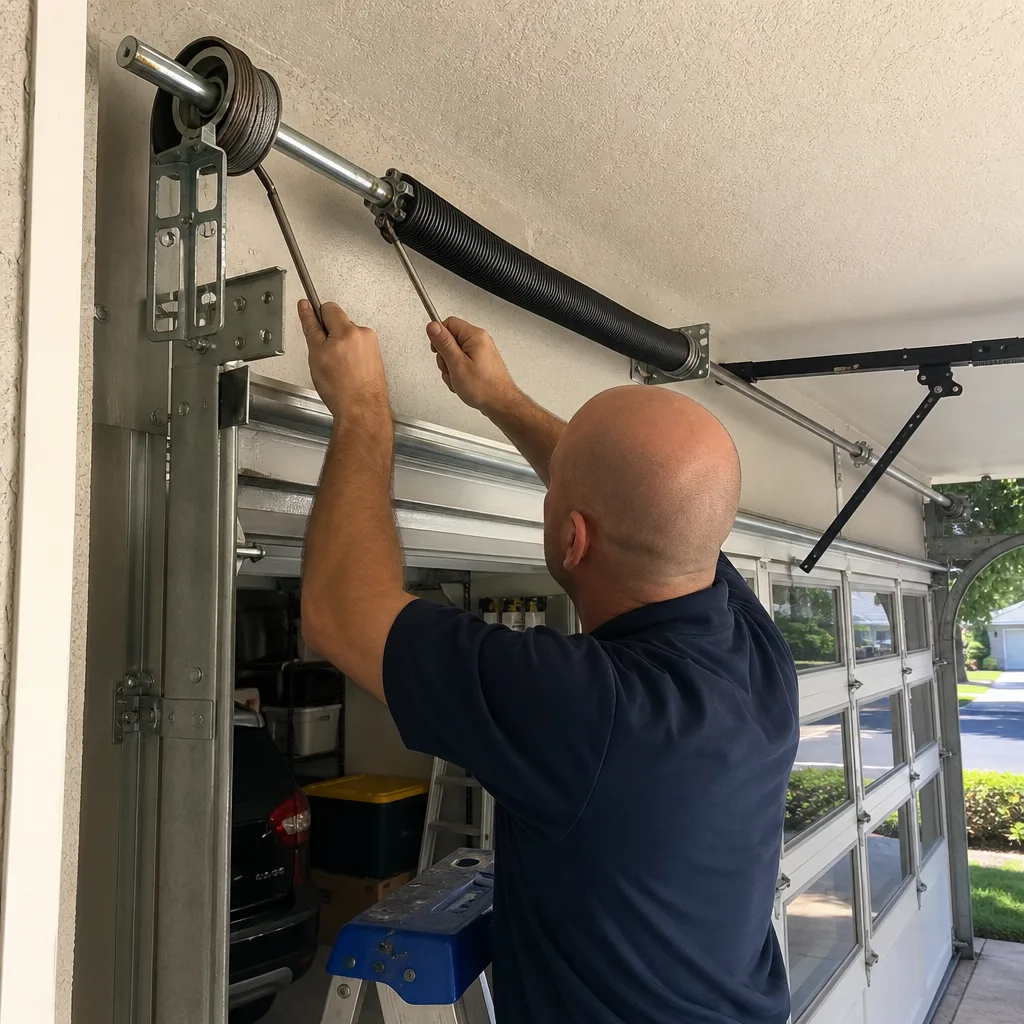
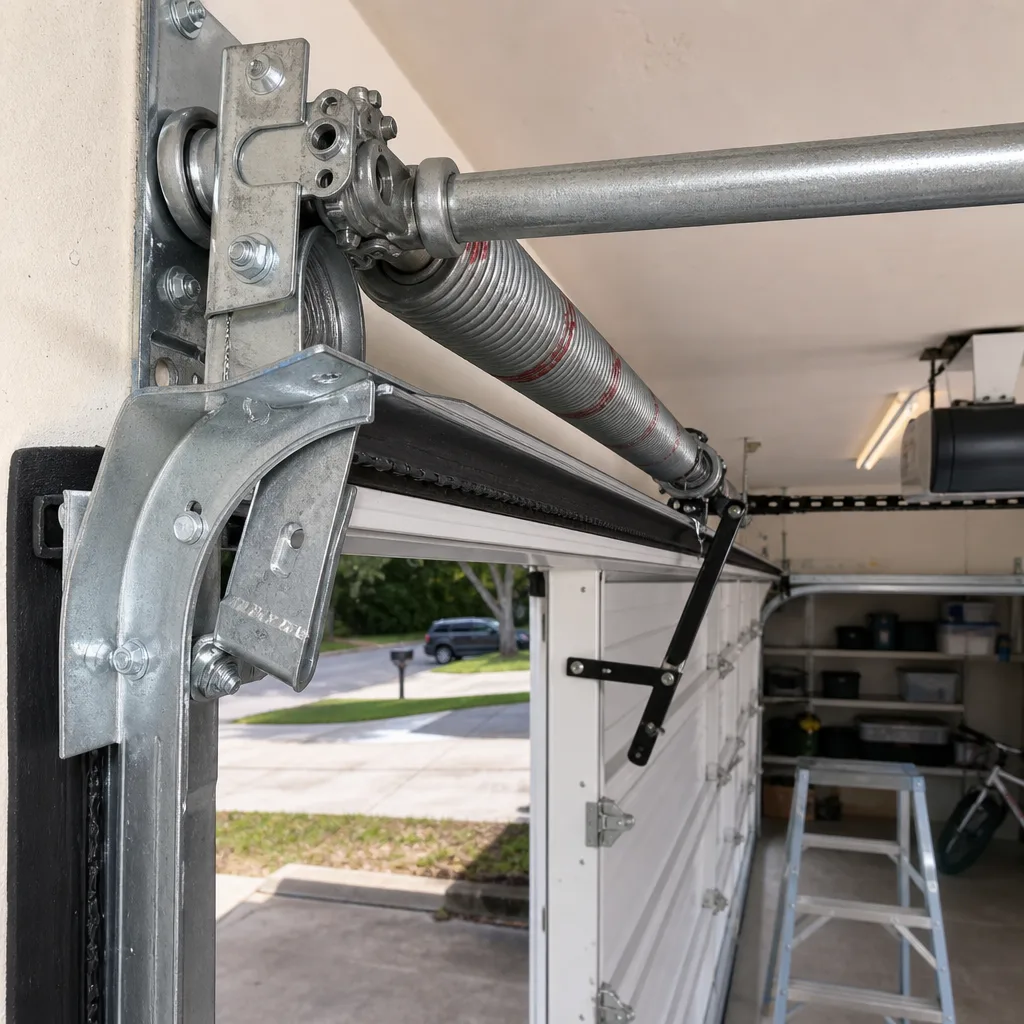
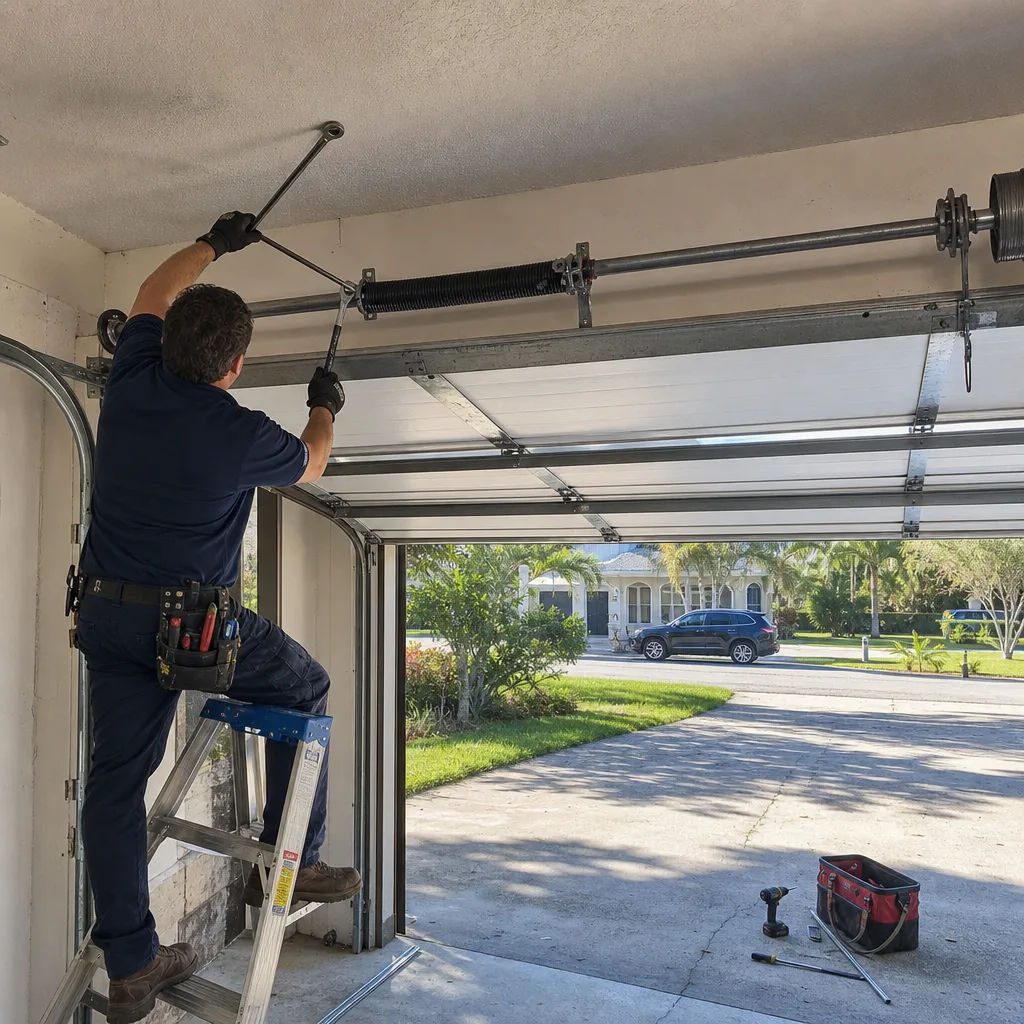
A standard 200 lb-rated torsion spring on a residential garage door stores roughly 100 foot-pounds of energy at full wind. That is the equivalent of a 100-pound weight dropped from one foot. When a spring breaks or slips, that energy releases in milliseconds. The winding cone, a steel fitting at the spring’s end, can reach release velocities high enough to fracture bone. This is not a “be careful” scenario. It is a “do not be in the room” scenario, which is why Florida law places torsion spring work squarely outside the homeowner exemption.
The math is straightforward. A torsion spring works by twisting, not stretching. Each twist stores torque in the coil. A 0.225-inch wire diameter spring wound seven and a half turns stores energy proportional to the square of the wire diameter. Move up to a 0.250-inch wire, common on 16-foot doors and heavier Amarr or Wayne Dalton models in Tampa, and the stored energy increases roughly 35 percent at the same wind count. The door’s weight is not the variable that injures people. The stored torque is.
What a licensed technician does differently: the winding bars are sized to the cone’s socket, the spring is unwound in controlled quarter-turns with the body positioned outside the bar’s arc, and the replacement spring is matched to the door’s exact weight and drum geometry, not guessed from the old spring’s visible diameter. At Garage Door Repair in Tampa, we photograph the failed spring before quoting a replacement. Clause 4 of The Haven Standard requires it. You see the break at the coil, the measured wire diameter, and the written price before a single winding bar touches the cone.
The safe DIY action for a broken spring is this: stop using the door. Disconnect the opener from the door arm so nobody tries to raise it. Take a photo of the break. Then call a licensed contractor. The call is not an admission of defeat. It is the correct classification of the repair under Florida law.
Tampa’s Wind-Load Requirements and What They Mean for DIY
Tampa sits in a High Velocity Hurricane Zone for parts of its coastal edge and a wind-borne debris region throughout. The Florida Building Code requires garage doors on new installations to be wind-load rated. That rating must match the structure’s design pressure, which varies by address, exposure category, and whether the door faces the prevailing wind. A door rated for 130 mph is not automatically compliant for a 150 mph zone, and the difference is not a sticker. It is the gauge of the steel, the number of reinforcement struts, and the anchoring schedule into the header and jambs.
This is where the homeowner exemption ends on a new installation. The moment a garage door is attached to the structure as a new opening or a replacement of the entire door-and-track system, a permit is required in Tampa. The permit requires a wind-load calculation or a product listing that matches the structure. The person signing that permit application must be licensed for the scope. FS 489.103(7) does not let a homeowner pull a wind-load-rated garage door permit as their own contractor, because the work includes structural attachment.
Panel replacement gets a conditional pass. If you are swapping damaged panels on an existing, already-permitted door, using the same brand and model line, and the track, springs, cables, and anchors stay untouched, you remain inside the exemption. The reasoning: the wind-load system is the track, struts, and anchoring, not the panel face. But the moment a panel is so damaged that the strut behind it needs replacement, or the track pulled out of alignment by the same impact, the work crosses into structural repair, and a licensed contractor is required. That distinction is one most guides miss, and it is the one that matters for permit closure and insurance claims after a Tampa storm.
If you are unsure whether your repair crosses that line, the question to ask is not “can I do this?” but “would I be able to show a permit or a compliant product listing if asked?” If the answer is no, the work is professional. For a full replacement, Garage Door Installation in Tampa covers the permitting, the wind-load documentation, and the written scope before work starts.
Documenting DIY Work the Right Way
The same paper trail discipline that protects professional work protects DIY work. If you replace your own panels or opener, and you later sell the home, refinance, or file an insurance claim, the documentation you keep determines whether the work counts as an asset or a liability. Here is the documentation sequence we recommend, and it mirrors what a professional should hand you: written scope before work, photos during, and a record of what was found and what was done at the end.
- Before you start, photograph the existing condition. Take wide shots of the door from inside and outside, close shots of the track brackets, hinges, rollers, and any damage you are addressing. Date-stamp the photos. These establish the baseline condition before your work.
- Write down the scope in one paragraph. “Replacing four raised panels on a 16×7 non-insulated steel door, brand Amarr, model Lincoln 1000, using the same model panels, no track modification, no spring work.” That paragraph is your Clause 1: a written scope before work starts, even when you are the contractor.
- Photograph the parts you remove and the parts you install. Include the label or stamp on the new panels. This proves the replacement matched the original product line, which is the condition that keeps panel work inside the homeowner exemption.
- Photograph the completed work from the same angles as step one. The before-and-after pair is the evidence that no anchor point moved, no track was re-positioned, and the work stayed within the non-structural scope.
- Keep the receipt for the parts. The receipt carries the date, the product, and the vendor. It links your work to a specific time and a specific product, which is what a future permit question or property disclosure will ask for.
- File everything with your home records. The folder becomes your paper trail. If the home is ever sold, disclose the work with the documentation attached. The buyer’s inspector will find the work anyway. The documentation changes the finding from “unpermitted modification” to “documented homeowner maintenance within statutory exemption.”
This is not bureaucracy for its own sake. It is the same logic that drives the documented photo record Servo includes on every visit. The customer leaves with evidence of what was found and what was done. Do it for your own work and the work stands up to scrutiny.
The Cost Math on Borderline Tasks
Some tasks sit close enough to the DIY-professional line that cost should decide the question. Here is the math for the three most common borderline cases in Tampa.
Panel replacement. Individual raised panels for a common 16×7 steel door run $60-$110 each depending on brand. Four panels: $240-$440 in material. The professional quote for the same work includes the panels, the labor, and the documentation. It also transfers the liability for a misaligned fit, and it includes the photo record and written scope as standard. If the professional quote lands within $150-$250 of your material cost, the professional option buys the permit-compliance certainty and the transfer of liability for roughly the cost of one extra panel. That is the financially rational choice for most homeowners.
Opener replacement. A good belt-drive opener from LiftMaster or Chamberlain runs $180-$280 at retail. A plugged-in swap is DIY-eligible. But the professional quote includes removal of the old unit, proper rail alignment, force-setting adjustment, sensor alignment, and the written price before work starts. If the gap is under $200, the professional installation also carries the 365-Day Done Right Promise: if it is not right, it gets made right. A DIY opener that slams on close or reverses mid-travel is your problem to re-diagnose on a Saturday.
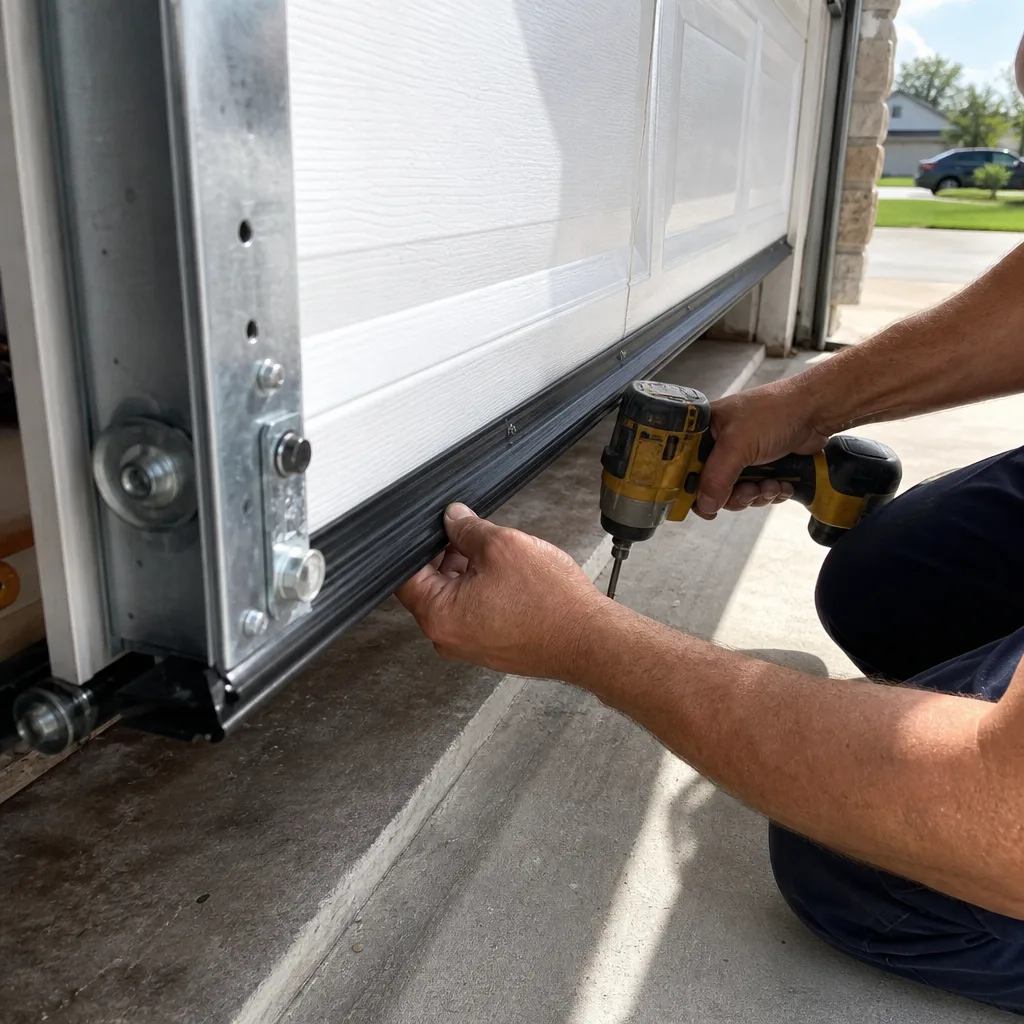
Weatherstripping and seals. Bottom seal replacement is unambiguously DIY. Material is $15-$35 for a roll of the correct profile. This is the task where DIY always wins on cost, because the labor is simple and the risk is near zero. The only condition: buy the right profile for your door brand. A Wayne Dalton door uses a different bottom retainer than a Raynor, and forcing the wrong profile produces a seal that leaks the first month in Tampa’s rainy season.
The rule: when a task sits inside the exemption and the risk is cosmetic or low, DIY is cost-rational. When a task sits on the conditional line, run the arithmetic on the professional quote before you spend on materials. The liability transfer and documentation often cost less than you expect, especially when the quote is written and flat, per Clause 1 of The Haven Standard.
For opener work, see Garage Door Opener Repair & Installation in Tampa. We carry parts for all major brands, and the written price is delivered before any work starts, not after the old unit is on the floor.
Common Mistakes to Avoid
- Replacing a torsion spring yourself. This is the most common and the most dangerous. The energy stored in a wound spring releases without warning. Florida law keeps this work outside the homeowner exemption for the same reason it keeps structural work outside it: the consequences of a mistake are severe and the liability is not contained to your garage.
- Calling panel replacement “DIY” while touching the track. The exemption covers panels, not anchors. The moment a track bracket is loosened, repositioned, or re-bolted, the work is structural and requires a licensed contractor. Tampa’s wind-load compliance depends on those anchors holding their design position.
- Buying the wrong profile weatherstripping. Generic seals fit poorly on brand-specific retainers. Match the seal to the door brand or you will redo the job after the first heavy rain. In Tampa’s wet season, that lesson costs a new roll and a wet floor.
- Failing to photograph before-and-after on DIY work. The documentation is what keeps your work inside the exemption narrative when it is questioned later. Photographs cost nothing. The absence of them costs everything if a future buyer or insurer asks for proof the work was non-structural.
- Assuming all professional quotes are padded. The price gap on borderline tasks is often narrower than the material cost difference suggests, especially once documentation and liability transfer are priced in. Get the written quote before assuming DIY saves enough to matter.
- Ignoring the one-year sale condition in FS 489.103(7). If you do the work yourself and then list the home within a year, the exemption was void from the start. In Tampa’s active resale market, that clock matters more than most homeowners realize.
- Using an extension cord to power a new opener permanently. The opener replacement exemption assumes an existing grounded outlet. A permanent extension cord is a code violation and a fire hazard, and it invalidates the exemption’s intent. If the outlet is not there, the electrical work is professional.
When to Call a Professional
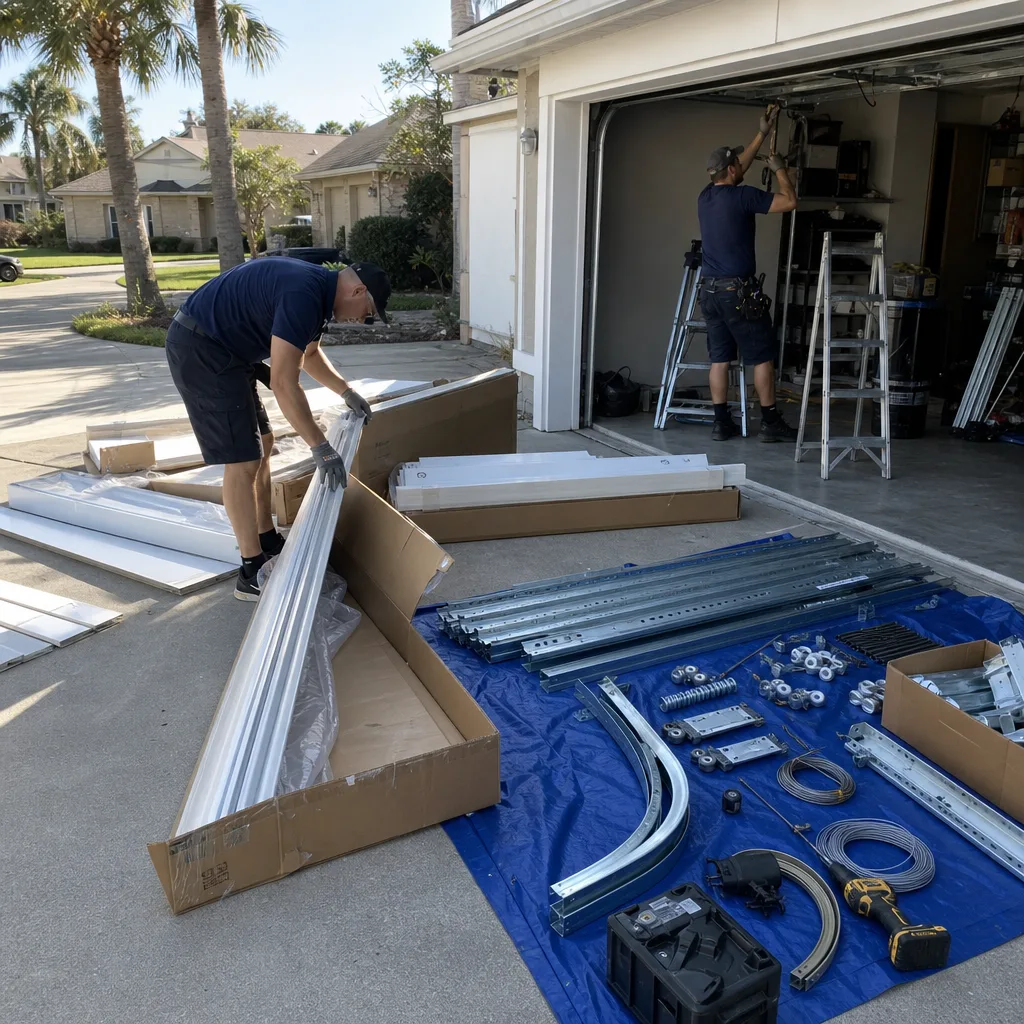
Call a licensed contractor when the work touches a torsion spring, a lift cable, a track anchor, a new installation, or any repair where you cannot produce a permit-compliant answer for the wind-load question. Call when the door is off-balance and you cannot identify why, when the opener runs but the door binds, or when you hear a sound you cannot source. Call when the home is within a year of a possible sale, because the exemption clock is running. Servo Garage Doors Tampa offers free estimates in Tampa, with a flat written price and written scope before any work begins. Call (656) 223-3036.
Frequently Asked Questions
Yes, if the replacement uses an existing grounded outlet and the swap does not require new wiring or structural changes, it falls inside FS 489.103(7). The work must be on your own property, for your own use, and the home must not be intended for sale within one year. Call (656) 223-3036 for a written quote if you would rather not do the swap yourself.
No. Torsion spring replacement is outside Florida Statute 489.103(7) scope regardless of skill level. The spring stores significant mechanical energy and the work requires a licensed contractor. Call (656) 223-3036 for a flat written price, and the technician will photograph the failed spring before quoting the replacement.
Panel replacement does not need a permit if the panels are the same brand and model line, the track is untouched, and the springs and cables are not modified. If a strut needs replacement or the track moved out of alignment, the work becomes structural and a permit is required. Call (656) 223-3036 for a free estimate on permitted panel work.
Keep before-and-after photographs, a one-paragraph written scope, receipts for the parts, and a record of what was removed and installed, matching the documentation in our Garage Door Repair Maintenance Checklist for Tampa Homeowners. This documentation supports a future property disclosure or insurance question by proving the work stayed within the non-structural homeowner exemption.
Most residential repairs in Tampa run $150-$400, with spring replacement typically $180-$340 and panel replacement $240-$550 depending on count and brand. Every Servo job is quoted with a flat written price and written scope before work starts. Call (656) 223-3036 for an exact quote, free.
Servo Garage Doors Tampa services LiftMaster, Chamberlain, Genie, Clopay, Amarr, Wayne Dalton, Craftsman, and Raynor. If your door or opener is one of the major brands, the parts are available and the technician knows the product line. Call (656) 223-3036 for a written price before any work begins.
The Bottom Line
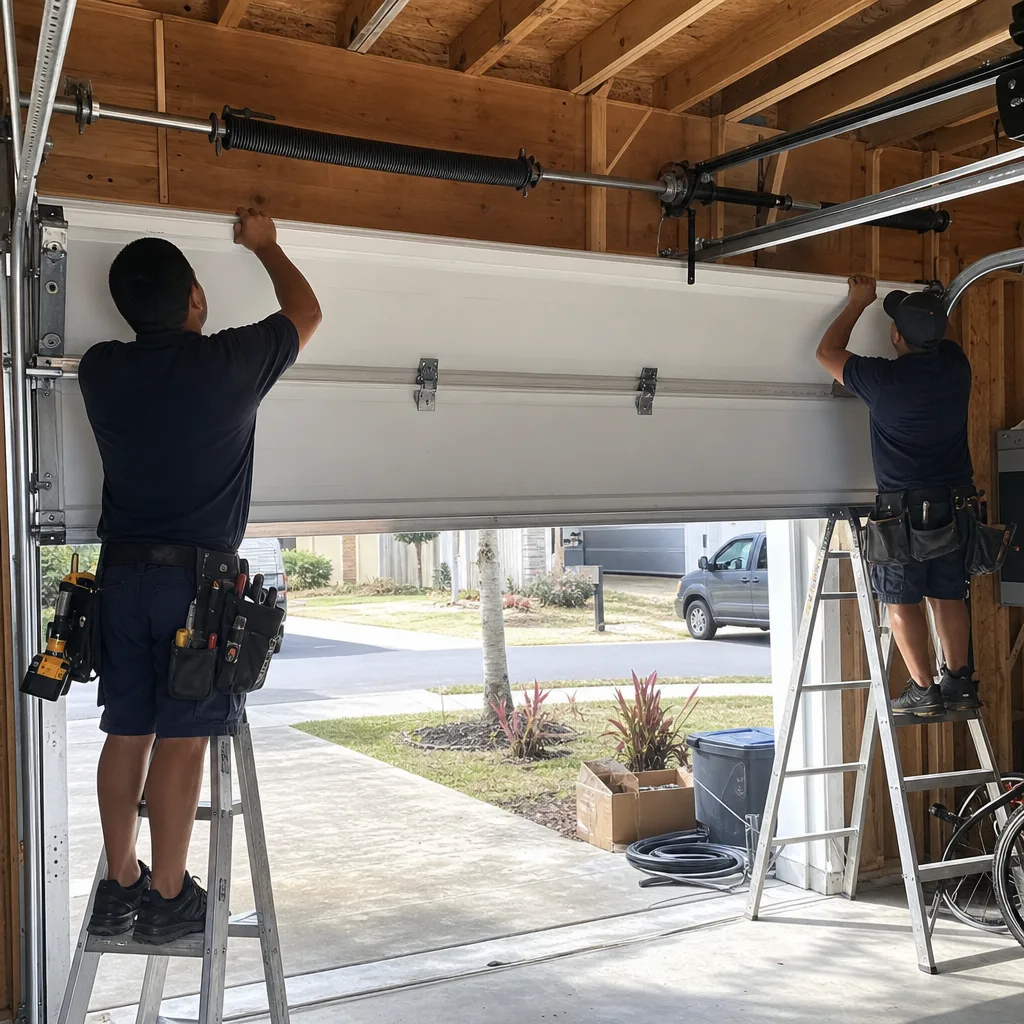
The DIY-versus-professional decision for garage doors in Tampa is a legal boundary question before it is a skill question. Florida Statute 489.103(7) lets you replace openers, panels, weatherstripping, and rollers on your own property under specific conditions, but torsion springs, track anchors, structural modifications, and anything requiring wind-load certification belong to a licensed contractor. Document whatever you do yourself with the same discipline a professional would use. Where the exemption ends, call someone who can show you the failed part, the written price, and the completed work. Call Servo Garage Doors Tampa at (656) 223-3036 for a free estimate, and see the full scope of what we do at Servo Garage Doors Tampa home.
Written by Marcus Deller, Owner at Servo Garage Doors Tampa, serving Tampa since 2015.