
Last updated September 20, 2026
Full 25-point door and opener safety check with every visit - springs, cables, rollers, tracks, and your LiftMaster or Chamberlain opener included
You get a price before we start. It does not change when the truck arrives.
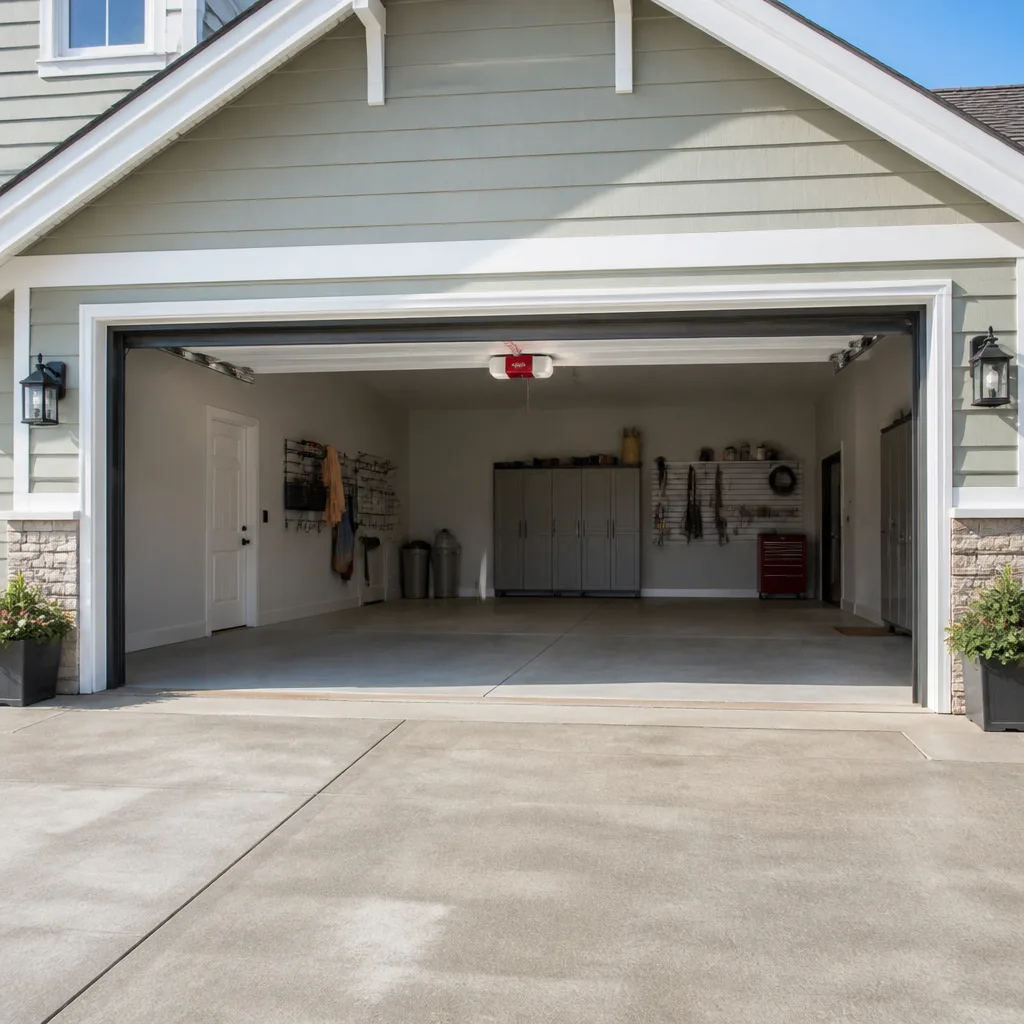
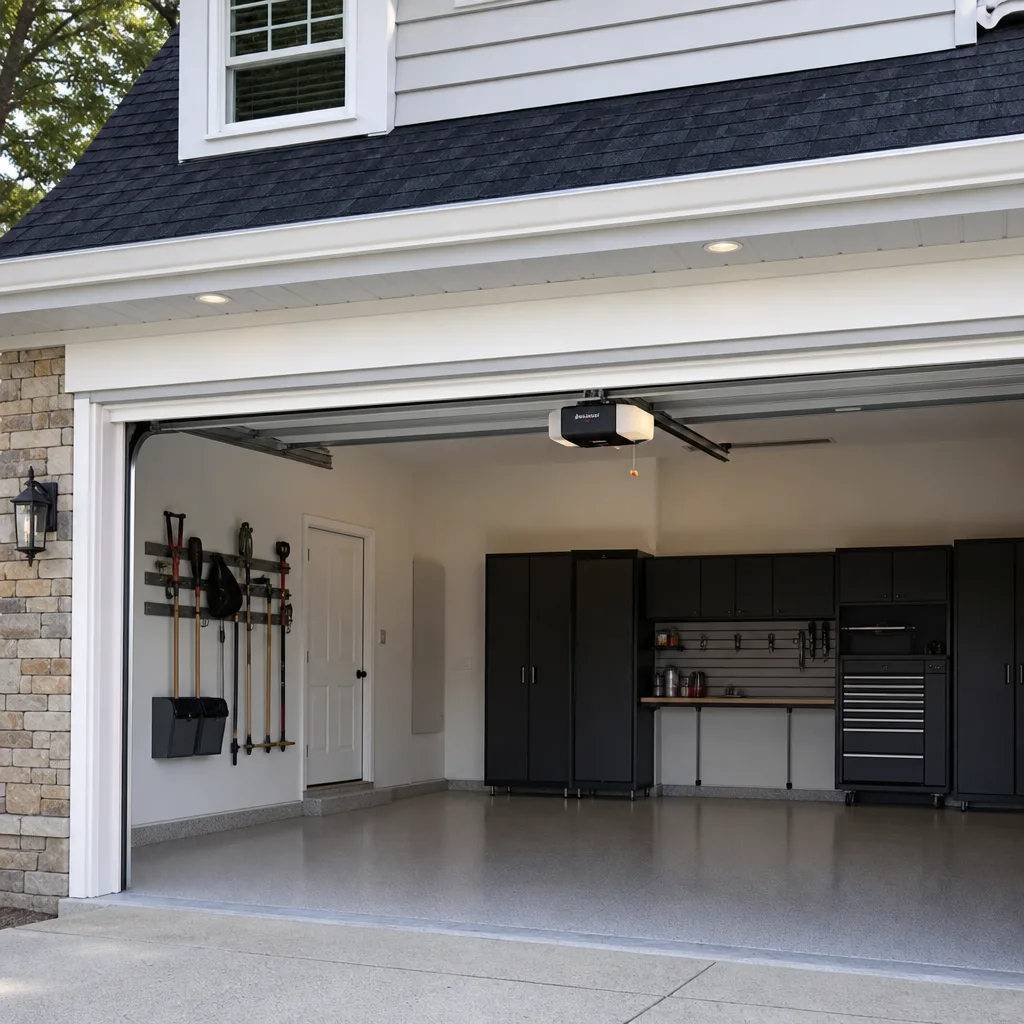
 Before
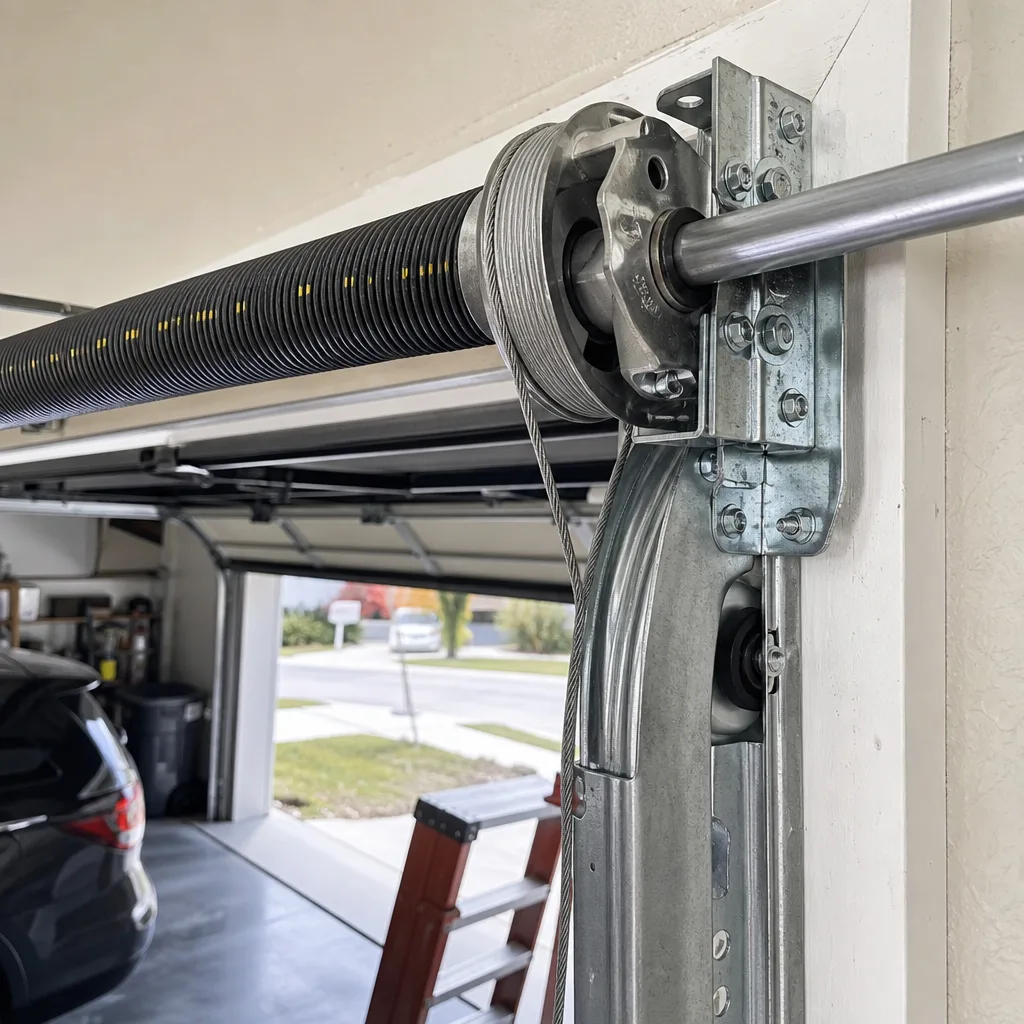 After
After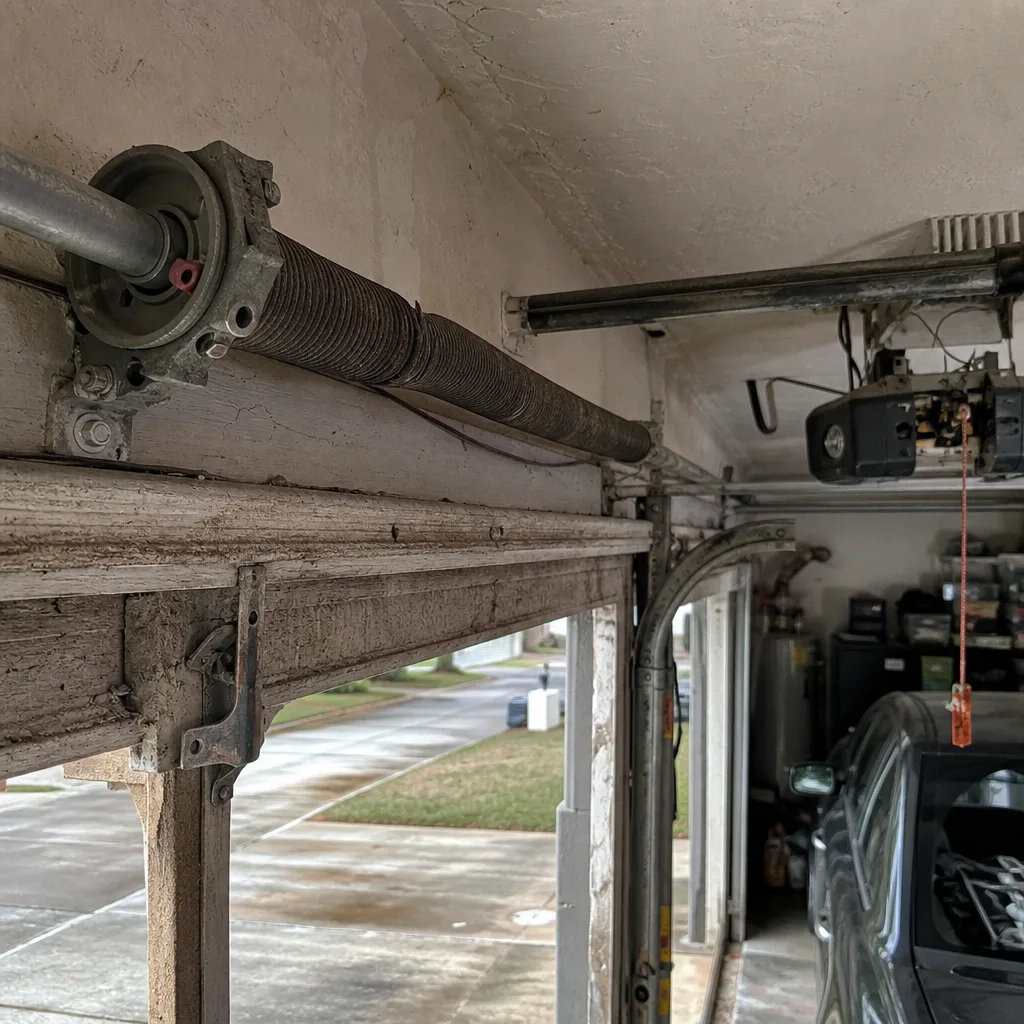 Before
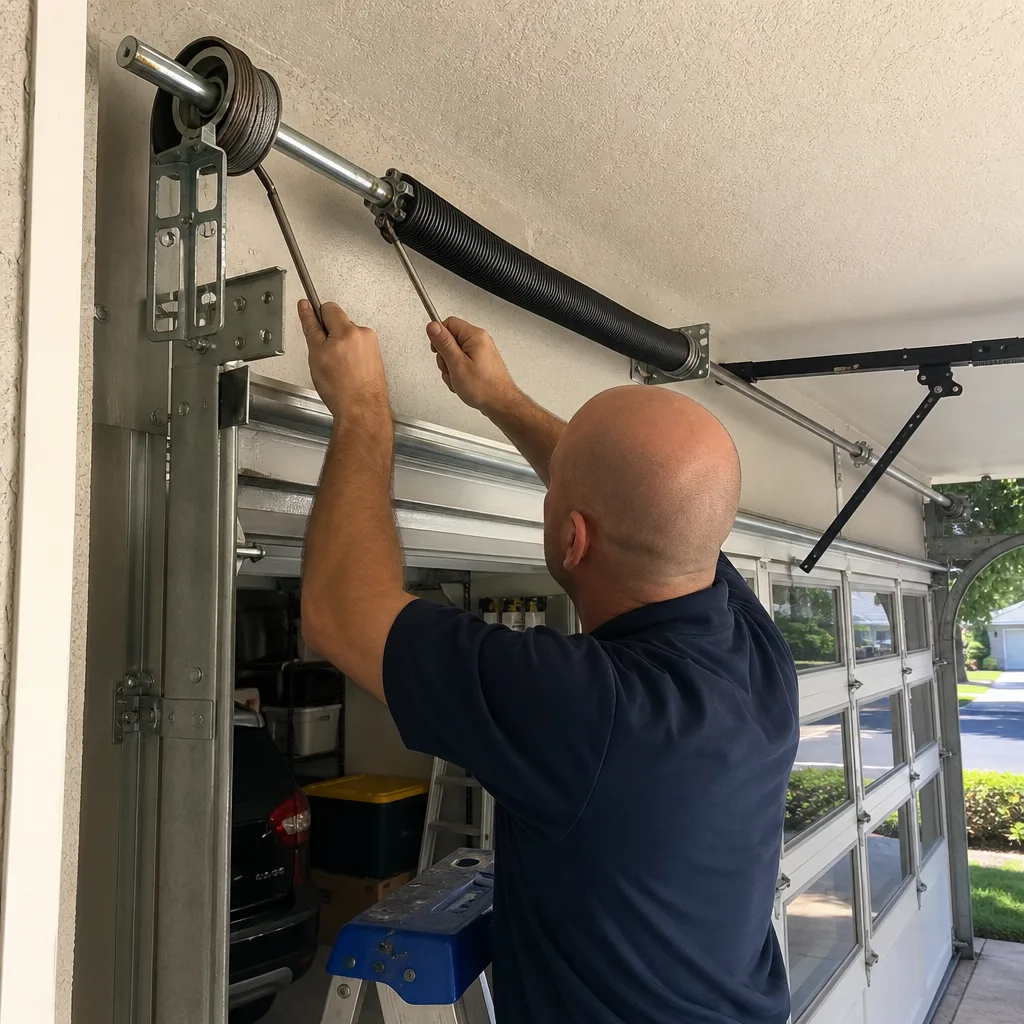 After
After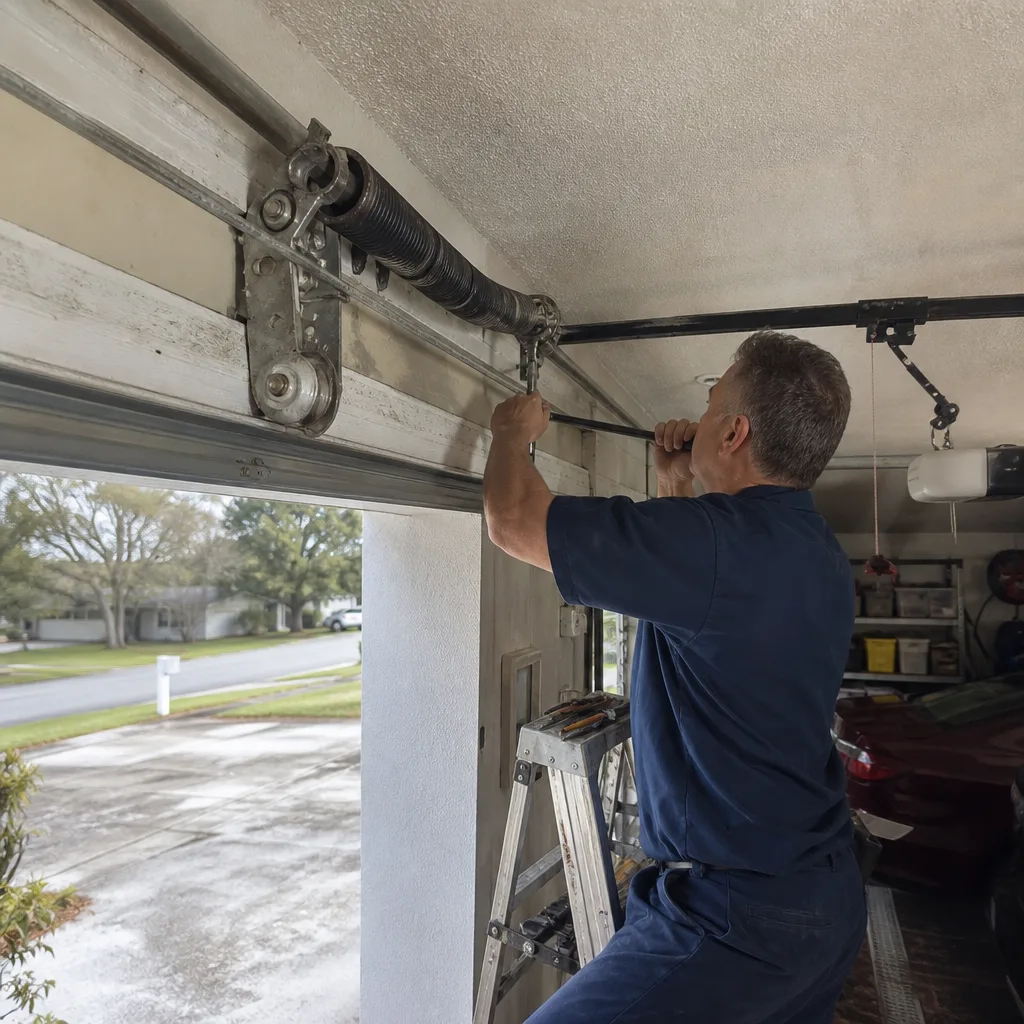 Before
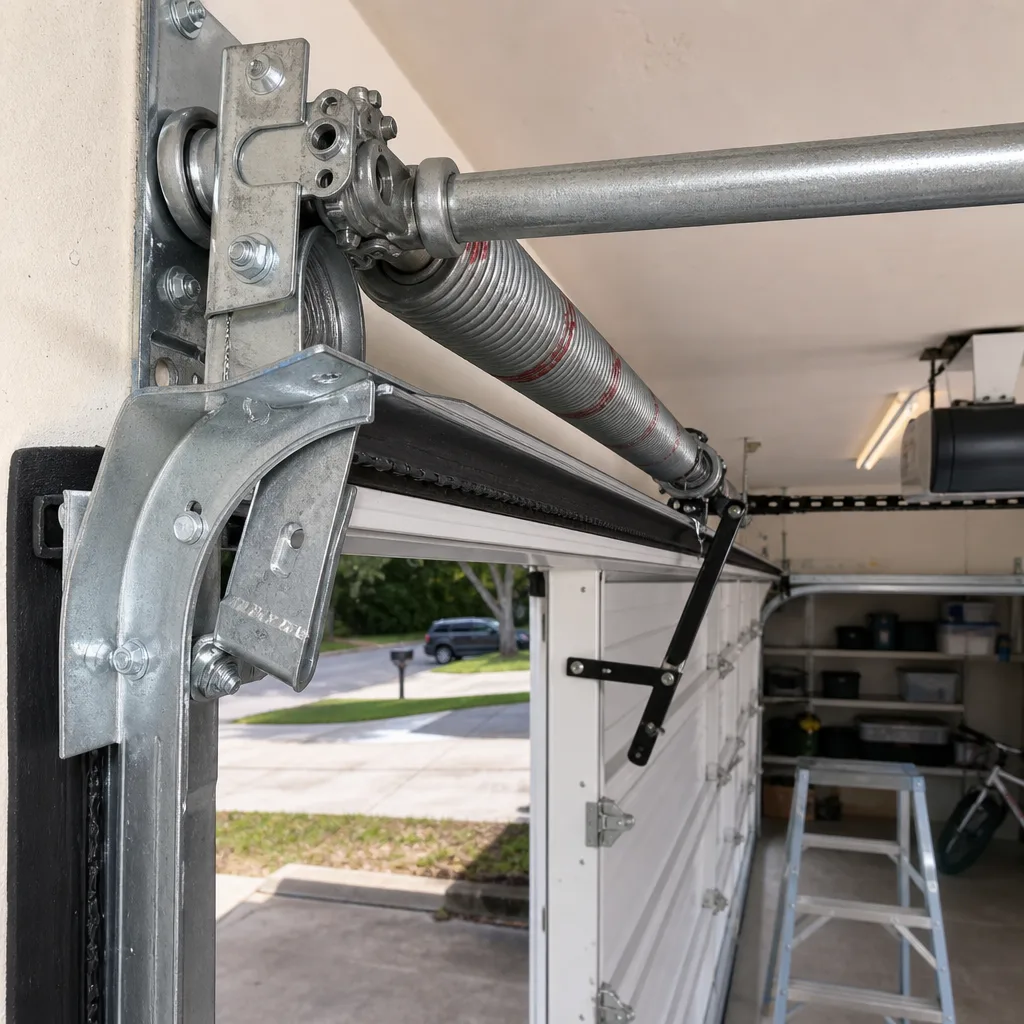 After
AfterThe Complete Guide to Garage Door in Tampa
A 16-foot garage door in Tampa must resist a minimum 130 mph wind load under FBC 2023. That single requirement disqualifies the most common door sold at big-box stores, yet most homeowners only discover this after installation, when the inspector fails the rough-in or the insurance adjuster flags the non-compliant panel. In this guide, you’ll learn how to read a Notice of Acceptance label, which steel gauge actually survives Tampa’s salt air, what triggers a permit in the City of Tampa versus unincorporated Hillsborough County, and the exact sequence of a compliant installation from permit to final inspection. For more guides & resources, explore our blog. This is the garage door information that matters in Tampa, not Phoenix.
Quick Answer
Choosing a garage door in Tampa means meeting Florida Building Code wind-load requirements, selecting materials that hold up to humidity and salt air, and navigating permit thresholds that differ between the City of Tampa, Temple Terrace, and unincorporated Hillsborough County. A compliant residential door for most of Tampa carries a design pressure rating matched to your specific address, uses a minimum 24-gauge steel or equivalent rated alternative, and gets installed under a permit with rough and final inspections.
Table of Contents
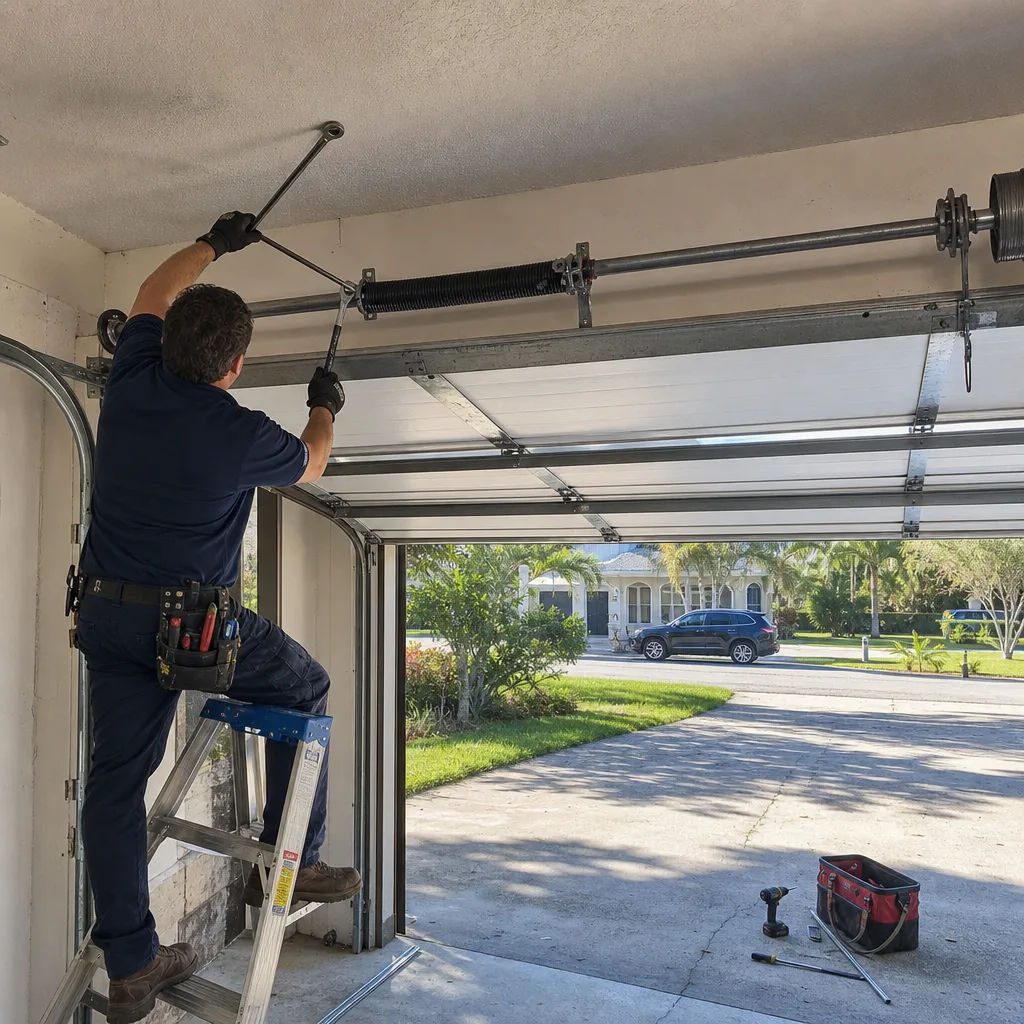
- Tampa’s Wind-Load Requirements: What FBC 2023 Actually Demands
- How to Read a Notice of Acceptance (NOA) Label Before You Buy
- Salt Air, Steel Gauge, and Lifespan: Coastal vs. Inland Tampa
- Permit Thresholds: City of Tampa, Temple Terrace, and Hillsborough County
- The Sequence of a Compliant Tampa Garage Door Project
- Materials Comparison: What Works in Tampa and What Fails
- Garage Door Opener Considerations for Tampa Homes
- What a Garage Door Costs in Tampa in 2026
 Before
 After
AfterTampa’s Wind-Load Requirements: What FBC 2023 Actually Demands
The Florida Building Code, 2023 edition (FBC 2023), governs every garage door installed in Hillsborough County. Wind speeds vary by location. Homes in most of Tampa proper sit in a wind zone requiring a minimum design pressure of plus or minus 0.50 times the base wind pressure, but the specific number depends on your address, your roof height, and whether your street is considered an open exposure or a sheltered one. The ASCE 7 wind map, which the Florida Building Code adopts, places most of Tampa in a 130 to 140 mph basic wind speed zone. That does not mean your door must survive a direct 130 mph gust. It means the door, its tracks, its mounting hardware, and its connection to the structure must be engineered to resist the uplift and lateral pressures calculated from that base wind speed.
A garage door in Tampa is not just a flat panel. It is a building component with a structural job. In a hurricane, wind pressure builds against the door face. If the door fails, the garage pressurizes, and the roof goes next. That is why the code treats the door as part of the building envelope. We have measured torsion spring failures, bent vertical tracks, and ripped-out mounting brackets after storms where the door itself looked intact from the outside. The failure was in the hardware load path, not the panel.
When a Tampa contractor quotes a door, the wind-load rating should be the first line of the written scope, not the last footnote. FBC requires the manufactured product to carry a Notice of Acceptance from Miami-Dade County or an engineering evaluation for the specific application. If the written quote does not name the wind-load rating and the NOA number, it is not a compliant quote under Florida code. That is the standard Servo Garage Doors Tampa applies on every estimate, per Clause 1 of The Haven Standard: a flat, written price and written scope delivered before any work starts.
Insulated doors with strut reinforcement meet higher wind loads than non-insulated doors of the same gauge. The struts, typically three or four U-shaped steel bars bolted across the interior face of each section, are what allow a residential door to carry a 130-plus mph rating. Without struts, even a heavy-gauge door will deflect past the track’s grip and pop out under negative pressure. The big-box door usually ships with zero struts and a manufacturer’s waiver limiting wind exposure to 90 mph. That waiver voids in Hillsborough County.
How to Read a Notice of Acceptance (NOA) Label Before You Buy
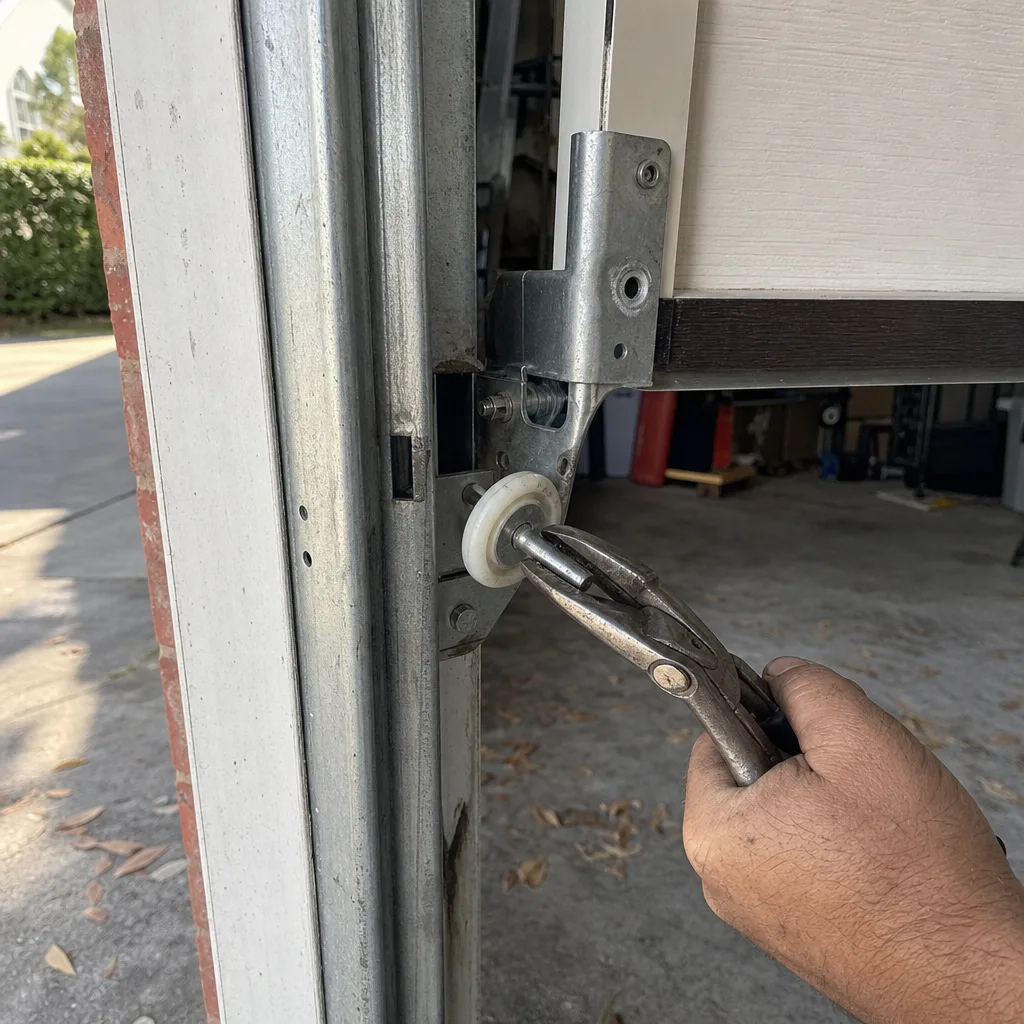
Every compliant garage door installed in Tampa carries a Notice of Acceptance, or NOA, issued by Miami-Dade County or the Florida Department of Business and Professional Regulation. The NOA is a document, not a sticker. The physical label on the door carries the NOA number, the manufacturing date, the door model, and the maximum design pressure the assembly is rated for, expressed as a positive and negative pounds-per-square-foot number. For a typical Tampa home, that number falls between plus 30 and negative 30 PSF on the panel face, but the hardware load path adds its own requirements.
Here is how to read the label in four steps:
- Find the NOA number. It appears on a metal or vinyl tag, usually on the top panel’s interior face or the left end stile. The number looks like “FL-12345” or “MIA-12345.” Write it down before you pay for the door.
- Cross-reference the number online. The Miami-Dade Product Control Search or the Florida Product Approval database lists the exact door model, the permitted wind zones, the maximum panel size, and the required strut configuration.
- Verify the design pressure rating against your address. Your design pressure is calculated from the ASCE 7 wind map based on your risk category, exposure, and roof height. A licensed contractor or engineer can run this calculation in minutes. If the door’s rating is lower than your address requires, the door is non-compliant.
- Check the installation instructions inside the NOA. The NOA specifies the mounting method, the anchor type, the track gauge, and the required connection to the jambs. A door can carry a compliant rating on paper and fail in the field if the installer used the wrong anchors.
What most homeowners never learn: the NOA binds the manufacturer, the door model, the track system, and the installation method as a single tested assembly. You cannot swap in a different track or a cheaper jamb bracket and still claim the NOA rating. The assembly is the product. In our experience, when a Tampa homeowner brings us a competing written estimate, the missing NOA reference is the most common thing we flag. The Free Second Opinion on any written estimate exists for exactly this reason: bring the paperwork, and we’ll tell you whether it is code-compliant for your address, not just competitively priced.
Salt Air, Steel Gauge, and Lifespan: Coastal vs. Inland Tampa
Tampa’s corrosion map splits along two lines. Homes within about two miles of Hillsborough Bay, Old Tampa Bay, or the Gulf-facing parts of South Tampa live in a salt-air environment that accelerates steel degradation. Homes north of I-275 toward Carrollwood, Lutz, and Temple Terrace face humidity but fewer airborne chlorides. The distinction drives material choice.
A 24-gauge steel door is the minimum we specify anywhere in Hillsborough County. Thinner 25-gauge or 26-gauge doors, common at big-box stores, sag under their own weight within five to seven years in Tampa humidity and fail panel connectors sooner. The gauge number measures thickness inversely: lower gauge equals thicker steel. A 24-gauge panel is 0.0239 inches thick. A 26-gauge panel is 0.0179 inches. That quarter-millimeter difference is the difference between a door that works for 15 years and one that bows after four summers.
For coastal Tampa ZIP codes, including South Tampa neighborhoods like Palma Ceia, Davis Islands, and Beach Park, we recommend stepping to a 24-gauge minimum with a factory-applied polyester or polyurethane finish. The salt in the air attacks raw steel at cut edges first, then at the stile-to-panel seams, then at the bottom weather seal track. A galvanized steel base helps, but the cut edges still expose the substrate. Factory paint, not field paint, matters. A field-painted steel door in South Tampa shows rust blooms at the seams within three years.
Realistic lifespan ranges in Tampa, based on what we have measured in the field since 2015:
- 24-gauge single-layer steel door, inland: 12 to 18 years before panel replacement becomes cost-effective.
- 24-gauge single-layer steel, coastal: 8 to 12 years, with visible seam rust by year six without factory finish maintenance.
- 26-gauge steel, any location: 5 to 8 years, with sag and seam failure common by year six.
- Aluminum frame with aluminum panels: 15 to 20 years in coastal locations, no rust, but higher material cost and more dent-prone.
- Vinyl-backed insulated steel, 24-gauge: 15 to 20 years inland, 10 to 14 years coastal, best energy performance.
The choice for a South Tampa homeowner and a Carrollwood homeowner should differ even though both live in Tampa. Salt proximity is the variable. The same 24-gauge door with factory finish might serve Carrollwood for 15 years and South Tampa for 10. That is not a defect in the door. It is the environment. Matching the material to the ZIP code is what a Tampa-specific quote does, and it is why a national guide’s generic “steel vs. aluminum” advice falls short here.
Permit Thresholds: City of Tampa, Temple Terrace, and Hillsborough County
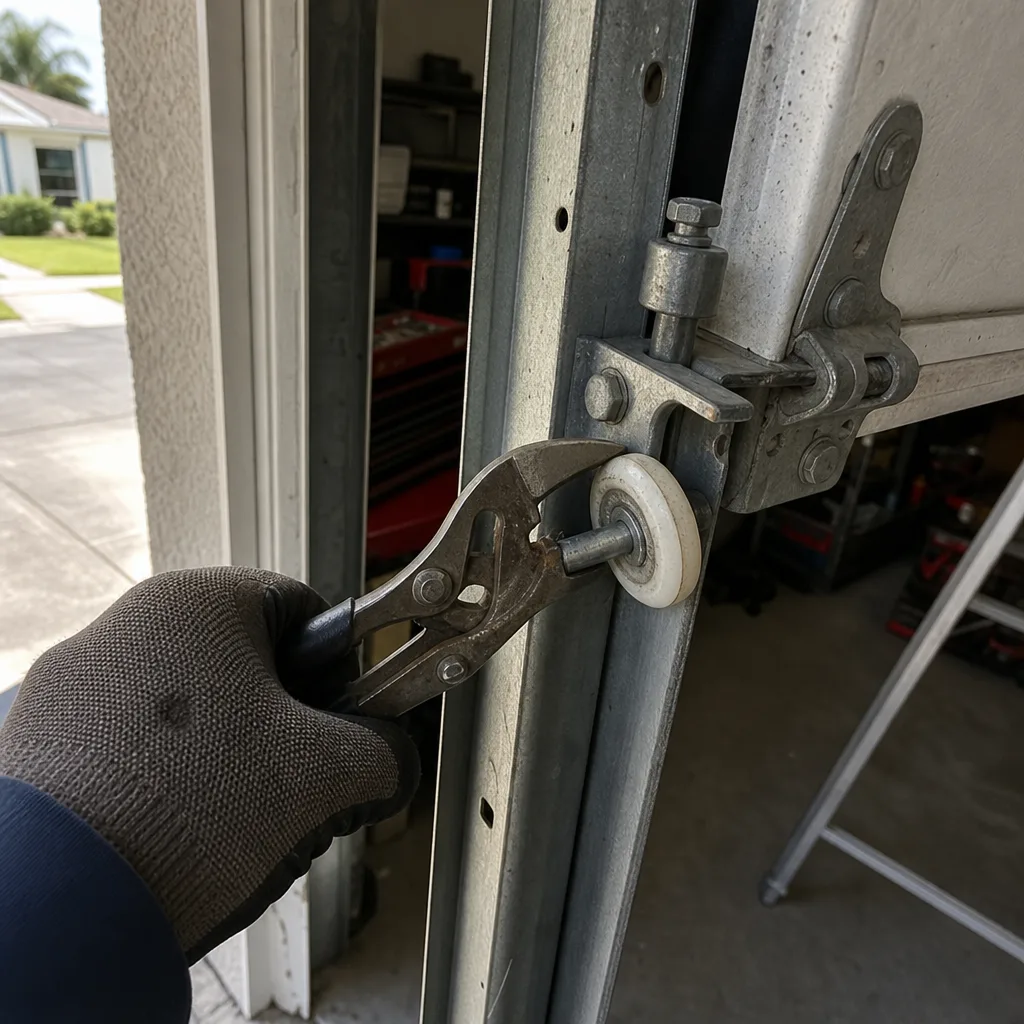
The permit question confuses more Tampa homeowners than any other. The short version: replacing an existing garage door with a like-for-like door usually does not require a permit in the City of Tampa if the opening size and the track system remain unchanged. Installing a new door in a new opening, enlarging an opening, or changing from a non-impact to an impact-rated assembly generally does require a permit. But the thresholds are not uniform across Hillsborough County.
City of Tampa: A straightforward replacement, where the door size, mounting system, and wind-load category are unchanged, falls under minor repair language and typically avoids a permit. The moment the opening changes, the header changes, or the door’s design pressure requirements change, a permit enters the picture. City inspectors check the NOA label, the track mounting, and the anchor embedment.
Temple Terrace: Temple Terrace runs its own building department. The city enforces a stricter interpretation of “replacement” and has, in our field experience, required permits for full door and track replacements more often than the City of Tampa does for the same scope. Homeowners in Temple Terrace should assume a permit is required until the building department says otherwise in writing.
Unincorporated Hillsborough County: The county’s threshold sits closer to the City of Tampa for like-for-like replacements, but the county has additional documentation requirements for wind-load verification in certain zones. County inspectors sometimes ask for the engineering calc when the door’s NOA carries a design pressure within 10 percent of the address requirement.
The safe move in every jurisdiction: ask the contractor to name the permit requirement in the written scope. If the quote says “permit not required,” ask them to put that in writing with their license number next to it. If they won’t, you have your answer. Servo Garage Doors Tampa addresses permits in every written scope, because a paper trail is the entire point. The reader of this guide who walks into a contractor conversation knowing that Temple Terrace and unincorporated Hillsborough differ is already ahead of most competing bids.
The Sequence of a Compliant Tampa Garage Door Project
A code-compliant garage door installation in Tampa follows a specific order. Skipping a step is how homeowners end up with a door that works fine for six months and fails a re-inspection when they sell the house. Here is the sequence:
- Measure and document the opening. The contractor measures width, height, side room, headroom, and backroom. These five dimensions determine which door models fit and which track configurations the NOA permits. The measurements go into the written scope.
- Pull the permit, if required. In the City of Tampa, Temple Terrace, or unincorporated Hillsborough County, the contractor or homeowner files for the permit before work begins. The permit application names the door model, the NOA number, and the design pressure rating.
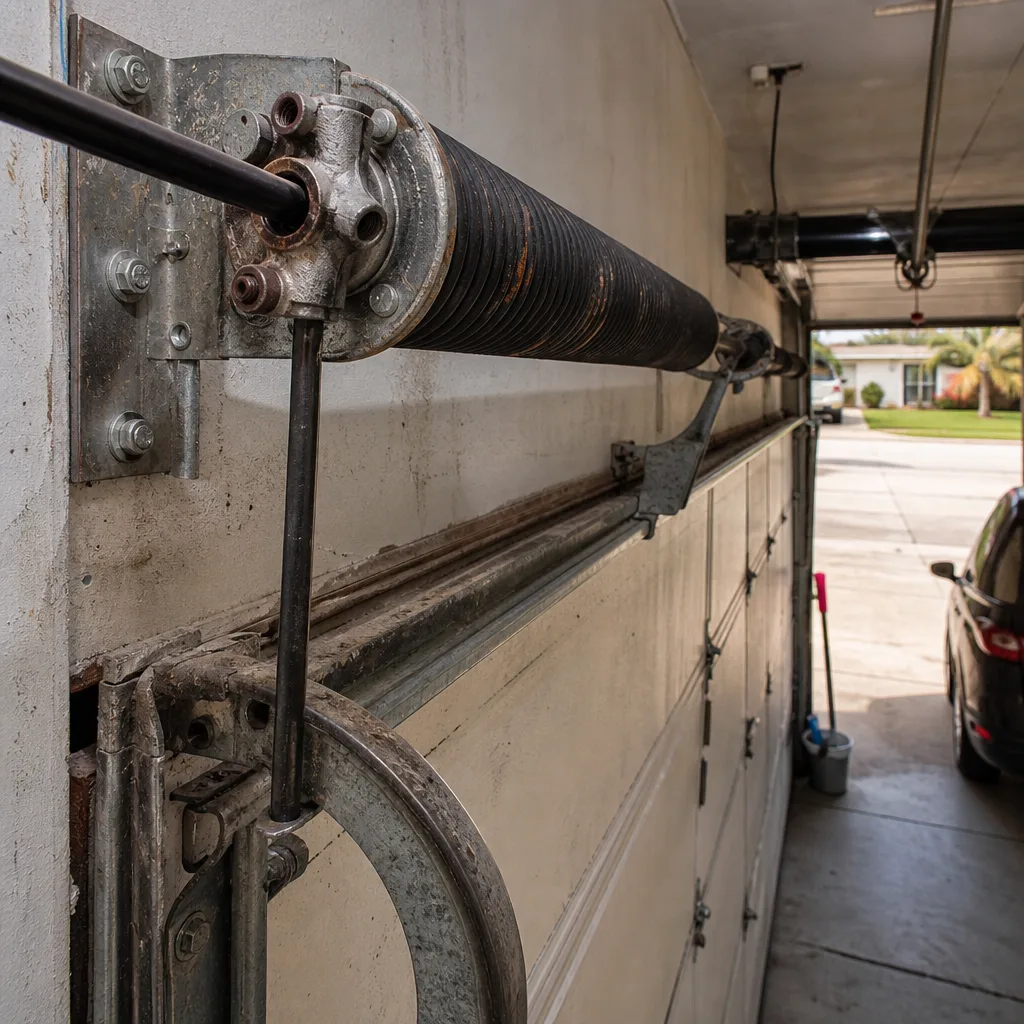
- Install the door and track system. The installer mounts the tracks, sets the panels, tensions the torsion springs (this is the hazardous step; torsion springs store enough energy to cause serious injury), and adjusts the travel limits. A uniformed, background-checked technician does this work, not a subcontractor of unknown origin.
- Rough inspection. If the permit requires one, the inspector visits before the door is fully finished. The inspector checks the NOA label on site, the anchor embedment, and the track gauge.
- Final inspection. The inspector verifies the door opens and closes under load, the safety reversal system triggers correctly, and the wind-load components match the approved permit documents.
- Documentation handoff. The homeowner receives the permit sign-off, the NOA reference, the written warranty, and a photo record of the installation. In our practice, every visit closes with a documented photo record, tracing back to Clause 4 of The Haven Standard: the customer sees the failed part, or the new part, before the job is signed off.
What happens when a contractor skips a step? If the permit was required and skipped, the homeowner owns the problem at resale. The title company asks for the permit history, the missing permit surfaces, and the seller pays to bring the door into compliance. We have seen this exact scenario cost a Tampa homeowner $1,400 for a re-inspection and retrofit on a door that was never permitted. The cheapest installation is not the one that avoids the permit. It is the one that closes the paper trail.
Materials Comparison: What Works in Tampa and What Fails
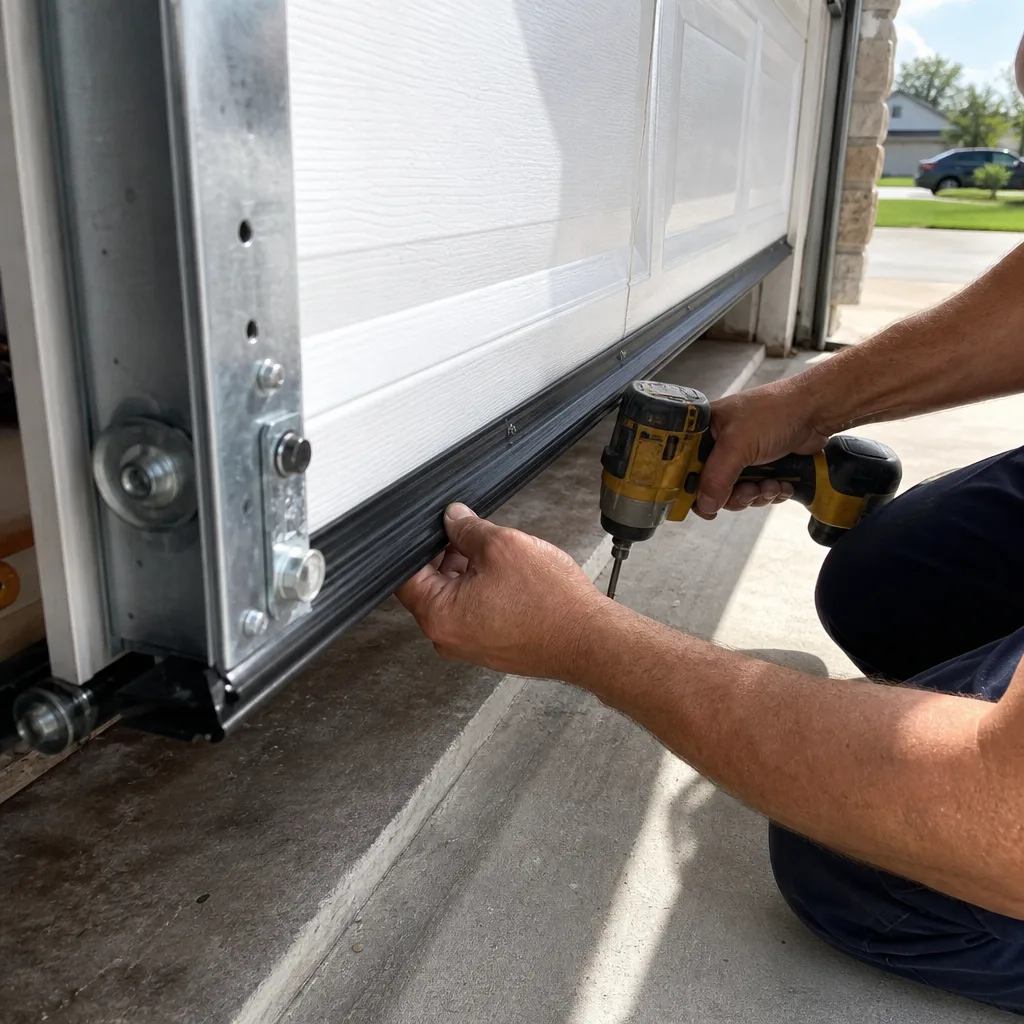
Every material choice involves a tradeoff between initial cost, lifespan, maintenance burden, and wind-load capacity. Tampa’s combination of humidity, heat, and storm exposure narrows the field. Here is the practical comparison:
Steel (24-gauge minimum in Tampa)
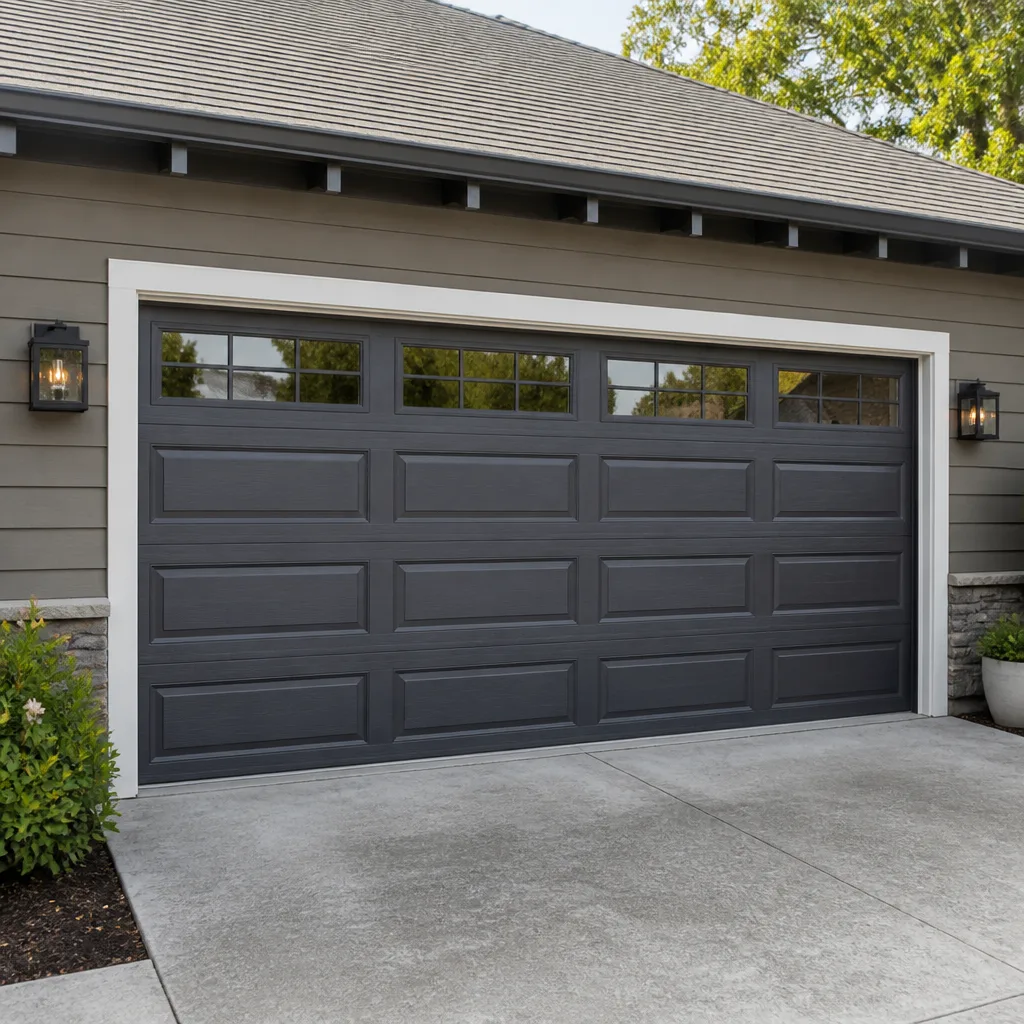
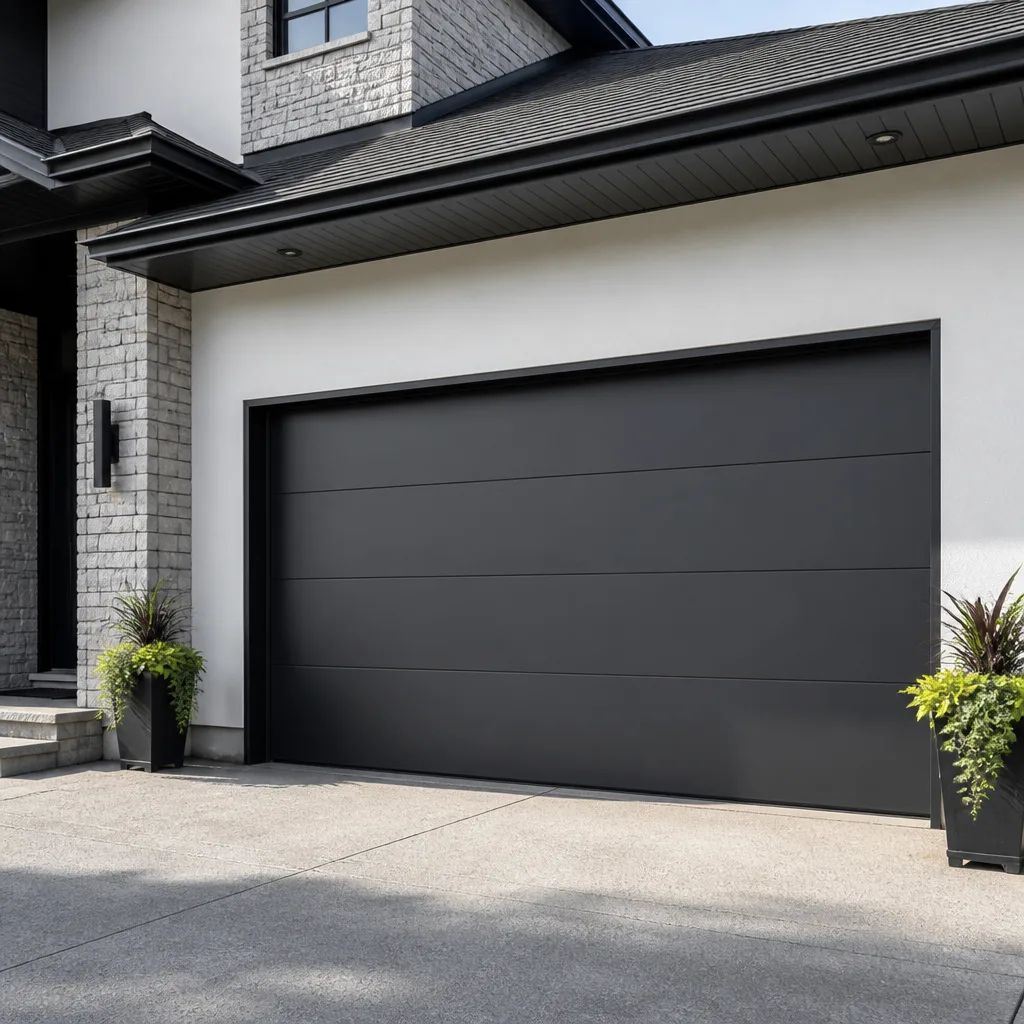
Steel is the default for most Tampa homes. It carries the highest wind-load ratings per dollar, it takes a factory finish well, and it is the most commonly manufactured panel in the NOA database. The downside is weight and corrosion. A 16-foot by 7-foot steel door weighs between 250 and 400 pounds depending on insulation, which demands a correctly sized torsion spring system. The spring does the lifting; the opener merely guides it. Undersized springs are the most common installation error we correct in Tampa.
Aluminum
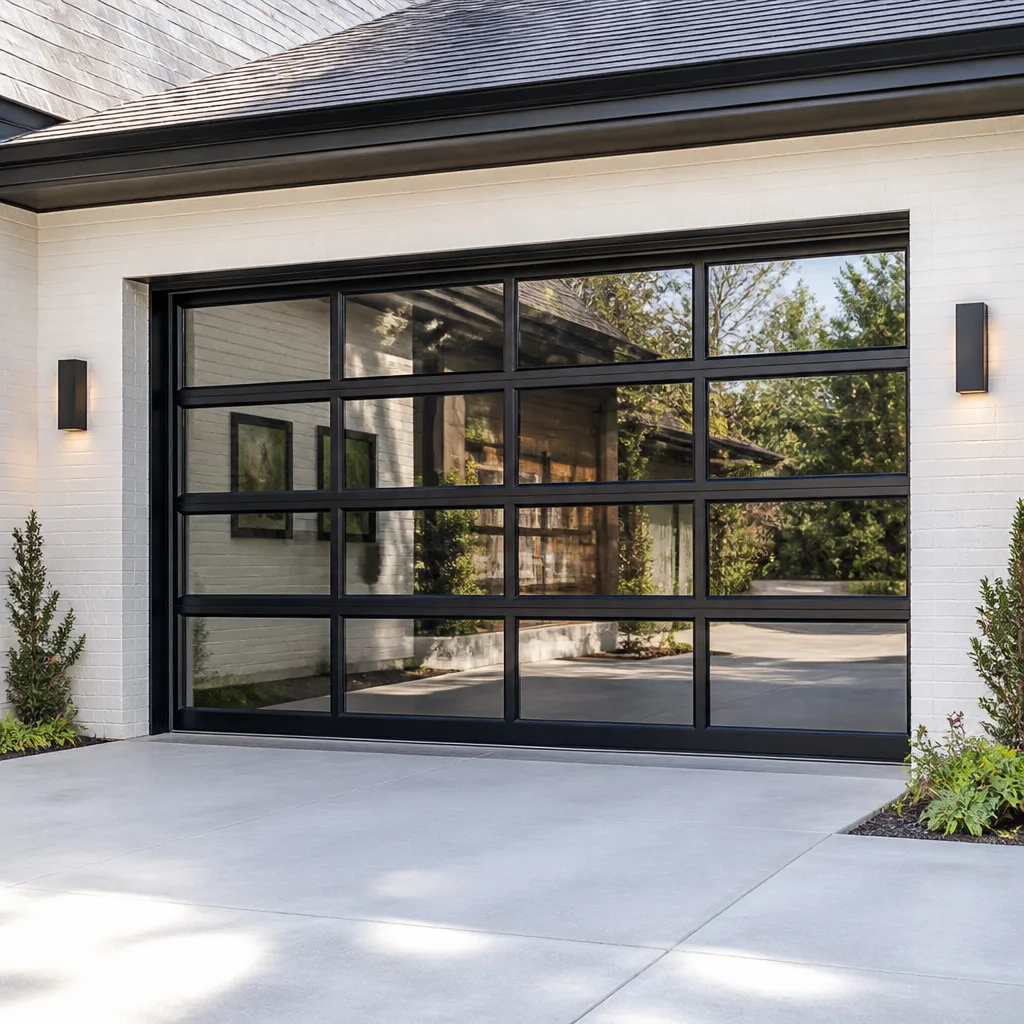
Aluminum makes sense in coastal ZIP codes where salt air eats steel. Aluminum does not rust, and modern aluminum doors with glass inserts hold design pressure ratings comparable to steel, though they cost more. The tradeoff is dent resistance. A wayward basketball or bicycle handlebar dents an aluminum panel more easily than a steel one. For South Tampa homes with a coastal exposure and a long driveway set back from street trees, aluminum is often the right call. For Carrollwood with its oak canopy and falling branches, steel holds up better.
Wood
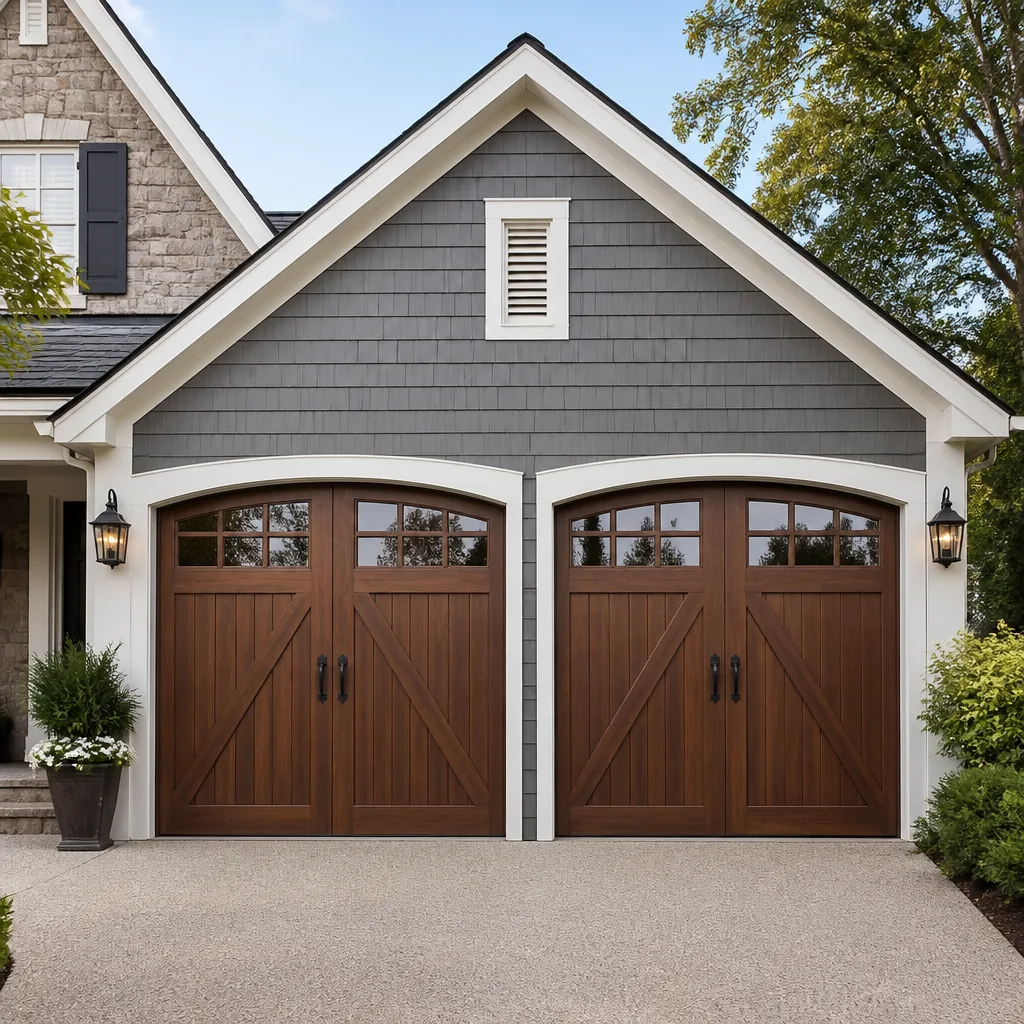
Wood garage doors exist in Tampa’s older neighborhoods, especially in Hyde Park, Bayshore Beautiful, and the historic districts. Wood is beautiful and nearly impossible to keep square in Tampa humidity. The stiles swell, the panels warp, and the door gains weight as it absorbs moisture, which wears out torsion springs faster. A wood door in Tampa needs annual sealing and periodic re-square adjustment. Most homeowners who inherit a wood door eventually replace it with a factory-finished steel or aluminum door. The cost of maintaining wood here exceeds the cost of replacement within a decade.
Fiberglass
Fiberglass doors appear occasionally in Tampa, usually as a lightweight alternative on older homes with original garage framing that cannot carry the weight of steel. Fiberglass resists corrosion and dents, but it degrades under UV exposure, which Tampa has in abundance. The resin yellows and the panel surface chalks after five to seven years. The NOA database carries fewer fiberglass options, which limits wind-load compliance. It is a niche material here, not a mainstream recommendation.
Garage Door Opener Considerations for Tampa Homes
The opener is the motorized unit that moves the door along the track. Most Tampa homes use a belt-drive opener for noise reduction or a chain-drive for cost savings. In our field experience, the Tampa-specific opener issues are heat and power quality, not noise.
Heat kills opener logic boards. Tampa garages routinely reach 100 degrees Fahrenheit in the summer, and a garage that faces west receives direct afternoon sun on the door face. The electronics inside the opener housing, particularly the logic board and the capacitor, degrade faster in sustained heat. The opener’s travel limits drift, the force settings wander, and the unit eventually stops responding. A logic board replacement is a common repair call we field from June through September. The fix is straightforward and far cheaper than replacing the opener, provided the technician diagnoses the board rather than selling a new unit.
Power quality matters in Tampa because of the summer lightning season. A direct or nearby strike can spike the opener’s electronics. A surge protector on the opener circuit is cheap insurance. If the opener is hardwired to a 120-volt circuit, a whole-house surge protector at the panel is the better option. The opener’s safety reversal system, the sensor pair at the bottom of the door opening, must reverse the door when the beam is broken. FBC and the federal UL 325 standard require it, and Tampa inspectors check it during final.
Belt-drive openers dominate the Tampa market for a reason: the belt does not stretch in heat, it does not require lubrication, and it runs quieter than chain-drive, which matters when the garage shares a wall with a bedroom or a home office. Chain-drive works and costs less. The brands we service most in Tampa include LiftMaster and Craftsman, both of which offer solid belt-drive units with battery backup. Battery backup matters here for the hurricane season: when the power goes out, the opener still lifts the door. A Belt-drive LiftMaster with battery backup is the most common configuration we install in the inner suburbs around Tampa.
What a Garage Door Costs in Tampa in 2026
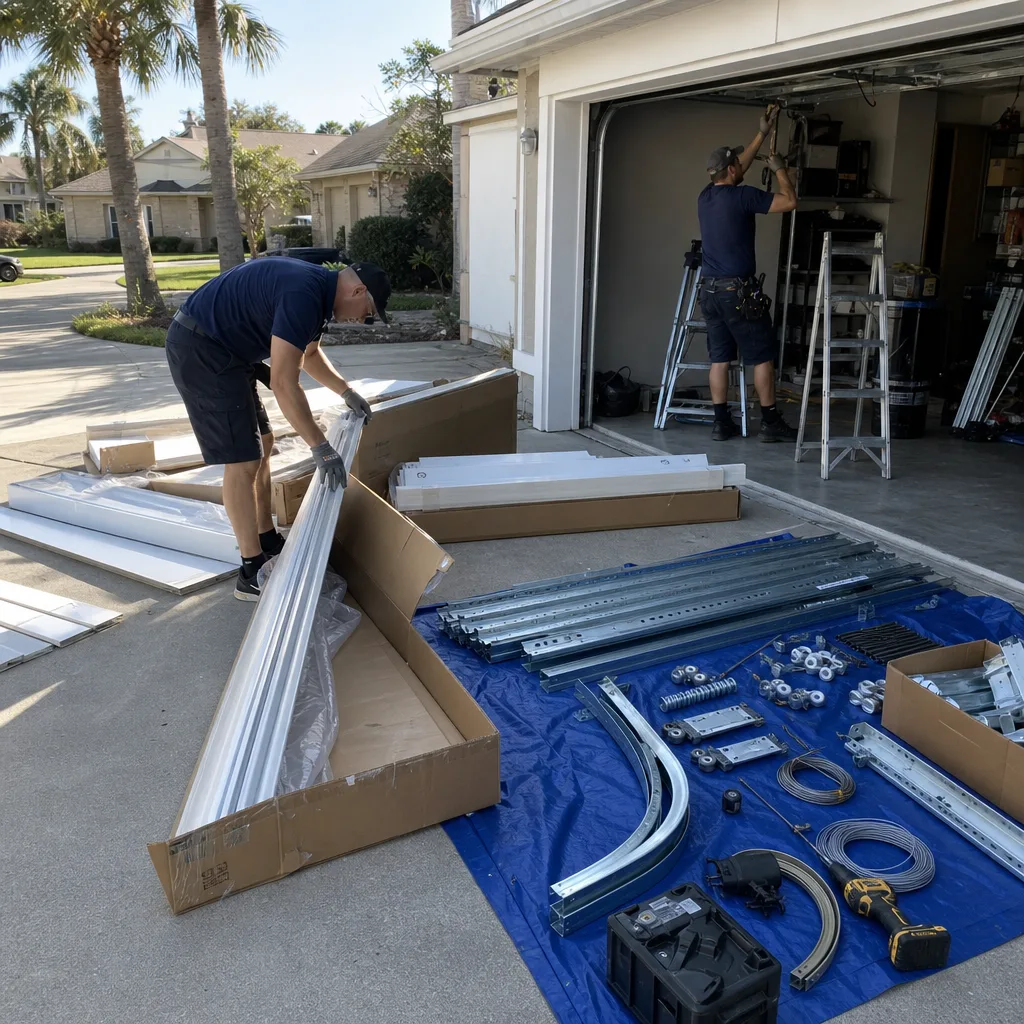
Garage door pricing in Tampa splits by material, insulation, wind-load rating, and jurisdiction. The following ranges reflect what we have observed and written on scopes across Hillsborough County in the past eighteen months. They are not national averages; they are Tampa numbers.
- Single-car door replacement, 24-gauge steel, no wind load beyond standard FBC minimum: $900 to $1,500 installed, depending on insulation and finish.
- Double-car door replacement, 24-gauge steel, standard FBC minimum: $1,500 to $2,400 installed.
- Double-car door, impact-rated or high-wind-load NOA with strut reinforcement: $2,400 to $3,800 installed, higher for full-view aluminum with glass.
- Aluminum full-view door, double-car, coastal-rated: $3,000 to $4,500 installed, depending on glass spec and wind-load rating.
- Torsion spring replacement, one spring: $180 to $340 installed, including the spring, labor, and adjustment. Two-spring systems run $300 to $500.
- Garage door opener replacement, belt-drive with battery backup: $450 to $700 installed, including removal of the old unit and programming.
- Garage door opener repair, logic board or limit switch: $150 to $300, parts and labor.
- Permit fees, where required: $80 to $300 depending on jurisdiction and scope. The written scope names this line item.
Every number above is a range, not a binding quote. The binding price comes in the written scope after we measure the opening and pull the wind-load requirement for the address. What never changes is the sequence: flat, written price before any work starts, no hidden line items, no post-installation surcharges. That is Clause 1 of The Haven Standard in practice. “Call for a quote” is not how this works, and it was never how this works.
Common Mistakes to Avoid
- Buying a big-box door without an NOA and expecting it to pass a Tampa inspection. The door may carry a national warranty but no Florida wind-load approval. The inspector will flag it, and the warranty will not cover the replacement.
- Replacing the door without checking the permit requirement for the specific jurisdiction. City of Tampa, Temple Terrace, and unincorporated Hillsborough have different thresholds. The contractor should name the requirement in writing.
- Choosing steel gauge by price, not by location. A 26-gauge door in South Tampa rusts and sags years earlier than the same door in Carrollwood. The savings disappear fast.
- Setting the opener force higher to overcome a stiff door. The stiff door has a problem, usually a worn spring or a misaligned track. Overriding the force setting defeats the safety reversal system and puts the door out of compliance. Fix the door, not the opener settings.
- Skipping the written scope and going with a verbal quote. Verbal quotes evaporate. The written scope names the door model, the NOA reference, the permit line item, and the price. If the contractor will not write it down, walk away.
- Attempting to tension a torsion spring without the proper tools and training. Torsion springs store enough stored energy to break bones or worse. This is the one repair where calling a trained professional is not a suggestion; it is the only safe move.
- Assuming the builder-grade door from 2007 is still compliant. FBC has changed since then. An older door may carry no NOA at all, which becomes a problem at resale and a liability in a storm.
When to Call a Professional
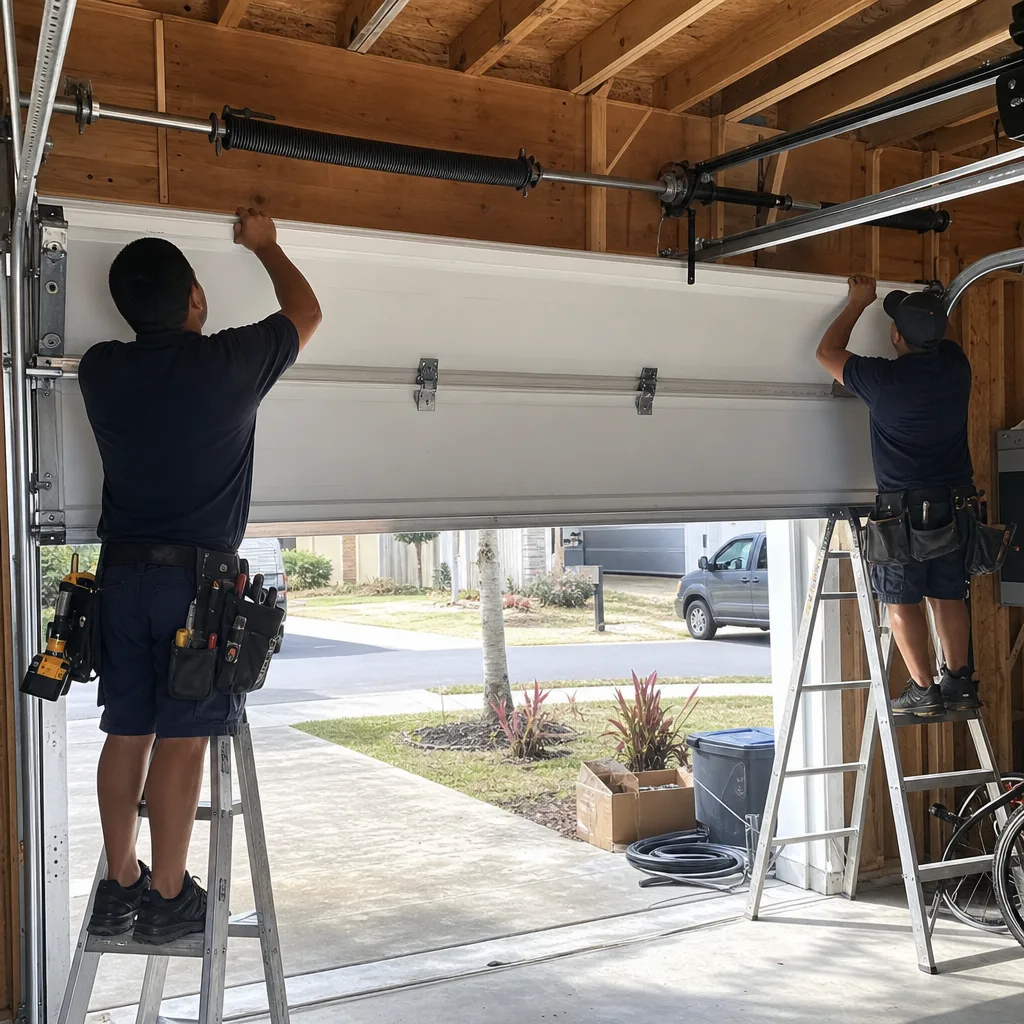
A garage door in Tampa is a structural component under Florida code, and the repair or replacement touches stored-energy springs, high-tension cables, and wind-load hardware. Call a professional when the torsion spring breaks, when the door comes off its track, when the opener’s logic board fails, when the door sags visibly, or when a storm has shifted the track alignment. Not sure whether to tackle a repair yourself? Read our DIY vs Professional Garage Door: The Tampa Homeowner’s Decision Guide. Call before you buy a door if the quote does not name an NOA number and a design pressure rating for your address. Servo Garage Doors Tampa offers free estimates in Tampa, with a written price and written scope delivered before any work begins. Call (656) 223-3036 and you will speak to a live person, 24/7, including emergency calls. The technician arrives with a license number on the page, not buried in fine print, and leaves with a documented photo record of what was found and what was done.
Frequently Asked Questions
A like-for-like replacement in the City of Tampa usually does not require a permit, but Temple Terrace and unincorporated Hillsborough County enforce different thresholds, and any change to the opening size or wind-load category triggers a permit. Ask the contractor to name the permit requirement in the written scope before work begins. Call (656) 223-3036 if you want a written answer for your specific address.
A single-car steel door replacement in Tampa typically runs $900 to $1,500, while a double-car door ranges from $1,500 to $3,800 depending on wind-load rating, insulation, and material. Every Servo quote is a flat, written price delivered before work starts, per Clause 1 of The Haven Standard.
Most of Tampa falls in a 130 to 140 mph basic wind speed zone under FBC 2023, which translates to a design pressure requirement calculated from your specific address on the ASCE wind map. Your door must carry an NOA with a design pressure at or above that requirement, and the installation must match the NOA’s mounting specifications.
A 24-gauge steel door lasts 12 to 18 years inland and 8 to 12 years in coastal ZIP codes near Hillsborough Bay, while a 26-gauge door sags and rusts within 5 to 8 years. Salt air and humidity drive the difference, which is why material choice should follow location, not price alone.
Most opener repairs, including logic board replacement and limit switch adjustment, are same-day jobs when the technician carries the parts on the truck. Servo Garage Doors Tampa answers 24/7 with a live person and dispatches a named technician with an on-the-way text, not a callback window.
Belt-drive openers hold up better in Tampa’s heat because the belt does not stretch and the unit runs quieter, which matters when the garage shares a wall with a bedroom. Chain-drive costs less and works fine, but the belt-drive LiftMaster and Craftsman units are the more common long-term choices in inner-suburb Tampa homes.
The Bottom Line
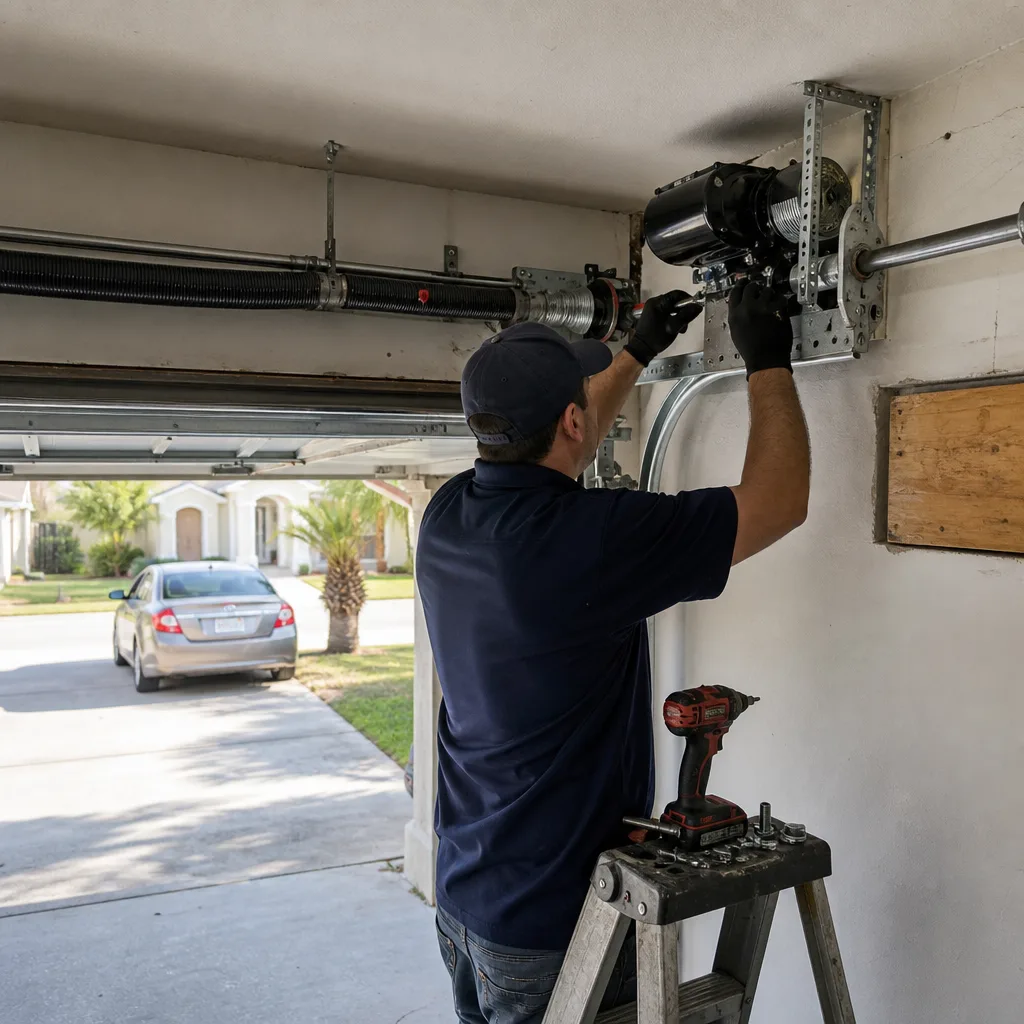
A garage door in Tampa is a building component, not an accessory. It must survive wind-load requirements that disqualify most national market doors, it must hold its shape through humidity and salt air, and it must carry a paper trail that survives an inspection and a resale. The door that works is the one specified for your address, permitted correctly for your jurisdiction, and installed by a technician who documents what they found and what they did. Every decision in this guide points to the same principle: buy the spec, not the sales pitch. A written price, a written scope, an NOA on file, and a photo record at the end. That is how garage doors should work in Tampa, and that is how we have done it since 2015. For help choosing the right door, call Servo Garage Doors Tampa at (656) 223-3036 for a free estimate.
Written by Marcus Deller, Owner at Servo Garage Doors Tampa, serving Tampa since 2015.